
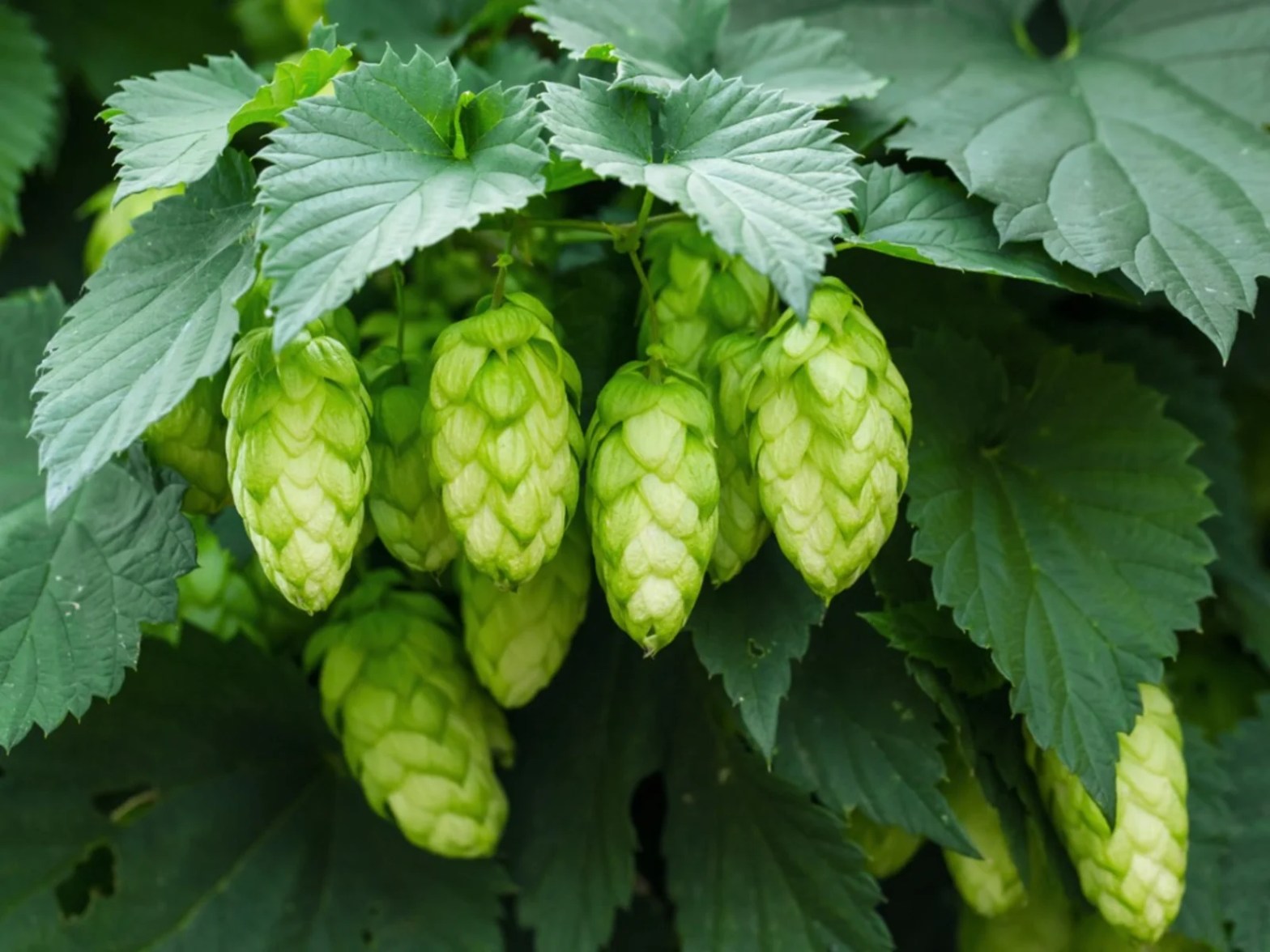
I grow hops at home and not just because fresh hops make better beer. First of all, hops area a wonderful ornamental plant. I would grow hops for my wife just because she thinks they are pretty. Hops are also a powerful medicinal herb. You can use hop tea (or beer by the way) to treat insomnia and anxiety. Right now, my hops grow on trellises but eventually, I plan to build an arbor for these so that you can stand in this structure (imagine a living sukkah) covered in the most gorgeous golden flowers that looked like paper pinecones where you can breathe in the aroma. I am imagining this as the most relaxing place in my garden.
The hop vine is a variant of cannabis (humulus lupulus). It is a perennial plant (comes back every year) and has been cultivated since the ninth century CE. We use hops in beer because the alpha acids present in hops are the primary bittering agent in beer. Hops are also a strong anti-microbial agent, which helps preserve beer and aids with foam retention.
Hop are a dioecious plant, which means they have separate male and female plants. The female plant produces the flowers that we use in brewing, while the male plant pollinates. These are prolific plants, and quite easy to grow. In fact, they grow a little too well. The only plant that grows faster than hops is bamboo, so if you don’t confine your hops bines (climbing stems) to a vertical structure, they’ll show the wolf in their humulus lupulus species name by “eating up” other nearby plants.
Hops can reach staggering heights in a short growing season. They grow on climbing bines (not vines) where the stems wrap-around support structures (like pole beans) rather than attaching like a vine by tendrils or suckers (like peas). The vine will climb 15 to 25 feet over the course of each summer and tt does most of this early in the season. Once it reaches a height of at least 10 feet, it begins to produce papery green cone-like strobiles which will mature into hops flowers you put in your beer. The plant’s bines die back over winter (I cut mine down) but the rhizomes are hardy and will send up new shoots the following summer. Only the female plants produce the strobiles (flowers) so you don’t need both plants. If you take a cutting from a rhizome of established female plant, it will grow to produce the flowers you want. You don’t need a male plant for flowering. The male plants are, however, useful if you want to cross pollinate your hops with different varietals to make new tastes or optimize other hop properties.
Plant your hops in the spring after the last frost and don’t expect much from your plant in the first year. The hops vines require time for their rhizomes to become established so they may not grow rapidly during the first year or produce many flowers but be patient. The plant is establishing itself for a long (25 – 30 year) life. Choose a location with full sun and loamy soil with a pH between 6 and 7. Also be sure to create some sort of support on which the vines can climb. I have tall posts from which I put strings down to the ground for the vines to grow up along. The vines will attach and wrap themselves clockwise around the strings as they grow. If the vine grows too tall, simply allow the vine to hang down for a few days (it will grow several feet) then reattach it to the string and it will continue to climb.
Plant rhizomes in hills spaced 2 to 3 feet apart. For each hill, dig a hole large and deep enough for two of your rhizomes, positioning them horizontally with their buds up and covering them with 1 inch of soil. While you can grow hops in containers, they will do better if you plant them in soil. Because the vines grow rapidly, hops require a large amount of water. Hops plant doesn’t require much phosphorus, so if you fertilize use a nitrogen-only plant food.
When your hops flowers are papery, springy to the touch, and a bit sticky with that distinctively hoppy smell, they are ready to harvest. Check them by smelling first, then gently squeezing one between your index finger and thumb to see if a sticky liquid is expelled.
Mature plants over three years old require root pruning in early spring. Without it, rhizomes will spread throughout the year, hoarding nutrients and water from the crown needed by the shoots. In the first year of growth, let the plant grow without any pruning. In the following years, as the bines begin to grow, you can prune the first spring shoots to encourage more robust secondary shoot growth. Once these shoots are one to two feet tall, pick two or three shoots to train clockwise from the top. It’s tempting to keep all bines on your plant, but choosing a few will give you a more robust plant and better yield.
Freshly-picked hops can either go directly into the kettle or be dried and frozen. You can dry your hops on a screen or use a commercial dehydrator. If you use a dehydrator, be careful to keep the temperature under 140 degrees Fahrenheit (60C). Once the hops are dried, vacuum seal a bag and properly store them in the freezer.
Want to have the
Regimental Brewmeister
at your site or event?
You can hire me.
https://colonialbrewer.com/yes-you-can-hire-me-for-your-event-or-site/
 Michael Carver -- Historical Interpreter/Reenactor