
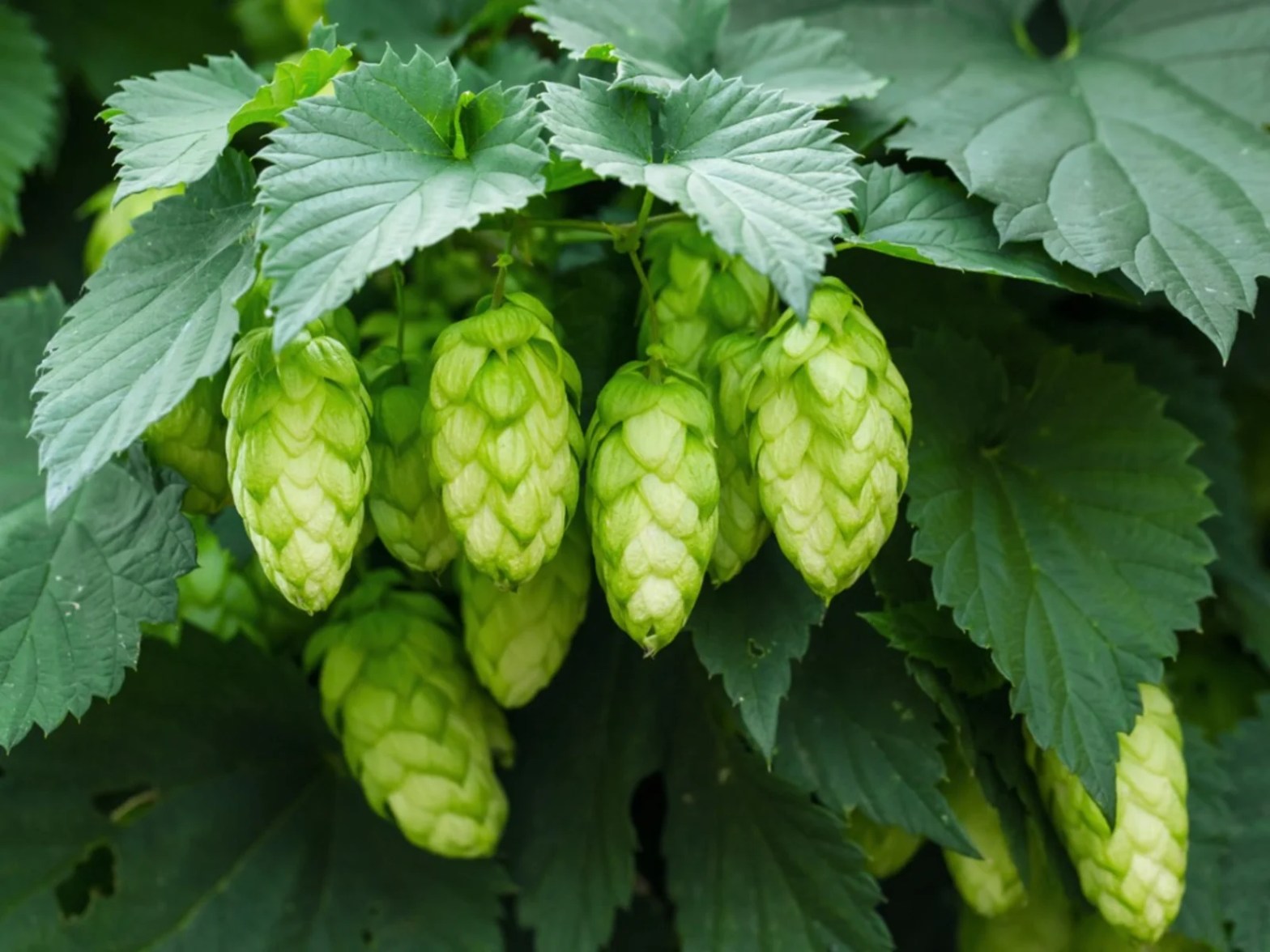
Hops are a relatively new addition to the brewmaster’s toolkit. Prior to the widespread adoption of hops, beer, sometimes called gruit, was bittered and flavored with spice and herb mixtures. Any number of herbs and spices went into gruit including henbane, wild rosemary, heather, ginger, spruce, juniper, and bog myrtle, just to name a few. During the Protestant Reformation, an anti-gruit campaign fed off the anti-pleasure hysteria of the Protestant Reformation. Herbalist who made gruit were persecuted as witches who were peddling herbs as dangerous substitutes for “scientific” medicine in the sixteenth and seventeenth centuries.
Remember, most brewers throughout the Middle Ages were women. In England a competition between “modern” (male) beer brewers and makers of old-fashioned gruit took on aspects of a war between the sexes. Gruit ale made by part-time “alewives” was often sold to supplement the family income. To advertise surplus ale, these alewives would stick a broom out the window (hence the common association of witches riding brooms). As commercial brewers (typically men) were sponsored by rich patrons who wanted to ensure their profits, vicious propaganda that stereotyped alewives as filthy, cheats who adulterated their brews with various potions was spread. The much-lauded Bavarian Reinheitsgebot or German or Beer Purity Laws were originally imposed as anti-gruit and anti-alewife regulations. To this day, many beer purists insist that any addition of non-grain-derived sugars–much less herbs and spices–makes a brew fit only for the ignorant, unwashed masses. Reinheitsgebot declared that hops and no other herbs were allowable beer ingredients. This quickly spread beyond Bavaria and in 1710 the English parliament banned the use of non-hop bittering agents. Hops became the dominant bittering agent in beer throughout the western world.
The modern hop has been developed from a wild plant as ancient as history itself. As far back as the first century AD hops were described as a salad plant and are believed to originate from Egypt. In Europe, hops were cultivated in the Low Countries (modern Belgium and Holland) from the 13th century. The cultivation of hops was probably introduced from Flanders to England around Kent at the end of the 15th century. Prior to that, brewers imported dried Flemish hops. Originally hops were used exclusively to preserve the beer.
The 19th century was the golden age of the hop industry. With the imperial control of India, demand for a light beer known as Indian Ale which was brewed with huge amounts of hops so that it could survive shipment from England, around the horn of Africa, to India became popular.
How do hops preserve beer? Hops contain a chemical known ss dimethylvinyl carbinol (Lupolone) which is a strong antibiotic. This acid serves as a preservative and keeps beer from spoiling. The flavoring and aroma are an added bonus.
Want to have the
Regimental Brewmeister
at your site or event?
You can hire me.
https://colonialbrewer.com/yes-you-can-hire-me-for-your-event-or-site/
 Michael Carver -- Historical Interpreter/Reenactor