“Beer” Recipe: John Adams — Breakfast Cider

Apple juice was fermented because before we had refrigeration, it was hard to stop that from happening — apples would just ferment naturally. When English colonists first arrived in North America, they enthusiastically embraced the wide range of wild fruits they found growing, from grapes to berries and of course, begam to make wines and …

Beer Recipe: French Alliance “Myrtile” Lambic

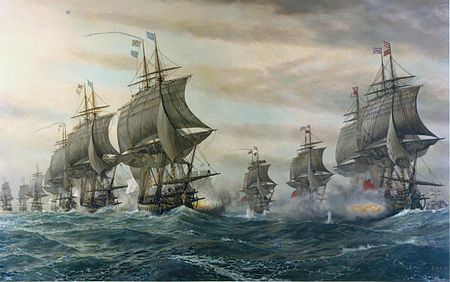
“Myrtille” is French for Blueberry. It is popular in some so-called patriotic circles to make snarky comments about France and the French, We call them “Frogs” and complain about rescuing them from their foreign exploits like Vietnam when they hold us to high moral standards on our adventures. The fact, however, is that the United …

Beer Recipe: Boston Tea Party IPA

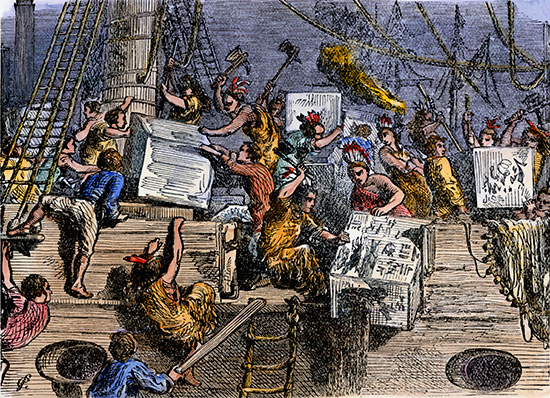
By 15 December, the Eleanor and the Beaver, also both laden with tea, arrive at Griffin’s Wharf. The law is clear: if the duty on the Dartmouth’s tea is not paid by 17 December, the customs officer is authorized to seize the ship and its cargo. The governor and the tea consignees, seeing a potential …

Beer Recipe: 3/5th Compromise Brown Ale

Are you a Constitutional Originalist? Do you hold that the US Constitution must be followed EXACTLY as the framers intended when they wrote it? Some in our country hold that the provisions in the US Constitution are perfect and complete guidelines for how our government should operate. These people clearly CANNOT READ! “I am not …

Basic Colonial Brewing: More on Decoctions

Brewers today have access to highly-modified malts.  We also have modern tools like thermometers which were prohibitively expensive luxuries not available to brewers in the 18th Century.  This means the process of extracting sugars from the grains through mashing were far less efficient in 1770 than they are today.  Decoction is a method to overcome …

Unfiltered Beer is Good for You!

For thousands of years beer served as food and medicine; it had antiseptic, anti-bacterial and anti-viral properties.  The health benefits of beer not only come from the grains and yeast but also the hops. Hops contain a flavonoid called xanthohumol that strongly suppresses CYP1A2 (suppressing is good), a liver enzyme that metabolizes various environmental procarcinogens …

To the Last Extremity – Spruce Ale

Americans love the idea of a last stand, a battle to the end.  We see this in the Battle of Bunker Hill, WE see this during the War of 1812 at both Fort McHenry and at Chalmette, Louisiana, we see this during the Texas Revolution at the Alamo, at the Little Big Horn, WWII’s during …

How was Colonial Beer Different

We recently held a brewing class at Fort Mifflin and one question was asked that deserves clarification in this blog: “How were beers of the 18th Century different from what we drink today?” I hope the table below adds some clarification. Colonial Beers vs Modern Beers:  Key Differences  Colonial BeerModern BeerMaltMixture of malted grains including …

Beer Recipe: Air and Exercise — Rattleskull

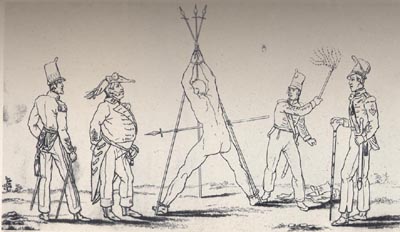
“Air and Exercise” = being whipped with a Cat-o-Nine-Tails. Prior to the arrival of Baron Friedrich Wilhelm von Steuben, American officers often imitated their British peers. In a rather startling example, George Washington once lobbied congress for permission to allow 500 lashes — “Air and Exercise”– as punishment to maintain discipline the Continental soldiers! Congress …

Basic Colonial Brewing #4 — Minding your “P’s” and “Q’s”

Which weighs more, a ton of lead or a tun of feathers?  Sounds absurd today but in the 18th Century this is actually a legitimate question.  How many feathers can you pack in a 256-gallon cask?  A lot more than 2000 pounds!  In Colonial America, minding your “P’s and Q’s” isn’t about etiquette, its about …