
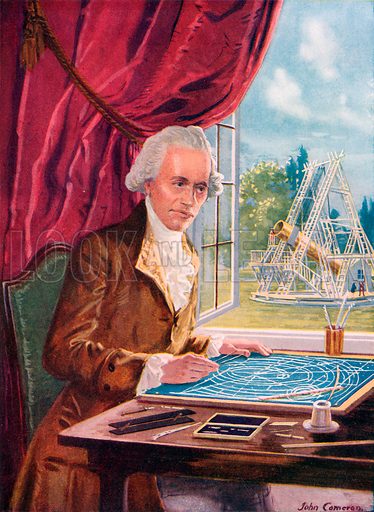
In the world of Living History there are three distinct impressions people tend to assume when presenting people from the past. When we act as a third-person interpreter, we are just demonstrating what life was like at the time we are portraying. In third person interpretation, we openly acknowledge that this is the 21st Century and we are here, in historical dress, to help the visitors relate to the history they have come to learn. This allows us to occasionally break character and speak of modern topics which the audience will understand, even when these would have been very foreign to the character we represent.[i] When we act as a first-person presenter, however, we assume the persona of the person we are presenting in its entirety and do not break character. The 21st Century does not exist. Obviously doing a first-person impression is hard.
Most of my personae are firmly a third-person impressions. This includes my 18th Century Brewer, soldier, and tradesmen presentations. I have, however, developed the following first-person personae where I strive to BECOME a specific person from history for an hour or so. I speak as they would and behave as if I only know what they would have known at the time. When I do these impressions, I do not allow myself to break character in front of visitors.[ii],[iii] These first-person impressions are:
- David Rittenhouse — As David Rittenhouse, I focus on the 1769 Transit of Venus as well as the founding of the US Mint. Occasionally, I will add in discussions of Rittenhouse as a member of Philadelphia’s Committee of Correspondence, as Second President of the American Philosophical Society, as a clock and instrument maker[iv], or discuss other salient topics in 18th Century science such as phlogiston or miasma. Doctor Rittenhouse will routinely run surveying parties, set up observatories, or give lectures. You can often find Dr. Rittenhouse working with Historic Philadelphia at Independence National Historical Park.
- David Franks — David Franks was a Loyalist who was well known in both business and social circles in Philadelphia. He was a member of the provincial assembly (1748); served in the quartermaster corps during the French and Indian War; and during the Revolutionary War he acted as an intermediary in the exchange of prisoners as well as an “agent to the contractors for victualing the troops of the King of Great Britain.” I portray David Franks not only to demonstrate that Jews were active participants in the Revolution (both sides) but also to highlight the difficulties everyday citizens of Pennsylvania faced when choosing which side of the war to support.
- Mordecai Sheftall — Mordecai Sheftall was the highest-ranking Jew in the Continental Army carrying the rank of colonel by 1780 (I portray him at the rank of Captain). Sheftall is suspected to have been one of the Jews who educated George Washington on the story of Channukah at Valley Forge in 1778. I portray Mordecai Sheftall not only to demonstrate that Jews were active participants in the Revolution (both sides) but also to highlight the difficulties Jews faced in a time when “freedom of religion” only really applied to Protestant Christians. Sheftall was able to achieve and hold political or military office at a time when most of these officials were required to swear Christian oaths (explicitly naming Jesus) to secure their rank or office.
- John Arnold – Seargent John Arnold of the 5th Pennsylvania Regiment was a member of George Washington’s elite bodyguard – the Life Guard – charged with protecting the headquarters as well as disseminating the teachings of General Fredrick von Steuben to the ranks of the Continental Army.
- Jonathan Gilford – Captain Gilford (HM 33rd, Retired) is a PURELY FICTIONAL character. He exists only in Thomas Fleming’s Liberty Tavern (1976), but I find the character a useful persona not just as a tavernkeeper (Yes, I can make you a grand ale flip!) but also as a good platform to discuss changing loyalties during the American Revolution and why the decision to support the Revolution, especially in New Jersey and Pennsylvania, was not always straightforward. Gilford is a supporter of republican ideals but also a former (medically disqualified) British soldier. He has conflicted loyalties and also sees the corruption war causes on both sides.
[i] For example, the Regimental Brewer (3rd Person persona) will discuss Plato and IBU of his beers with modern guests who are homebrewers even though these are 20th Century inventions.
[ii] The exception is, of course when safety or security risks are created by maintaining character. Don’t worry, if someone collapses, David Rittenhouse has miraculous knowledge of CPR and how to handle and AED or even call 911 on a mobile telephone.
[iii] When confronted with anachronisms (car horns and sirens, cameras and cellphone, etc.) I will dismiss these things as impossible or perhaps fantasy and pretend not to understand anachronistic things that visitors tell me (NASA, what is this NASA? A man cannot possibly climb up to the Moon).
[iv] Especially with regard to Princeton’s and University of Pennsylvania’s orreries.
 Michael Carver -- Historical Interpreter/Reenactor