Schnapps is a generic name for brandy and the best schnapps come from Austria. Often referred to as “Obstler” (the German word ‘Obst’ means fruit), Austria, Schnapps has its roots in the Roman Empire. The Ancient Romans brought the art of fruit cultivation to Austria where fruits could easily grow in the Alpine regions. Austria has the perfect blend of cold weather and sunshine to produce fruits high in acidity and aroma. Schnapps became popular for its medicinal qualities. With most undistilled water leading to illness, the Austrians began to convert fruits into alcohol as a means of avoiding the scourges of typhus, cholera and other waterborne diseases.
In the 18th century, distillation of Schnapps became widespread due to the invention of copper pot stills. These pots made the distillation process easy. During harvest season, people transport a communal mobile pot by horse and cart for households to share.
Marie Antoinette’s mother, Maria Theresa is also responsible for the increase in popularity of Schnapps in Austria. Seeing schnapps as a goldmine for tax revenue, the Empress legalized the production of up to 200 liters of distilled alcohol per household annually. Land-owning farmers were permitted to produce an additional 100 liters. Almost immediately Austrians began to make alcohol from their home-grown fruits and berries or those found growing in the wild.
The process of making Schnapps is very close to that of whiskey. However, there are a few differences in the two processes. After the fruits have been harvested, they are seeded and mashed. Some brewers do not wash the fruits as this takes away the natural yeast needed to ferment the fruits. Once the fruit mush starts to ferment, they add water to the mixture to make a slurry. This liquid is then moved to a closed vessel and left to ferment for 20 and 45 days before distilling. The distillation process is the same as whiskey and the final spirit is bottled and stored in a cool place to let the taste stabilize.
Popular schnapps varieties are:
- Obstwasser (fruit water) made from apples
- Zwetschgenwasser (plum water) made from plums
- Poire Williams (William’s pear) made with pears
- Kirschwasser (cherry water) made with cherries, and
- Marillenschnaps (apricot brandy) made with peaches or apricots.
Americans who drink schnapps typically mix their schnapps into cocktails but Austrians and Germans often straight in cordial or shot form. They commonly drink Schnapps before, during, or after a meal to help the stomach digest food. So, if you ate a little too much at dinner, it’s a good excuse to take a shot of Schnapps.
When toasting in Austria, it’s a tradition to make eye contact with your drinking buddy, then everyone in the round wishes each other “Prost”, which translates as “be healthy” or “Zum Wohl”, which translates as “be well.”
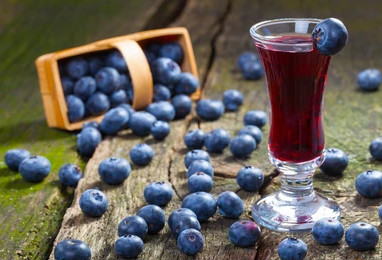
I have a bumper crop of blueberries this year so I am making a bit of Heidelbeerewasser or blueberry schnapps. Which is popular, of course in Heidelberg but also in Iceland.
Want to have the
Regimental Brewmeister
at your site or event?
You can hire me.
https://colonialbrewer.com/yes-you-can-hire-me-for-your-event-or-site/
 Michael Carver -- Historical Interpreter/Reenactor