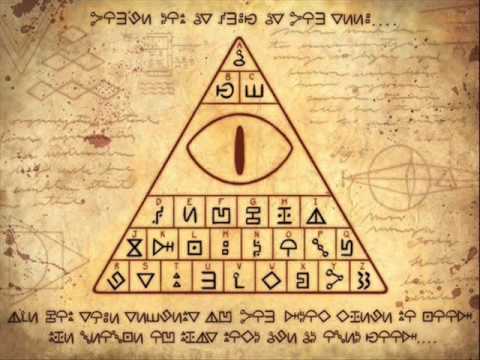
If you employ spies, it is very likely that your enemy also has spies. One very effective means of concealing the true conditions or plans in a sea of false options and making those false options more likely and more true. Today, we call this “fake news” but “fake news” isn’t something recently developed. It …
Monthly Archives: September 2023
Early Italian Divorce
In 1791, Wolfgang Amadeus Mozart was working on his requiem mass when he fell seriously ill. From his deathbed, Mozart declared, “I feel definitely that I will not last much longer; I am sure that I have been poisoned.” He went on to claim, “Someone has given me acqua tofana and calculated the precise time of my death.” Mozart …
UPCOMING EVENT
Colonial Brewing during Fall FestColonial Pennsylvania Plantation3900 N. Sandy Flash Drive Ridley Creek State Park Newtown Square, PA 19073September 30, 202311:00am – 4:00pm Okay, it looks like we will be soaked today but only showers tomorrow. The brewery is loaded up and soon to be on its way to Ridley Park. Tomorrow, I plan to …
Colonial Spymaster (#8) — Steganography
Steganography is the practice of concealing a message within another message. The advantage of steganography over cryptography alone is that the intended secret message does not attract attention to itself as an object of scrutiny. Plainly visible encrypted messages, no matter how unbreakable they are, arouse interest whereas, steganography both conceals the message and hides …
Historical Tidbits — Congress creates the United States Army

When reenacting or acting as a historical interpreter, its good to have a few historical dates and stories to share. This series will publish a few. September 29, 1789 – Congress created the United States Army. Following the Revolution, the Continental Army was disbanded. This act of Congress under the US Constitution created a permanent …
Continue reading “Historical Tidbits — Congress creates the United States Army”
Colonial Spymaster (#7) — How the Culper Ring Relayed Information from New York to Washington
The Culper Ring developed a complex method of gathering and relaying information to General George Washington. Below is the sequence of steps the Ring would take to gather and relay the valuable information. (The process of replaying information has many different variations due to its complexity and secrecy.) Abraham Woodhull (Samuel Culper) would visit his …
Colonial Spymaster (#6) — The Culper Ring and its Codes
Benjamin Tallmadge established a small group of trustworthy men and women from his hometown of Setauket, Long Island. Known as the Culper Spy Ring, Tallmadge’s homegrown network would become the most effective of any intelligence-gathering operation on either side during the Revolutionary War. Tallmadge recruited his childhood friend, the farmer Abraham Woodhull, and Caleb Brewster, …
Continue reading “Colonial Spymaster (#6) — The Culper Ring and its Codes”
Historical Tidbits — British take possession of Philadelphia
When reenacting or acting as a historical interpreter, its good to have a few historical dates and stories to share. This series will publish a few. September 27, 1777 British take possession of Philadelphia During the summer of 1777, the British army began an initiative to capture the colonial capitol of Philadelphia. British General Howe …
Continue reading “Historical Tidbits — British take possession of Philadelphia”
Colonial Spymaster (#5) — Pigpen Cypher
The Pigpen Cipher is another example of a substitution cipher, but rather than replacing each letter with another letter, the letters are replaced by symbols. The cipher has an interesting history: although its true origins are unknown, it has been used by many groups. Most notoriously, it was the cipher of choice for use by …
Samuel Adams was born on September 27, 1722
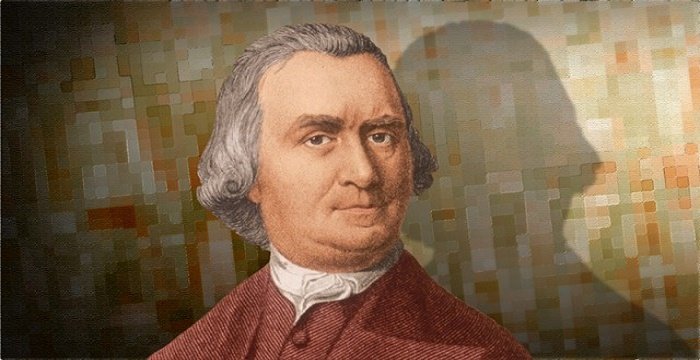
On September 27, 1722, Samuel Adams was born to Samuel Adams, Sr. and Mary (Fifield) Adams. Samuel was one of twelve children only three of whom survived past their 3rd birthday. Adams went on to attend Harvard College where he graduated in 1740 and after several failed attempts to make a career as a lawyer, …
Continue reading “Samuel Adams was born on September 27, 1722”
 Michael Carver -- Historical Interpreter/Reenactor