
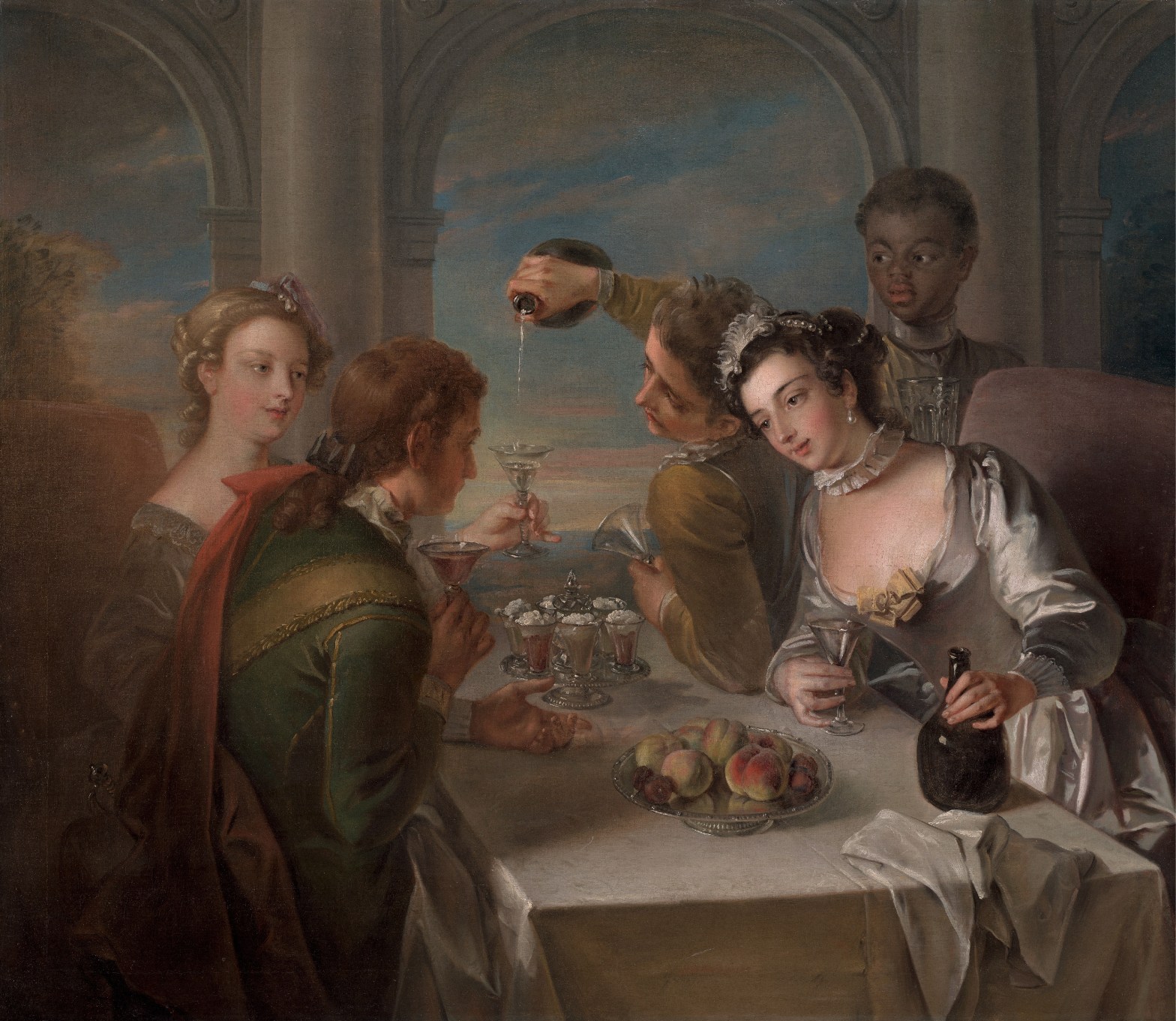
Syllabub was a very common dessert in the 17th, 18th, and 19th centuries. Originally milk was sweetened and mixed with cider, sweet fortified beer, or sherry then left to curdle. It could be served hot or cold and was more or less stable for about a week after it was made so it was a solid staple in many social circles.
Bub, an Elizabethan slang word meaning a bubbling drink, and Sille is French from Champagne, a region of France best known for its bubbly wine. The word syllabub literally means bubbly drink or more particularly wine mixed with a frothy cream and the frothier the better. The drink originated from something called a Hatted Kit which was made by spraying milk directly from the cow’s udder (which has a natural froth) into the wine. Charles II was fond of Hatted Kit that he kept cows at the palace in case he got a hankering for some syllabub. He was known to walk up to one of his cows and squirt some milk into his flagon of wine, sack or cider.
To make a Syllabub under the cow
Put a bottle of strong beer and a pint of cider into a punch bowl, grate in a small nutmeg and sweeten it to your taste. Then milk as much milk from the cow as will make a strong froth and the ale look clear. Let it stand an hour, then strew over it a few currants well washed, picked, and plumped before the fire. Then send it to the table.”
— Elizabeth Raffald — The Experienced English Housewife, ’s 1769
By the 18th Century, syllabub had matured to a more sophisticated dessert. We no longer just walk up to the cow and squirt some milk in our wine. Syllabub is an elaborate dessert with its own presentation. This is a must have in many formal dining situations with special glasses and salvers (trays) expertly fashioned to showcase this delicacy with dainty stemmed glass which shows off bottom layer of wine and the creamy frothy top. The drink is served with a spoon and a sort of straw so that diners are to enjoy the cream layer and the sweet wine.
Modern Syllabub recipes:
Fortified Syllabub
- 8 tbs sweet or dessert wine
- 2 tbs brandy
- pared rind of one lemon
- 60g (2 oz) sugar
- 300ml (½ pint) double cream
- freshly grated nutmeg
The day before you want to serve the syllabub, mix the wine and brandy in a bowl, add the lemon peel and steep overnight. The next day, strain the wine into a large bowl and stir in the sugar until dissolved. Pour in the cream and whisk until thick. Be careful not to over-whip the cream. Spoon into glasses and scatter a few rasping of nutmeg over them.
A modern interpretation of Eliza Smith’s Syllabub:
Take a quart and a half a pint of cream, a pint of Rhenish, half a pint of sack, three lemons, near a pound of double refined sugar; beat and sift the sugar, and put it to your cream; grate off the rind of your three lemons, and put that in; squeeze the juice of the three lemons into your wine and put that to your cream, then beat altogether with a whisk just half an hour; then take it up altogether with a spoon and fill your glasses; it will keep good nine or ten days, and is best three or four days old; these are called the everlasting Syllabubs.
Eliza Smith — The Complete Housewife, 1753
- 3 cups of heavy whipping cream
- 1 cup white wine (Rhine Wine or a Chablis)
- ½ cup Golden Sherry
- 1 ½ lemons (juice and peel)
- 1/4-1/2 cup sugar
In a large mixing bowl, grate the lemon peel and juice the lemons. Add the wine and sherry to the lemons, then add sugar and whisk until sugar is dissolved. Add the cream all at once and whisk until it is light and frothy or to a peaking consistency. Gently fill your glasses. The mixture will separate in about two to three hours at room temperature. Once separated, they can be put into the refrigerator until consumed. If they go directly into the refrigerator, they will take six to eight hours to separate.
Whipped Syllabub
Take a quart of thick cream, and half a pint of sack, the juice of two Seville oranges or lemons, grate the peel of the two lemons, half a pound of double refined sugar, pour it into a broad earthen pan, and whisk it well; but first sweeten some red wine or sack, and fill your glasses as full as you choose, then as the froth rises take it off with a spoon, and lay it on sieve to drain; then lay it carefully into your glasses till they are as full as they will hold: do not make these long before you use them. Many use cyder sweetened, or any wine you please, or lemon or orange whey made thus: squeeze the juice of a lemon, or orange into a quarter of a pint of milk, when the curd is hard, pour the whey clear off, and sweeten it to your palate; you may color some with the juice of spinage, some with saffron, and some with cochineal just as you fancy.
Hannah Glasse — The Art of Cookery Made Plain and Easy, 1796
- 2 cups of heavy whipping cream
- 1 cup of Golden Sherry
- 1 lemon (juice and peel)
- ½ cup sugar
- Red wine, sweetened if necessary
In a large mixing bowl, grate the peel and juice the lemon. Add sherry, sugar and cream. Whip this mixture with a whisk until soft to firm peaks form. Dollop the whipped mixture into a sieve, screen, or strainer over a bowl, and allow to set for two hours. Fill your glasses three fourths full with the drained wine/juice mixture or the sweetened red wine. Gently spoon the mounds of strained cream on the glasses to top them off.
Non-alcoholic Syllabub:
One pint of cream, half a pint of wine, the juice and grated peel of one lemon, sweetened to your taste; put it in a wide mouthed bottle, shake it for ten minutes, then pour it into your glasses. It must be made the evening before it is to be used.
-RUTLEDGE, SARAH. “THE CAROLINA HOUSEWIFE,” 1847.
Grate the lemon peel, juice the lemon, measure the cream and the apple juice. Place all in a large plastic container with a screw top. Ensure the top is on firmly and does not leak. Pick up the container and shake until the sound changes from sloshing to muffled. Open the container and taste for sweetness. Depending on the taste and varieties of apple juice, little or no sugar may be added. Fill your glasses and let them sit until separated. Serve room temperature or chilled.
Want to have the
Regimental Brewmeister
at your site or event?
You can hire me.
https://colonialbrewer.com/yes-you-can-hire-me-for-your-event-or-site/
 Michael Carver -- Historical Interpreter/Reenactor