Historical Tidbits — Nathanial Hale is executed as a spy

When reenacting or acting as a historical interpreter, its good to have a few historical dates and stories to share. This series will publish a few. September 22, 1776 – Nathanial Hale is executed as a spy on Long Island without trial.  “My only regret is that I have but one life to give to …

Historical Tidbits — Great Fire of New York

When reenacting or acting as a historical interpreter, its good to have a few historical dates and stories to share. This series will publish a few. September 21, 1776 — Great Fire of New York erupted destroying 10 to 25 percent of buildings in the city.  The British Army accused revolutionaries of deliberately setting the …

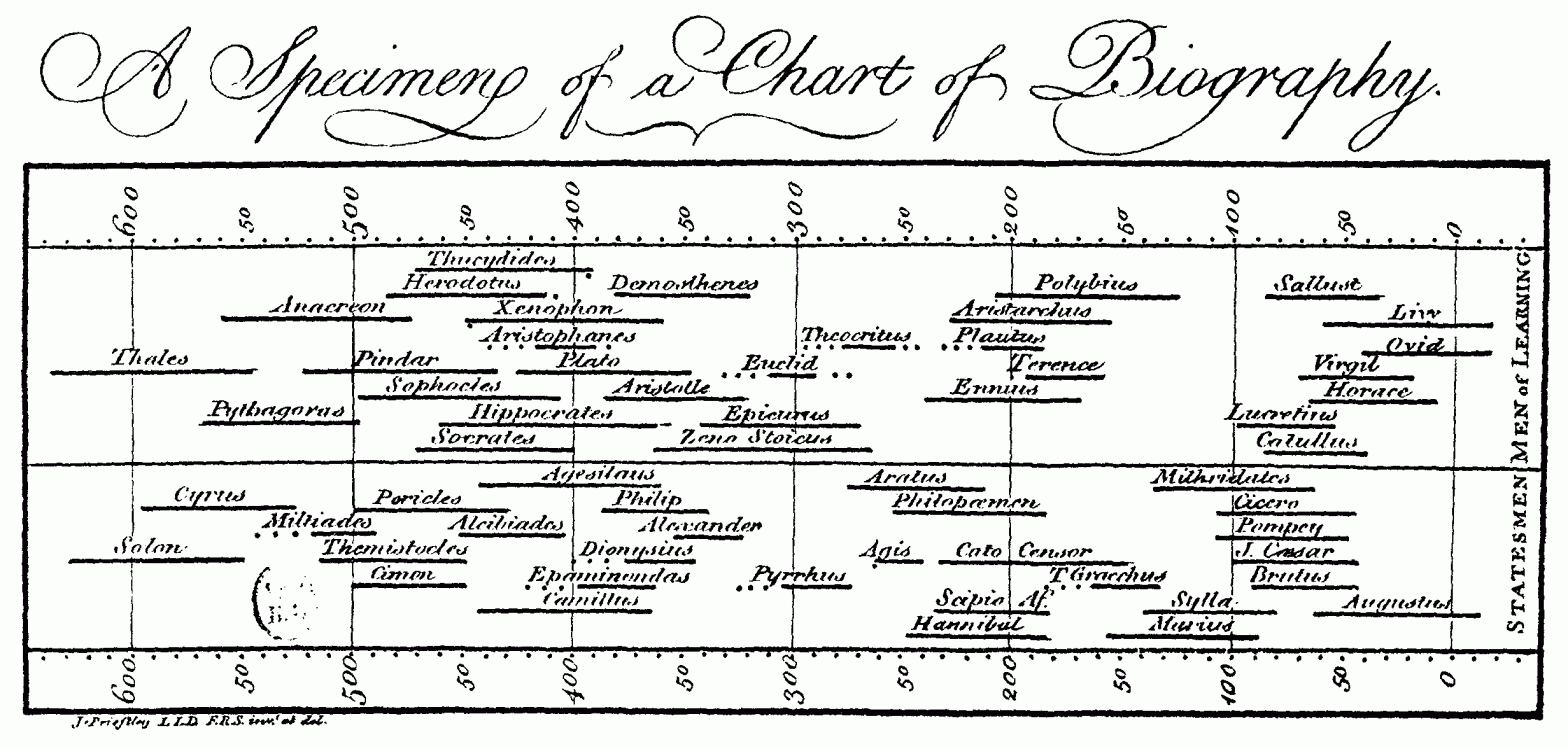
Joseph Priestley Invented Timeline Charts in 1765

Joseph Priestley, as you will no doubt remember, was a theologian, and a chemist best known for his pioneering work isolating elements such as oxygen.  Chemist are accustomed to working with things you cannot readily see (atoms and molecules, energy, electron states, etc.).  It was only natural that when Priestly was teaching history at the …

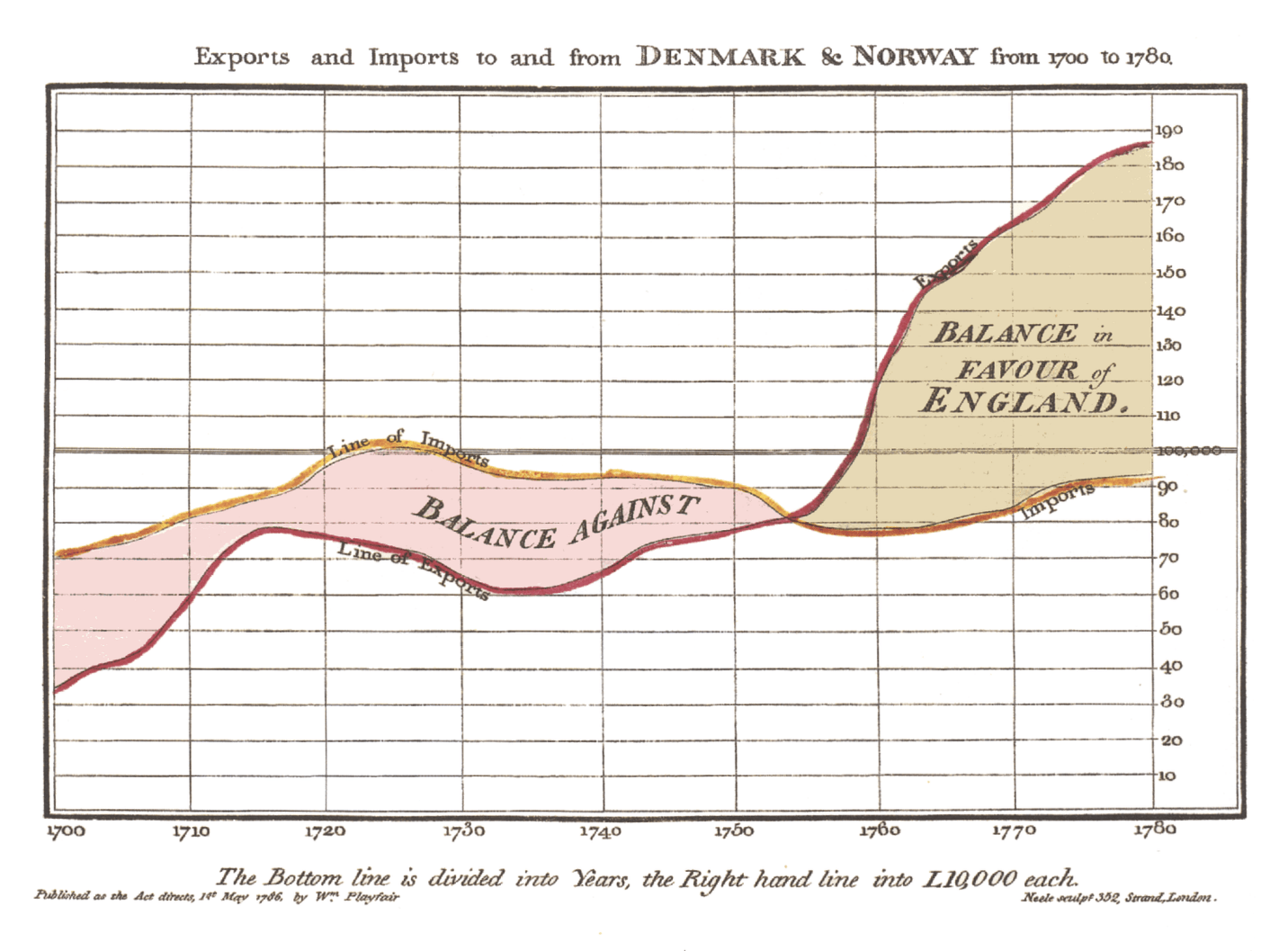
William Playfair Changed the Way We Look at Facts and Figures in 1786

The bar chart, the pie chart, and the line graph were invented by a man who was, himself, something of a statistical outlier.  William Playfair was a boundary-thwarting, Enlightenment-era, near-criminal rascal and 18th century academics actually looked down their noses at anything that resembled a picture arguing that “Readers were accustomed to persuasion by rhetorical …

Historical Tidbits — PAOLI MASSACRE

When reenacting or acting as a historical interpreter, its good to have a few historical dates and stories to share. This series will publish a few. September 20, 1777 – PAOLI MASSACRE:  Major General Charles Grey launched a surprise attack on General Anthony Wayne’s camp, near the General Paoli Tavern.  To ensure that the Americans …

Why is it called “giving a toast?”  — Where’s the bread?

Toasting is an ancient tradition which connotes celebration and good times. Today toasting remains an important practice in many cultures around the world. But why do we call it a toast?  How exactly does the word “toast,” as in dry bread, figure into festive drinking? Well, it turns out dunking literal pieces of toast into …

Making Whiskey

Whiskey’s origin lies somewhere between 1,000 and 1,200 AD when traveling monks migrating across Europe, introduced the distillation practice into Scotland and Ireland.  Because of the lack of vineyards in these countries, the monasteries turned to fermenting grain mashes and then distilling them into whiskey.  For the next 400 years, whiskey spread throughout the Celtic countries.  …

There has always been a loophole for the elite.

Okay, I have been on a 21st Amendment stream today and this is clearly NOT an 18thg Century topic but it is germane to the Regimental Brewmeister because after the MAGA folks have outlawed abortion and reading, their next targets will be marijuana and alcohol.  So, toughen up your self-publishing, weed growing, and brewing skills …

Why did I learn to make beer, wine, and distilled spirits?

People come up to me constantly with this question: “How did you learn to brew?”  The short answer – at home – is trivial.  The question I want answer is “why did I learn to brew/distill/make wine?”  Even though I was born decades after its repeal, I learned to brew as a direct result of …

“Colonials were a despicable people — hardly worthy to call themselves the king’s subjects.”

The French and Indian War gave many British aristocrats their first view into what their American colonists were like. They were not impressed! War thrust people of diverse backgrounds and views into close contact, the French and Indian War was no exception.  Britons and Americans learned first-hand that many of the commonalities that they believed …