
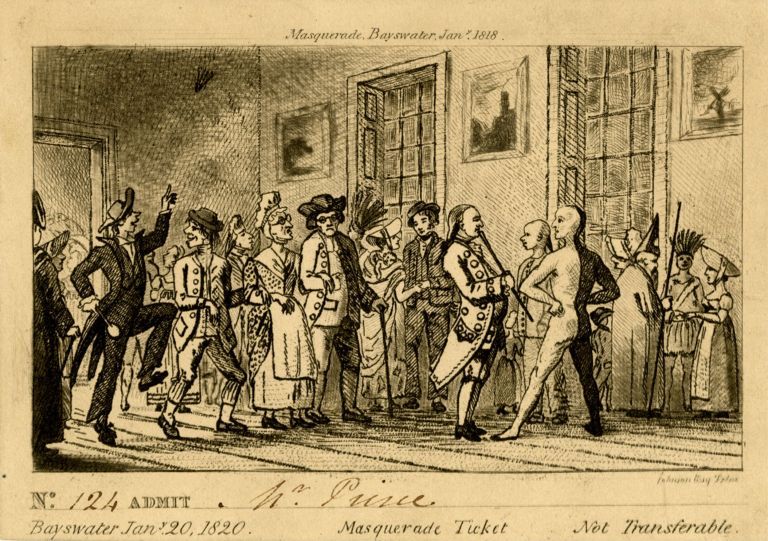
COLONIAL WINTER MASQUERADE
Saturday, January 27, 2024
from 5 PM to 9 PM
Kings Mills
6000 Pennell Rd
Media, PA 19063
From the Italian, a Masquerade is an assembly of persons wearing masks and usually other disguises, the word evolved from Arabic maskharah “buffoon, to make a mockery of.” Dating back to the 14th and 15th centuries, masquerade balls began as part of Europe’s carnival season. Villagers would gather in masks and costumes to take part in elaborate pageants and glamorous processions. The idea of these parties quickly spread with the most notorious balls being held to celebrate grand occasions like the welcoming of kings and queens into their cities. Tied with the Christian Carnival celebrations, these balls were rife with decadence, gluttony and a large amount of lust.
Today, masquerades are most commonly seen at Mardis Gras in New Orleans or in Carnival celebrations in Catholic parts of Europe and Brazil. During the Middle Ages, however, the church would allow the observation of the Carnival season nearly everywhere. This was the last chance for the pious to indulge in all the food and wine before fasting for Lent. People held parades, wore masks, and danced in the streets. All social restrictions were cast aside and the poor were able to mingle with the wealthy. Carnival is derived from the Latin carne vale meaning “farewell to meat” and is the last great feast before the Lenten season of privations. In addition to giving up meat, people were expected to abstain from “unholy” acts during Lent. As a result, trysts with masked strangers during Carnival were permitted to put these desires to rest. Masquerade balls evolved out of these adopted traditions. Men and women usually wore exaggerated and colorful outfits. They also wore masks, often adorned by feathers or jester bells.
Masquerade balls became popular in 18th Century England after John James Heidegger impressed King George II with his operas. Heidegger brought costumes from Venetian balls to public dances in gardens across London and used masquerades as a way to promote high fashion to the public transforming the debauchery of medieval Carnival to a much more refined and extravagant affair. In the English version of masquerade, all the revelers would unmask at the end of the night so the whole party became a game for guests to figure out each other’s identities.
Despite the popularity and glamour of masquerades, they were seen by some as immoral, scandalous and unpatriotic. The Bishop of London, Edward Gibson, preached sermons against them and respected artists and novelists such as William Hogarth, Henry Fielding and Samuel Richardson wrote in condemnation of them. What really sent critics into a panic was the idea of disguise. Within the walls of the masquerade, the formal conventions of polite eighteenth-century society were suspended. While in costume, with a mask to hide your true identity, it was possible to step into another world for a few hours, where aristocrats played at being chimneysweeps and shepherds; men dressed as women and vice versa; prostitutes disguised themselves as nuns, and Englishmen became Ottoman Turks in robes and turbans. Moralists worried that societal norms, social hierarchy, gender roles and so on would be corrupted and compromised. By the 19th Century, these “party poopers” won out. While ‘fancy dress balls’ remained a form of fashionable entertainment throughout the nineteenth century, the costumes and masks were discarded in favor of tuxedos and ball gowns. These respectable and harmless affairs were tame when compared with the risqué, dramatic masquerades of a hundred years before. EXCEPT in Rio de Janeiro, New Orleans, and the Low Countries where Carnival still reigns and the masquerade is part of the national identity.
Come join the Admiral of the Blue Apron as I act as master of ceremonies for Colonial Pennsylvania Plantation’s COLONIAL WINTER MASQUERADE on Saturday, January 27, 2024 from 5 PM to 9 PM at Kings Mills (6000 Pennell Rd, Media, PA 19063). We will be having a traditional 18th Century Masquerade and an evening of great food and drink, colonial music and dancing, colonial games, a silent auction and much more! Support the plantation and spend a wonderful night of winter fun!
Get Tickets Here!
Want to have the
Regimental Brewmeister
at your site or event?
You can hire me.
https://colonialbrewer.com/yes-you-can-hire-me-for-your-event-or-site/
 Michael Carver -- Historical Interpreter/Reenactor