In 1978, the province of Quebec added “Je me souviens” to their automobile license plates. For those of you who are language challenged, this Translates simply as “I remember.” Most of us have seen a car from Quebec with their blue and white license plates but have you ever wondered what exactly it is that they remember – perhaps where they parked? Well, the phrase is tied to Quebec’s 18th Century take over by the British and since the Quebec Act was clearly one of the causes of the American Revolution, we SHOULD care. Here’s the story behind the official motto of Quebec.
Quebec’s original motto was “la belle province” and it is a beautiful place. But in 1883, they changed that motto to “Je me souviens”, and of course, when it became fashionable for license plates to sport a motto, they added it to the auto tags.
The originator of the motto was Étienne-Paschal Taché in 1837 and this motto is set in stone on the houses of the Québécois Parliament. The phrase comes from a poem penned by his granddaughter Helene Paquet:
Je me souviens I remember,
Que né sous le lys, that born under the lily
Je croîs sous la rose. I grow under the rose
The lily and the rose are the floral emblems of the kingdoms of France and England and here is the point to remember. The 1763 Treaty of Paris ceded “New France” to the British who renamed the territory “Quebec.” Although many British people hoped the French Canadians would be assimilated this was not the case as distinct rules of governance for Quebec were set out in the Quebec Act such as allowing the French Canadians to retain their Catholic religion and their French system of civil law. The Quebec Act became one of the Intolerable Acts that infuriated the thirteen British colonies in what would become the United States of America[i].
Following its defeat in the Seven Years’ War, France ceded the American colony of New France, specifically Canada, to Britain in order to retain it dominion over the islands of Guadeloupe and Martinique and their valuable sugar production. The British renamed this territory Quebec after its capital city. Canadiens who chose not to leave became British subjects but these subjects under British Law were not able to serve in public offices as they were required to swear an oath to the King that contained specific provisions rejecting the Catholic faith. This created a huge problem for the military governor as many of the predominantly Roman Catholic Canadiens were unwilling to take such an oath. As a compromise necessary to retain order within the province and to secure the allegiance of the approximately 90,000 Canadiens now living under the British crown. Early Royal Governors (James Murray and Guy Carleton) struggled to maintain English Law and the vast majority of Canadians continued to speak French in all affairs causing huge problems for the courts. In 1770, Carlton petitioned Parliament to remove the reference to the Protestant faith from the oath of allegiance, guaranteed free practice of Catholicism, and restore a modified version of the use of the French civil law for matters of private law (English Law remained in effect for all government and criminal affairs). The Quebec Act (1774) granted these requests. In Quebec, English-speaking Canadians as well as British subjects in the colonies that would later become the United States fiercely objected to this act. French-speaking Canadians varied in their reaction, although the land-owning seigneurs and ecclesiastics were generally happy with its provisions.
Its cliché but culture always supersedes policy. Despite all efforts by Britian to assimilate Canada into “English Society” Quebec’s identity remained, and endures to this day, and firmly FRENCH. So, when a new Quebec Parliament building was erected, Taché had the coat of arms that adorned the main entrance[ii] , emblazoned with Je me souviens.
Quebecois never intend to give up their French identity or that culture to be eroded. The motto is often associated Parti Québecois, the province’s most vocally separatist party. It is the justification for the Charter of the French Language (Bill 101) became law, making French the official language of the region, and its is one of the many reasons why visitors to the region would be advised to learn a bit of French even though most of the urban residents are fluent in both English and French. French Canadians have a long memory and are not willing to allow someone to take their country away from them — EVER!
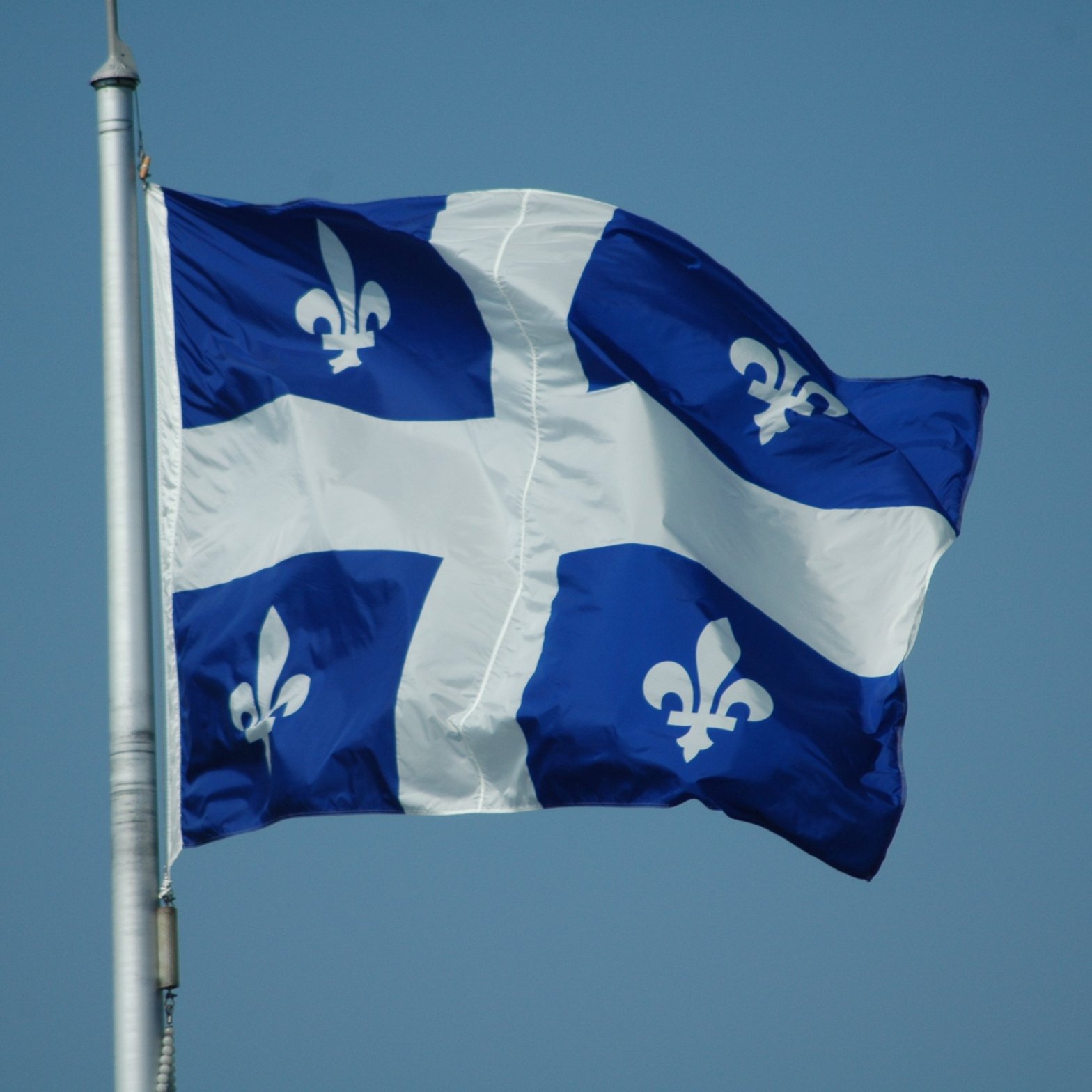
Perhaps in these trying times when criminals are running for public office, we should learn from their example and not forget who we are and what we stand for even if the enemy prevails. I might have to break out my Quebec flag for events where those damn treasonous MAGA hats show up. I can’t shoot them (well I could but there are consequences) but I can let the middle finger of the Fleur-de-lis let them know what I think of them.
[i] Even the Declaration of Independence makes reference to the Quebec Act as – “For abolishing the free System of English Laws in a neighboring Province, establishing therein an Arbitrary government, and enlarging its Boundaries so as to render it at once an example and fit instrument for introducing the same absolute rule into these Colonies”
[ii] Ironically a gift from Queen Victoria
Want to have the
Regimental Brewmeister
at your site or event?
You can hire me.
https://colonialbrewer.com/yes-you-can-hire-me-for-your-event-or-site/
 Michael Carver -- Historical Interpreter/Reenactor