
“Mama always told me not to look into the eyes of the sun;
But mama, … that’s where the fun is.”[i]
What fun? Well on April 8 at 15:23 EDT the sun will disappear from the sky (well in Philly, 80% but that’s amazing!). Mama warns us to never to look directly at the sun because they say it will blind you (hence “Blinded by the Light”) and its true that even a quick glimpse of the sun is usually painful and difficult, so our natural instinct is to immediately squint and turn away. But what if you want to watch the fun?
Well don’t look directly at the sun, especially with a telescope as this can lead to solar retinopathy, a condition where the intense UV light literally burns a hole in the retinal tissues. It destroys the rods and cones of the retina and can create small blind spots. What’s worse is that because the retina does not have any pain-receptors, so you won’t feel the damage being done. It’s often not until several hours (or even days) later, when people find their eyes hurt, their vision is blurred or that dark or yellow spots are affecting their sight that they realize damage has occurred. So heed mama’s advice and “never look into the eyes of the sun.” There are simple and safe ways to watch the solar eclipse.
We are arranging to have solar filters for people at Rittenhouse Town this year. These special glasses are EXTREMELY dark and filter out 95% of the sunlight and all of the UVA/UVB radiation. With these you CAN “look into the eyes of the sun” but only for short periods of time. The problem with filters is that as the eclipse progresses, it will get darker. As it gets darker, your pupils dilate to let in more light and then… the eclipse begins to wane and you are staring into the bright ball of the sun. So, you can use these but that is not the method Dr Rittenhouse will be using.

Another great method is to observe the eclipse INDIRECTLY. This allows us to use our telescope and get a bigger image. We will be projecting an image onto a piece of paper using the telescope. To do this, we place a white card about a foot or two behind the eyepiece of a telescope on a tripod. The card must be shaded from direct sunlight so that the image of the sun is clear. Small telescopes such as the one we are using are especially suited to the solar-projection method and this is, of course, the same method Dr Rittenhouse’s team used to watch the Transit of Venus in 1769 as a surprising amount of detail on the solar surface can be seen, including sunspots and flares (even when there is no eclipse). Since we are not looking directly into the sun, as the eclipse wanes, our eyes are not directly exposed to the burst of UV radiation even though our pupils will dilate.

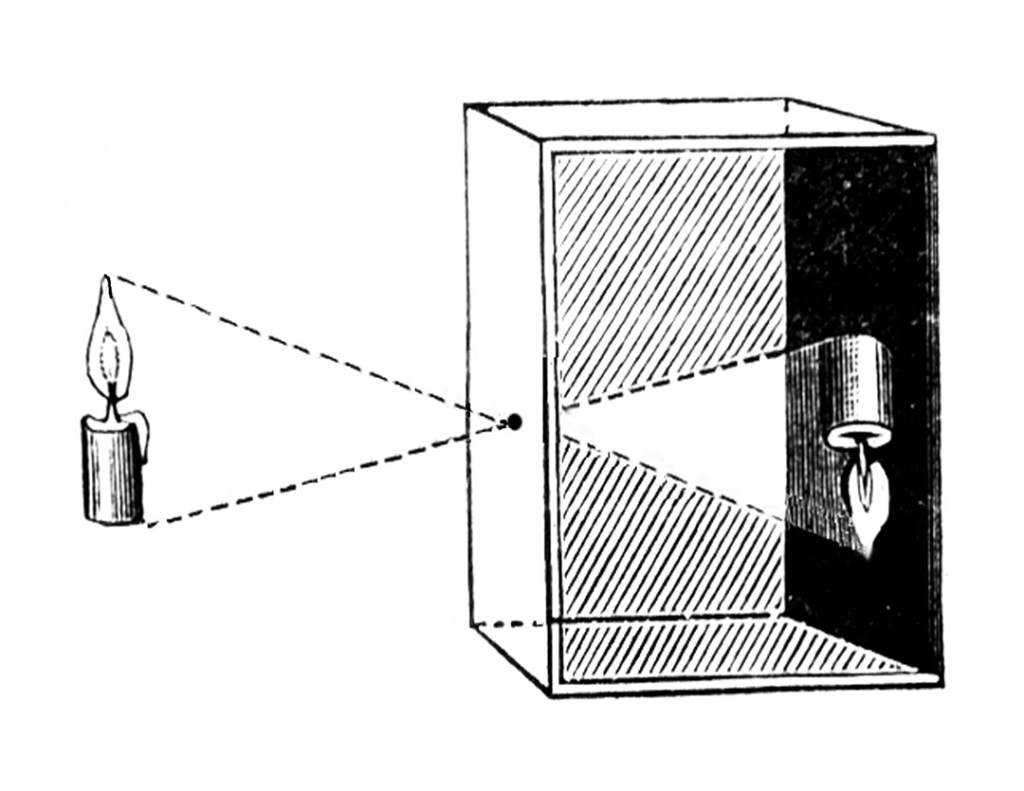
Another great way to view the eclipse indirectly is to use a simple pinhole camera. This simple device allows you to view the eclipse indirectly by casting a shadow of the sun onto another surface in much the same way our telescope will project the sun but with less magnification. A pinhole camera is a simple camera without a lens but with a tiny aperture (the so-called pinhole) over a light-proof box. Light passes through the aperture and projects an inverted image on the opposite side of the box. The size of the images depends on the distance between the object and the pinhole.
So be careful but be inquisitive and come out and watch this once in a lifetime event. With the proper precautions we can prevent the “very unpleasin’, sneezin’ and wheezin’” and assure go-kart Mozart that its “safe to go outside.”
[i] Manfield Mann Earth Band; “Blinded by the Light”, written by Bruce Springsteen in 1973
Want to have the
Regimental Brewmeister
at your site or event?
You can hire me.
https://colonialbrewer.com/yes-you-can-hire-me-for-your-event-or-site/
 Michael Carver -- Historical Interpreter/Reenactor