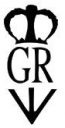
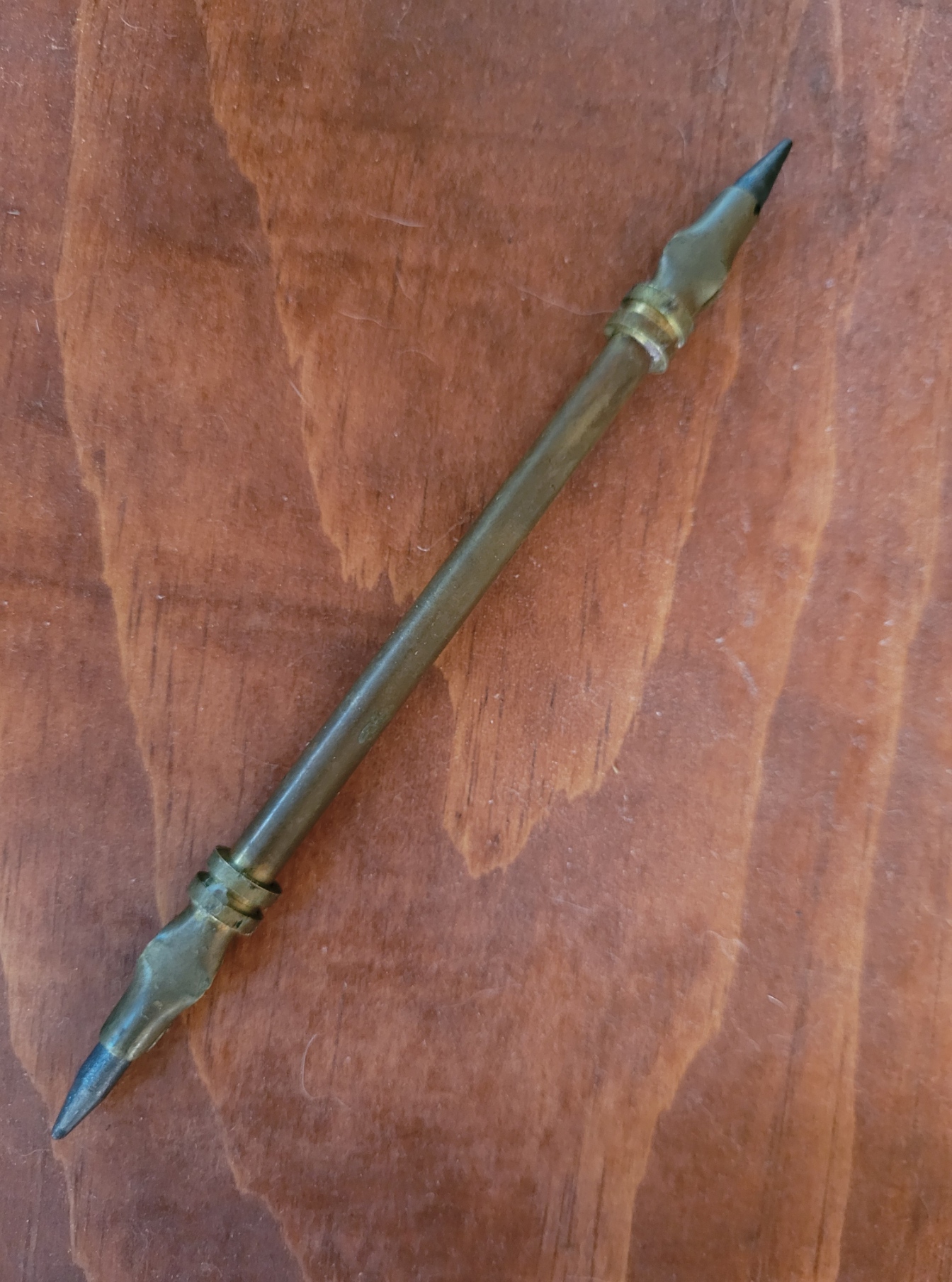
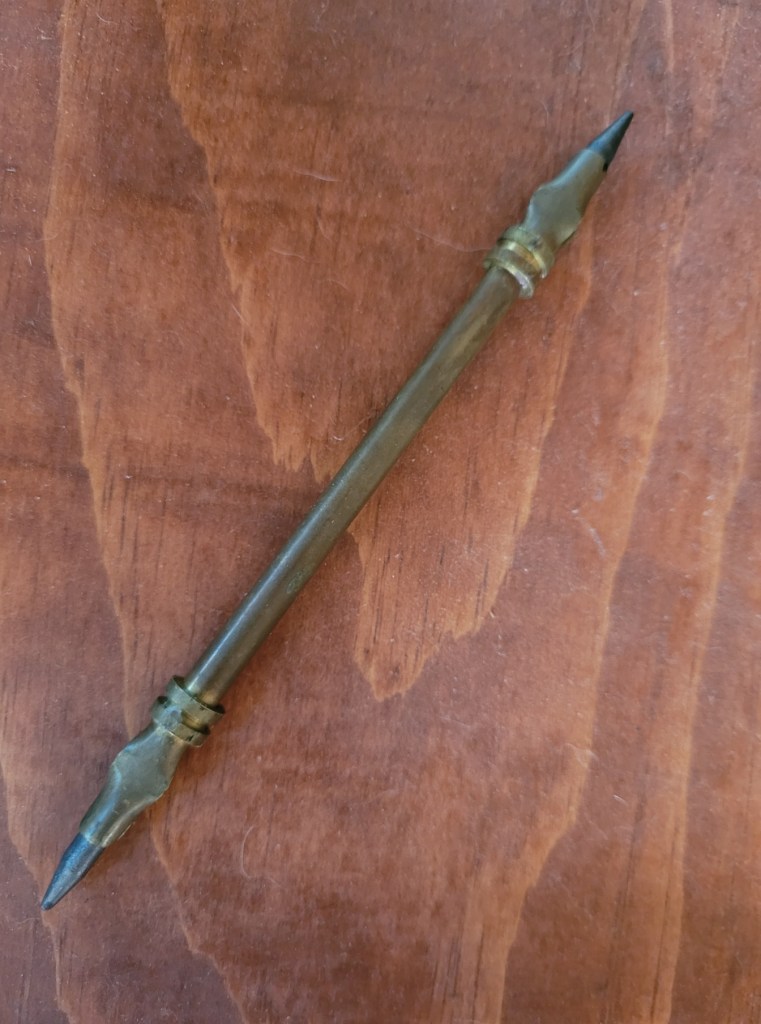
People began using pencils in Europe in the early 17th century. Graphite was discovered in England’s Lake District and it was soon discovered that this mineral made marks on paper and other surfaces that could be easily rubbed away. Early pencils were often a bit of graphite held in some sort of holder that allowed the writer to use it like a quill.
The eraser didn’t show up until the 1770s. Before we had rubber erasers most people used a bit of bread to rub out pencil marks. To erase your mistakes, you would wad up a small piece of bread and moisten it ever so slightly. This made a slightly abrasive dough that erased pencil marks on paper. In 1770, English chemist Joseph Priestly (best known for discovering oxygen) wrote about “a substance excellently adapted to the purpose of wiping from paper the marks of a black lead pencil.” This substance, known as caoutchouc, was so perfect for rubbing out pencil marks that it soon became known simply as “rubber.” In the Proceedings of the French Academy of Sciences, Priestly reported a suggestion for using caoutchouc, a vegetable gum produced by certain South American trees, to erase black lead marks.
The next major milestone in pencil creation came in 1858 when Hymen L. Lipman of Philadelphia developed a method for sheathing a piece of graphite as a lead core in a wooden dowel. He then went on to attach an eraser plug to the end of a finished pencil creating what we all know and love as the modern pencil.
Want to have the
Regimental Brewmeister
at your site or event?
You can hire me.
https://colonialbrewer.com/yes-you-can-hire-me-for-your-event-or-site/
 Michael Carver -- Historical Interpreter/Reenactor