

When reenacting or acting as a historical interpreter, it’s good to have a few historical dates and stories to share. This series will publish a few.
October 7, 1763 — Royal Proclamation of 1763, issued by King George III, forbade all settlement west of a line drawn along the Appalachian Mountains, which was delineated as an Indian Reserve.
Battle of Fishing Creek — August 18, 1780
One of the most lopsided defeats for the Americans in the War for Independence came in 1780 in South Carolina at the Battle of Fishing Creek. At dawn, when it was clear that the British were forming ranks to attack, Maryland and Delaware regiments received orders from Gen. Horatio Gates to stop them. The Americans engaged in musket fire so intensely that the smoke obscured the battlefield as the morning mist over the swamp prevented the smoke from rising. It was now difficult to see the effect of a very heavy and well-supported fire on both sides but when the British could see well enough to move, they rushed forward with their bayonets. Gates ordered the Virginia militia to answer with their bayonets, but the sight of the steel ends of the enemy’s weapons, pointed at them from ranks moving shoulder to shoulder and firing as they advanced, threw the whole body of militia into such a panic, that they generally threw down their loaded arms and fled.
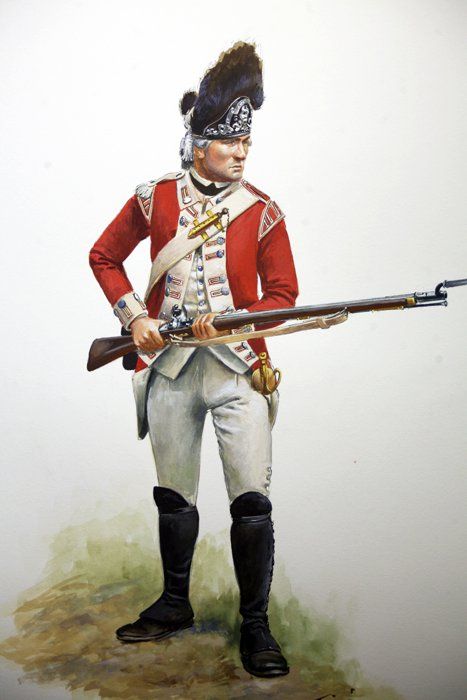
Those Continentals and North Carolina militia, who were prepared to stand and engage with the enemy, heard a loud roar and observed his countrymen fleeing pell mell. Firing upon the British, they were astonished to see that the enemy continued to maneuver. They soon fled too.
The British quickly cleared the battlefield on one side of the road, but the Continentals continued to hold the other side and put up a strong resistance. Some of the Marylanders had straddled the road and actually moved to stem the tide of the fleeing militia. With the desertion of the militia, the six hundred Continentals left to fight now faced three thousand redcoats.
Next came the cavalry, who were initially stationed in the rear, but now came sweeping around to the left and hit the Continentals from behind. Now even the Delaware and Maryland soldiers attempted to flee. In little more than an hour, some nine hundred men in Gates’s army had been either killed or wounded, with a thousand captured. Over the next two days the British continued to harry the retreating Americans eventually taking all of the American supply train including eight hundred horses, two three pounders cannon, two ammunition wagons, one thousand muskets, and forty-four wagons loaded with baggage, rum, and other stores.
Within a week, the British were back at Camden, and the garrison there was now stronger by far than it had been before. New of General Gates panicked flee were published in The Royal Gazette, the loyalist newspaper in New York, and in the London Times as a ‘perfect victory’ for his Majesty’s cause.
Want to have the
Regimental Brewmeister
at your site or event?
You can hire me.
https://colonialbrewer.com/yes-you-can-hire-me-for-your-event-or-site/
 Michael Carver -- Historical Interpreter/Reenactor