
In Francis Grose’s A Classical Dictionary of the Vulgar Tongue, first published in 1785, I found an entry that I have adopted as the moniker for my tavern impression — The Admiral of the Blue Apron. The ADMIRAL OF THE BLUE, is a publican wearing a blue apron, as was formerly the custom among gentlemen of that vocation. My personae in these taverns is that of a retired military man, an army captain, who has HOISTED THE BLUE FLAG after leaving the service to create an Ordinary for his comrades.
The ordinary tavern sponsored games and other entertainments as well as provided overnight lodging along with food and drink. In some towns, the courts met in a room at the tavern; in many ordinaries, the merchants conducted their business and shared the latest news from home and abroad. The tavern’s significance in the founding era of our nation related to another main attraction: joining comrades and sometimes opponents in political discourse and debate.
“To drink at a table without drinking to the health of someone special, should be considered drinking on the sly, and as an act of incivility.”
– Poor Richard
Outside the church, the tavern was the most important institution in most towns. Taverns were used as meeting places for political assemblies (like the militia or the courts). When people needed to conduct business meetings or hold markets, their choices were generally the church or the tavern. Since the Colonial Legislatures often offered inducements to tavern owners, they saw these businesses as “operating for the common good,” which ultimately meant that tavern meeting rooms could be appropriated for government business like courts, polls, and meetings of the militia. People relied on taverns as the primary means of spreading news and ideas. Newspapers and stories were often shared by travelers in taverns. As conflicts erupted between the Crown and her colonies in the 1760’s, it was in the taverns that men discussed their responses and ultimate aims. It was in the colonial tavern that the revolutionary spirit launched our nation. Without taverns, it is likely that the various colonies would have remained separate and subjugated to the greater British Empire.
“To drink at a table without drinking to the health of someone special, should be considered drinking on the Sly, and as an act of incivility.” – Poor Richard
Patrons are invited to an evening of storytelling and merriment during which they can enjoy and 18th Century tavern experience complete with period beer, cocktails, competitive toasts, various entertainments, and maybe even a rousting political debate. We will not serve food nor will be perform music but can assist the site in contracting of musicians, food, and other aspects of the tavern experience which will complete the evening.


The Regimental Brewmeister provides period correct, field brewed[1] beers, ciders, and meads. The Admiral of the Blue Apron[2], then takes these with the addition of locally produced spirits to fashion 18th Century tavern cocktails, punch, and other libations.
Beyond good ale, cocktails, and punch, we provide the following entertainments you are likely to encounter were you to visit a tavern in 1770:
- Competitive Toasting: Toasts would solidify the bonds of groups. Toasts add a competitive element of drinking. To give a proper toast requires courage, it’s sort of a mini performance, one that requires facing the chance of achieving great success, or stumbling over what you say. Toasting elicits laughter, dispenses well wishes, and venerates people, events, and ideas (like liberty).
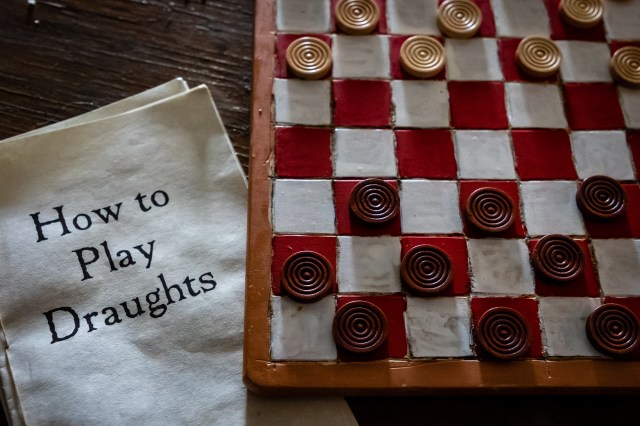
- Parlor Games: Just like today, people of the 18th Century enjoyed parlor and tavern games, often gambling. There are two primary types of parlor games: card games, and dice games but certainly some establishments, especially in London, also had draughts, backgammon, chess, darts and billiards. The aim of most tavern games is not to create a competition but rather an excuse to sit together and discuss the day’s news.
- Sharing of news and current events: Because the roads were poor, travel in the 18th Century was difficult and slow but there were travelers and they came with news. Travelers also often brought their newspapers, pamphlets, and even books which when they had finished reading, they frequently left, or even loaned, at the tavern.
- Glees and Tavern Songs: Glees and songs made for and about drinking are, of course, nothing new. Americans used drinking songs as a way to band together in ale and song. In the ultimate homage to a night of drinking, Francis Scott Key borrowed the tune of a bawdy British drinking song (“To Anacreon in Heaven”) about overindulgence and questionable relationship choices when he wrote “The Star-Spangled Banner.”


Costs:
- $1000 for a 4–6-hour tavern program in the evening. This will include:
- Set-up and event decoration
- Period gaming
- 18th Century bar (with critical 21st Century anachronism needed for safety and cleanliness[3]
- Tavernkeeper acting as master of ceremonies for key events including but not limited to:
- Talks on the history of taverns in AmericaLeading group activities such as toasting and gleesTeaching patrons to play historic games (like whist)
- Optional additional costs may include (if specifically requested by host):
- Addition of period attired serving staff in addition to the Admiral of the Blue — $200/person
- Travel in excess of 50 miles from Dresher, PA — $0.67/mile plus tolls roundtrip.
- Payments are to be made within 30 days following the event
- During the event, patrons may make payments in cash, or via credit card, Venmo, or PayPal.
Typical Menu[6]:
- Colonial Beer — We have Spruce Ale plus various specialty Beers by the Regimental Brewmeister all brewed over an open fire with 18th Century methods.
- Colonial Mead — Probably the world’s oldest alcoholic drink mead is fermented honey. Prior to the 1700s, mead was a popular choice of drink throughout New England. A Yankee favorite.
- Black Tea Punch –Punch (from the Hindi paantsch) was introduced to England by employees of the East India Company. This is a fine concoction of American Whiskey, Caribbean cane sugar, Indian Tea and lemon from Asia. A truly British cocktail.
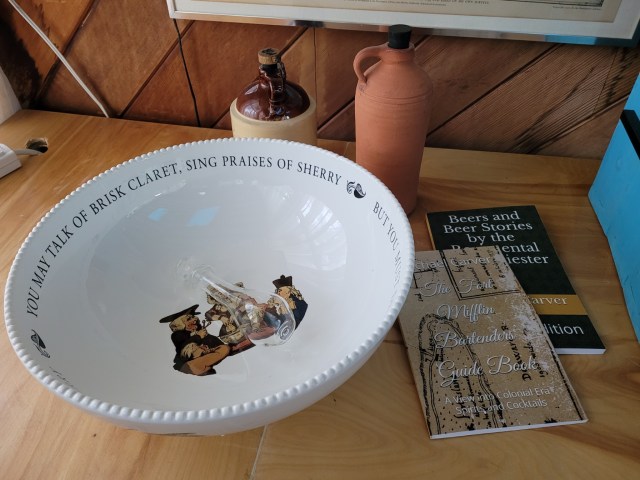
- Fish House Punch — This punch is traditionally served by the Schuylkill Fishing Company in Philadelphia and described as “very kindly and welcomed . . . into their Province with a Bowl of fine Lemon Punch big enough to have Swimmed half a dozen of young Geese.” The Punch is traditionally made in a large bowl also used as a baptismal font for the citizens’ infant sons; “it’s an ample space … would indeed admit of total immersion…” According to legend, on a visit to the club, George Washington drank so much of the potent Fish House Punch, he subsequently couldn’t bring himself to make an entry in his diary for three days.
- Ale Flip — This is bartender drama at its finest. A true 18th Century tavern favorite Rum, eggs, beer and sugar. Served warm with a flair and heated with our logger-heads.
- Rattleskull — A perfect 18th Century Attitude Adjuster. Rum and spices mixed into a pint of beer.
- Cherry Bounce — A favorite of Mr. Washington. Whiskey infused with cherries. No Lies – its fantastic!
- TAVERN GAMES TO BE PROVIDED:
- Crokinole
- The Royal Game of the Goose
- Shut the Box
- Cribbage
- Draughts and Backgammon
- Chess
- Farkle
- Mancala
- Captain’s Mistress
- Nine Man’s Morris
- Ring the Bull
- Skittles
- Dominos
- Desktop Curling
- Card Games (Whist, Gin, Bone Ace, Etc.)
[1] Brewed at area historical sites and reenactments using 18th Century recipes, equipment, and methods.
[2] In Francis Grose’s A Classical Dictionary of the Vulgar Tongue, first published in 1785, I found an entry that I have adopted as the moniker for my tavern impression — The Admiral of the Blue Apron. The ADMIRAL OF THE BLUE, is a publican wearing a blue apron, as was formerly the custom among gentlemen of that vocation. My personae in these taverns is that of a retired military man, an army captain, who has HOISTED THE BLUE FLAG after leaving the service to create an Ordinary for his comrades.
[3] Which you may not find should you go to an ACTUAL tavern in 1770.
[4] Limited to those clean-up activities directly related to tavern activities.
[5] 10% of drink sales receipts will be rebated to the site as a charitable donation (if applicable) at the end of the event. Alternatively, the site may negotiate a certain number of “included” drinks per patron. Included drinks do not get a rebate but may be discounted.
[6] Other cocktails may be substituted if requested.
Want to have the
Regimental Brewmeister
at your site or event?
You can hire me.
https://colonialbrewer.com/yes-you-can-hire-me-for-your-event-or-site/
 Michael Carver -- Historical Interpreter/Reenactor