Because of a shortage of hard currency, most of the colonies issued paper currency prior to the American Revolution. This coupled with an ongoing trade that often involved various foreign currencies, was sufficient for most trade as we had a largely barter driven economy. When war broke out with Great Britian, the Continental Congress grappled with the tricky proposition of how to pay for troops and supplies in a nation that was cash poor. Ultimately, they turned to printing paper money and embraced the convenient fiction that all of it was backed by silver and gold specie.
British forces and their Loyalist allies then turned to counterfeiting as a weapon of war. The relatively modest initial printing in May 1775 of $3,000,000 in Continental Currency was dwarfed by later releases, some by a desperate Congress hoping to keep the war effort moving and more by counterfeiters. In the end, the Continental Currency was so devalued that it became literally worthless. By 1781, the exchange rate was $225 paper currency to $1 specie.
After the Revolutionary War, the U.S. was governed by the Articles of Confederation, which authorized states to mint their own coins and currency but the Articles of Confederation was a poor system of governance. After the ratification of the US Constitution in 1788, the newly formed Department of Treasury sought to get all of this under control, but they faced a huge problem. Each state had at least one currency (some had several) and most of it was worthless. Furthermore, exchange rates between colonies were ill defined so the economy was essentially moneyless. To form a new US Bank, the nation needed a national currency.
On April 2, 1792 Congress passed the Coinage Act, establishing the first national mint in the United States. Congress chose Philadelphia, what was then the nation’s capital, as the site of our first Mint. President George Washington appointed a leading scientist, David Rittenhouse, as the first director. Rittenhouse bought two lots at 7th and Arch Streets to build a three-story facility, the tallest building in Philadelphia at the time. It was the first federal building erected under the Constitution.
Coin production began immediately. The Act specified the following coinage denominations:
- In copper: half cent and cent
- In silver: half dime, dime, quarter, half dollar, and dollar
- In gold: quarter eagle ($2.50), half eagle ($5), and eagle ($10)
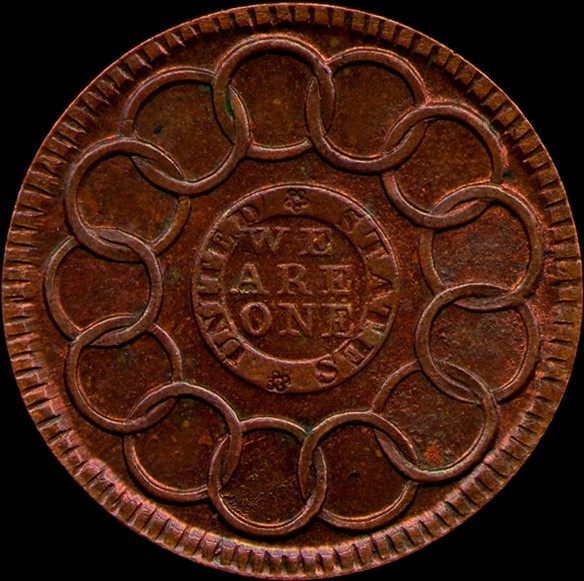
In March 1793, the Mint delivered its first circulating coins: 11,178 copper cents.
Want to have the
Regimental Brewmeister
at your site or event?
You can hire me.
https://colonialbrewer.com/yes-you-can-hire-me-for-your-event-or-site/
 Michael Carver -- Historical Interpreter/Reenactor