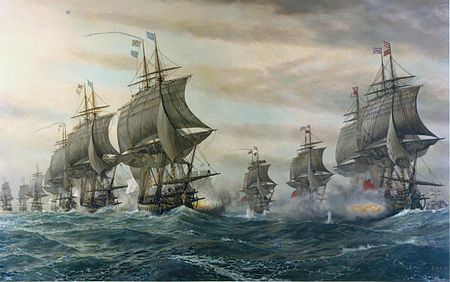
In the summer of 1775, George Washington and the fledgling Continental Army was unable to effectively lay siege to British-occupied Boston because the Royal Navy had a firm command of the sea-lanes and the harbor. All George Washington could do was observe the flow of enemy supplies into Boston harbor and wondered if intercepting a …
Author Archives: Michael Carver
Colonial Spymaster (#11) — Letter-locking
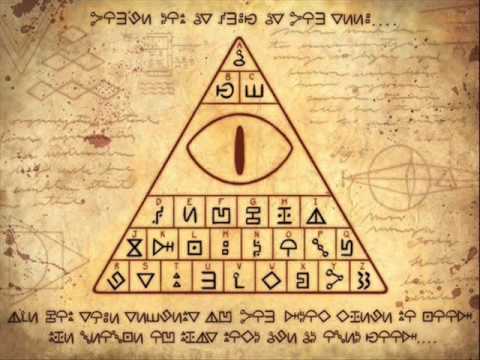
Long before email, text, and instant message, important words were passed discreetly from closed palm to palm. To keep the messages private, these hand-written notes were often elaborately folded, sealed with wax, and rigged with anti-tamper devices. The technique of “locking” letters involves folding the parchment, papyrus, or paper securely so that the letter functions …
Continue reading “Colonial Spymaster (#11) — Letter-locking”
Registration Open Now for Crossing Reenactors

Registration Open Now for Crossing Reenactors. If you want to join the crews and cross the Delaware in a Durham Boat, on either December 12 or 25, Register Here.If you are local and need kit, I can help up to two guest and you can cross with me but you must complete registration before Monday, November …
Continue reading “Registration Open Now for Crossing Reenactors”
Colonial Spymaster (#10) — Invisible Inks
One form of secret writing used by both the British and American armies was invisible ink. The secret writing was placed between the lines of an innocent letter and could be discerned by treating the letter with heat or a chemical substance. The recipient placed the paper over the flame of a candle or treated …
Continue reading “Colonial Spymaster (#10) — Invisible Inks”
Colonial Spymaster (#9) — Disinformation
If you employ spies, it is very likely that your enemy also has spies. One very effective means of concealing the true conditions or plans in a sea of false options and making those false options more likely and more true. Today, we call this “fake news” but “fake news” isn’t something recently developed. It …
Antifederalist No. 3 — New Constitution Creates a National Government; Will Not Abate Foreign Influence; Dangers of Civil War And Despotism.
Like the nome de plume “Publius” used by pro Constitution writers in the Federalist Papers, several Antifederalists signed their writings “A FARMER.” While the occupation of the writers may not have coincided with the name given, the arguments against consolidating power in the hands of a central government were widely read. The following was published …
Federalist #3: Concerning Dangers From Foreign Force and Influence

We are on the eve of a very important election. Much has been said about the Constitution and what is Constitutional so let’s take a few weeks and look at the foundational letters written by Madison, Hamilton, and Jay arguing for the creation of the US Constitution. The comment tab is open. Please share your …
Continue reading “Federalist #3: Concerning Dangers From Foreign Force and Influence”
Antifederalist No. 2 — We Have Been Told of Phantoms
This essay is an excerpted from a speech of William Grayson, June 11, 1788, in Jonathan Elliot (ed.), The Debates in the Several State Conventions on the Adoption of the Federal Constitution……. (Philadelphia, 1876) 5 vols., III, 274-79. The adoption of this government will not meliorate our own particular system. I beg leave to consider …
Continue reading “Antifederalist No. 2 — We Have Been Told of Phantoms”
FEDERALIST No. 2: Concerning Dangers from Foreign Force and Influence
We are on the eve of a very important election. Much has been said about the Constitution and what is Constitutional so let’s take a few weeks and look at the foundational letters written by Madison, Hamilton, and Jay arguing for the creation of the US Constitution. The comment tab is open. Please share your …
Continue reading “FEDERALIST No. 2: Concerning Dangers from Foreign Force and Influence”
Colonial Spymaster (#8) — Steganography
Steganography is the practice of concealing a message within another message. The advantage of steganography over cryptography alone is that the intended secret message does not attract attention to itself as an object of scrutiny. Plainly visible encrypted messages, no matter how unbreakable they are, arouse interest whereas, steganography both conceals the message and hides …
 Michael Carver -- Historical Interpreter/Reenactor