There remains a stubborn perception that somehow Noah Webster wrote the first American dictionary. This is actually not true. There were many dictionaries written in the 18th Century and the premier edition was written by Samuel Johnson. In June 1746, Samuel Johnson signed the contract with a group of booksellers in London to write A …
Category Archives: Ideas
David Rittenhouse was a Surveyor and Maker of Surveying Tools

Rittenhouse moved to Philadelphia in 1770, where he set up shop on the corner of Seventh and Mulberry (now Arch) streets and later became the city surveyor of Philadelphia. Rittenhouse was contracted as a surveyor for Great Britain in 1763. His first public service was a boundary survey for William Penn in 1763-64 to settle …
Continue reading “David Rittenhouse was a Surveyor and Maker of Surveying Tools”
Like Newton, Rittenhouse Ran the Mint
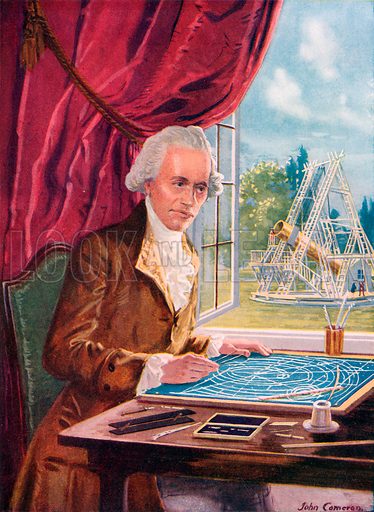
On February 24, 1775, Rittenhouse delivered a lecture on the history of astronomy to the American Philosophical Society, in which he linked the structure of nature to the rights of man, liberty and self-government. Rittenhouse also used the occasion to decry slavery. So impressed were those in attendance that the American Philosophical Society commissioned the …
The Great Orrery
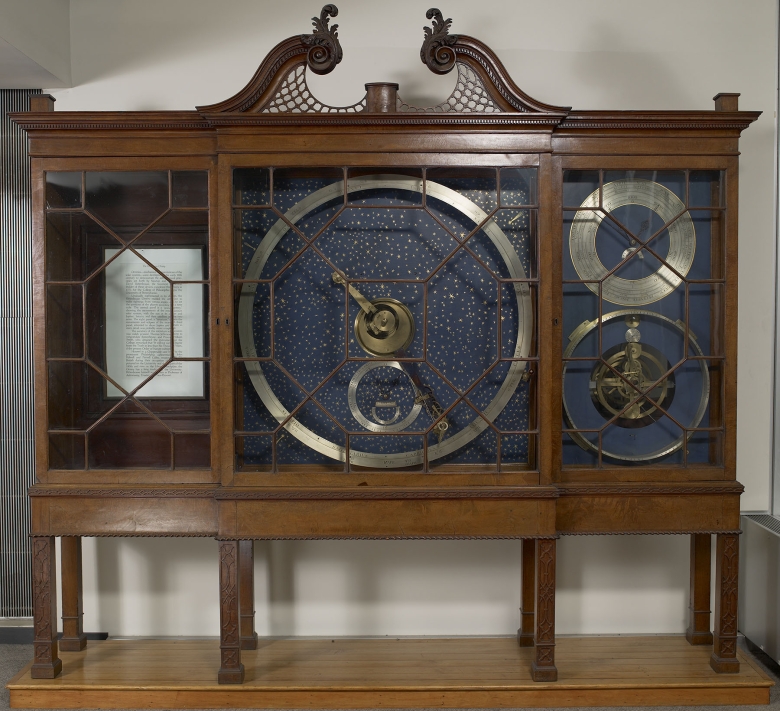
An orrery is a mechanical model of the Solar System that illustrates or predicts the relative positions and motions of the planets and moons. The first orrery that was a planetarium of the modern era was produced in 1704, and one was presented to Charles Boyle (who penned the Ideal Gas Law), the 4th Earl …
And then he fainted just before the whole spectacle began
In June 3, 1769, after months of planning, the skies that had been cloudy for several days cleared over East Norriton, Pennsylvania. David Rittenhouse waited nervously for the moment when Venus would briefly become visible as it passed across the sun. This transit was an extremely rare event and according to computations by Edmund Halley, …
Continue reading “And then he fainted just before the whole spectacle began”
Okay, I have bad news: Beer makes humans more attractive to mosquitoes.

In my presentation as Regimental Brewmeister, I frequently extol the benefits of beer over the local water. While drinking beer will protect you from Typhus and Cholera, there is a slightly greater chance that you will contract Yellow Fever if you drink beer. Turns out that the alcohol you’re drinking, and that you are excreting …
Continue reading “Okay, I have bad news: Beer makes humans more attractive to mosquitoes.”
Historical Tidbits — Indemnity Act

When reenacting or acting as a historical interpreter, its good to have a few historical dates and stories to share. This series will publish a few. June 29, 1767 The Indemnity Act –reduced taxes on the British East India Company when they imported tea into England. This allowed them to re-export the tea to the colonies more …
Ridges and Other Markings on Coins were Introduced by Isaac Newton

In 1696, Sir Isaac Newton was tapped as the Warden of the Royal Mint. These positions were, typically, considered ceremonial government honors for those citizens who had already aspired to greatness rather that real responsibilities. But Newton saw that the country had a massive counterfeit coin problem and took actions to address it. You have …
Continue reading “Ridges and Other Markings on Coins were Introduced by Isaac Newton”
Historical Tidbits — Molly Pitcher
When reenacting or acting as a historical interpreter, its good to have a few historical dates and stories to share. This series will publish a few. June 28, 1778 Molly Pitcher “Molly Pitcher” was not a single historical figure, but a composite folk hero inspired by the actions of different people, most of them women …
Historical Tidbits — Attack on Sullivan’s Island
When reenacting or acting as a historical interpreter, its good to have a few historical dates and stories to share. This series will publish a few. June 28, 1776 Attack on Sullivan’s Island In early 1776, the British organized an expedition for operations in the southern colonies. Delayed by logistical concerns and bad weather, the …
Continue reading “Historical Tidbits — Attack on Sullivan’s Island”

