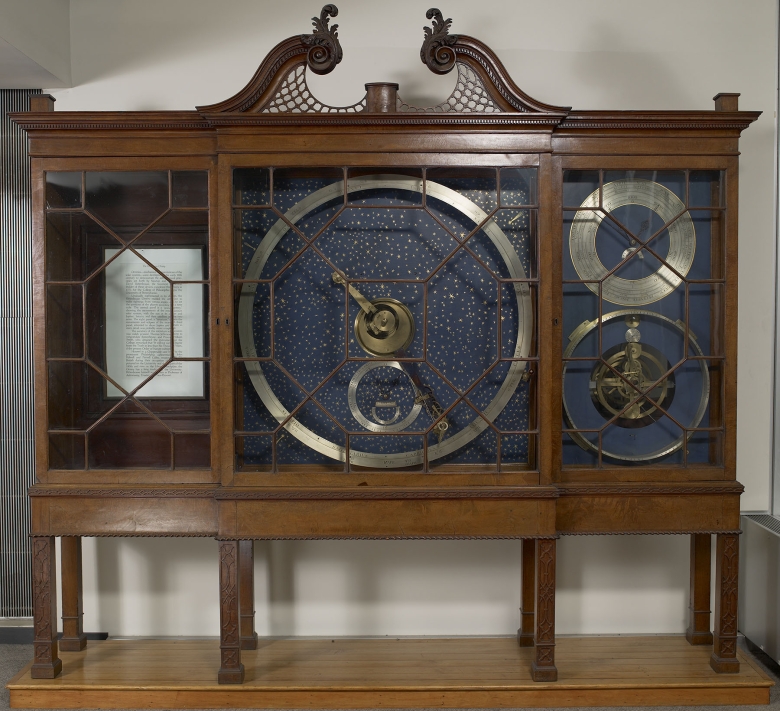
An orrery is a mechanical model of the Solar System that illustrates or predicts the relative positions and motions of the planets and moons. The first orrery that was a planetarium of the modern era was produced in 1704, and one was presented to Charles Boyle (who penned the Ideal Gas Law), the 4th Earl …
Category Archives: Ideas
Drink of Persecution
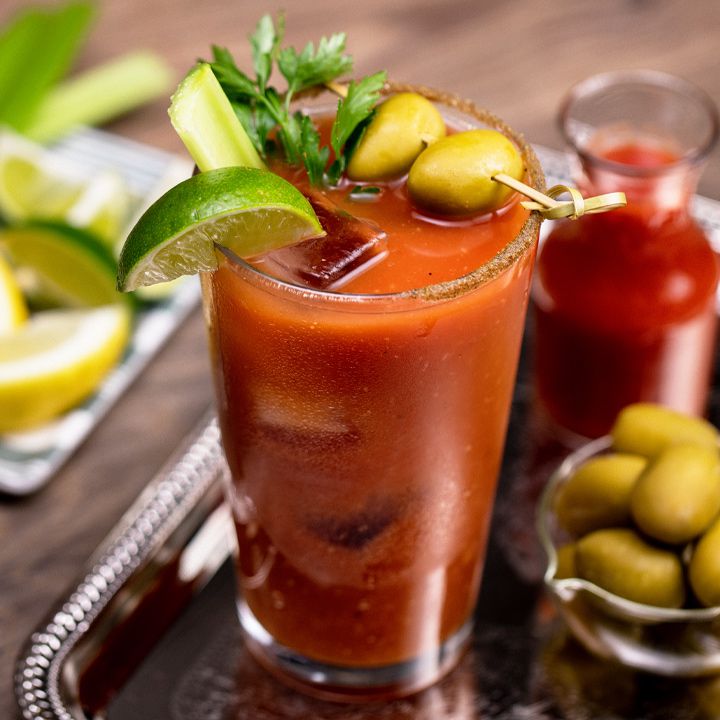
Perhaps it has something to do with the week I am spending in Texas or perhaps it is the fall-out from having watched The Serpent Queen on STARZ but my mind is stuck on “Bloody Mary.” I’m absolutely talking about the cocktail (I need 3 right now) but also the first Queen of England to …
David Rittenhouse was a Surveyor and Maker of Surveying Tools

David Rittenhouse moved to Philadelphia in 1770, where he set up shop on the corner of Seventh and Mulberry (now Arch) streets and later became the city surveyor of Philadelphia. Rittenhouse was contracted as a surveyor for Great Britain in 1763. His first public service was a boundary survey for William Penn in 1763-64 to …
Continue reading “David Rittenhouse was a Surveyor and Maker of Surveying Tools”
The Problem of True North vs Compass North
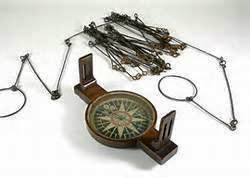
Private ownership of land in the British colonies of North America, provided self-sufficiency for many and extravagant wealth for a few. The idea of land as property came from England and accurate descriptions of property and its boundaries are essential. For this reason, surveyors were essential not just in the newly acquired lands of North …
Continue reading “The Problem of True North vs Compass North”
Ruffles have Ridges … and so do US Coins!

When the U.S. Mint opened in Philadelphia, coins were made of copper, silver, and gold, in accordance with the Coinage Act of 1792. Because these coins were made of precious metal, their value was directly related to the amount of metal they contained. Unfortunately, these coins were also vulnerable to a practice known as “clipping.” Clipping …
Continue reading “Ruffles have Ridges … and so do US Coins!”
Medical Ketchup

Medical Ketchup During the 1800’s ketchup was used for medicinal purposes. Ketchup was “brewed” as a cure for diarrhea, jaundice, indigestion, and rheumatism. Originally, ketchup was prepared with mushrooms as a primary ingredient, instead of tomato. So, the next time you’re at the dinner table in one of the 97% of American households that have …
Happy Decolonization Day.

Today marks the 247th anniversary of the Declaration of Independence and while a better date for the founding of our great nation is September 17th, 1787, this is America’s birthday. Since the country was founded, it has grown from 13 independent states with about 2.5 million people to 50 states and 14 territories with a …
Okay, I have bad news: Beer makes humans more attractive to mosquitoes.

In my presentation as Regimental Brewmeister, I frequently extol the benefits of beer over the local water. While drinking beer will protect you from Typhus and Cholera, there is a slightly greater chance that you will contract Yellow Fever if you drink beer. Turns out that the alcohol you’re drinking, and that you are excreting …
Continue reading “Okay, I have bad news: Beer makes humans more attractive to mosquitoes.”
Brewing Up History with Regimental Brewmeister

July 4, 202410 AM – 6 PMWashington Crossing Historic Park1112 River RdWashington Crossing, PA 18977 Okay, we are going back to Washington’s Crossing. Not to invade New Jersey (we’ll do that later) but to brew beer. Military expeditions were not possible in the 18th Century without vast quantities of beer (DON”T DRINK THE WATER!). I will, therefore, …
Continue reading “Brewing Up History with Regimental Brewmeister“
Ridges and Other Markings on Coins were Introduced by Isaac Newton
In 1696, Sir Isaac Newton was tapped as the Warden of the Royal Mint. These positions were, typically, considered ceremonial government honors for those citizens who had already aspired to greatness rather that real responsibilities. But Newton saw that the country had a massive counterfeit coin problem and took actions to address it. You have …
Continue reading “Ridges and Other Markings on Coins were Introduced by Isaac Newton”
 Michael Carver -- Historical Interpreter/Reenactor