Colonial Spymaster (#10) — Invisible Inks

One form of secret writing used by both the British and American armies was invisible ink. The secret writing was placed between the lines of an innocent letter and could be discerned by treating the letter with heat or a chemical substance. The recipient placed the paper over the flame of a candle or treated …

Colonial Spymaster (#9) — Disinformation

If you employ spies, it is very likely that your enemy also has spies.  One very effective means of concealing the true conditions or plans in a sea of false options and making those false options more likely and more true.  Today, we call this “fake news” but “fake news” isn’t something recently developed.  It …

Colonial Spymaster (#8) — Steganography

Steganography is the practice of concealing a message within another message. The advantage of steganography over cryptography alone is that the intended secret message does not attract attention to itself as an object of scrutiny. Plainly visible encrypted messages, no matter how unbreakable they are, arouse interest whereas, steganography both conceals the message and hides …

Colonial Spymaster (#7) — How the Culper Ring Relayed Information from New York to Washington

The Culper Ring developed a complex method of gathering and relaying information to General George Washington. Below is the sequence of steps the Ring would take to gather and relay the valuable information. (The process of replaying information has many different variations due to its complexity and secrecy.) Abraham Woodhull (Samuel Culper) would visit his …

Colonial Spymaster (#6) — The Culper Ring and its Codes

Benjamin Tallmadge established a small group of trustworthy men and women from his hometown of Setauket, Long Island. Known as the Culper Spy Ring, Tallmadge’s homegrown network would become the most effective of any intelligence-gathering operation on either side during the Revolutionary War. Tallmadge recruited his childhood friend, the farmer Abraham Woodhull, and Caleb Brewster, …

Colonial Spymaster (#5) — Pigpen Cypher

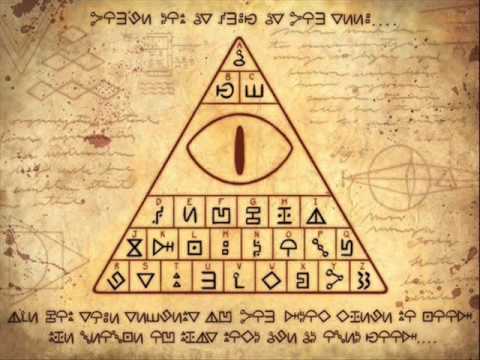
The Pigpen Cipher is another example of a substitution cipher, but rather than replacing each letter with another letter, the letters are replaced by symbols. The cipher has an interesting history: although its true origins are unknown, it has been used by many groups. Most notoriously, it was the cipher of choice for use by …

Colonial Spymaster (#4) — Polybius Cypher

The Polybius checkerboard, is a device invented by the ancient Greeks Cleoxenus and Democleitus, and made famous by the historian and scholar Polybius, a Greek historian noted for his work The Histories, which covered the period of 264–146 BCE.  Polybius was well known to the Founding Fathers of the United States and was influential on …

Colonial Spymaster (#3) — Ottendorf or Book Cypher

The Ottendorf Cypher, or Book Cypher, is a cyphertext is made up of numbers in groups of 3, and these numbers correspond to positions in a book (or other type of text).  Most often the numbers refer to Line, Word, and Letter.  To encode a message, the encoder needs only to find the word at …