
Getting Paid to Drink Beer… The Ale Conner
Imagine getting DRAFTED into office where your job is to drink beer. Well, that is exactly what happened in medieval England. Ale conners (also known as ale-tasters or ale-cunners) were local officials appointed by a baron or marquis to ensure the quality and fairness of ale and beer production in their county. Their job was…

2026 Brewmeister Merchandise
For a couple of years, I have been selling books at my events. I will continue to offer copies of the following books at events in 2026: New this year, I am adding the following offerings: Obviously, we will see if anyone wants these but send me your ideas of ways we can make your…
The Patriot’s Paradox
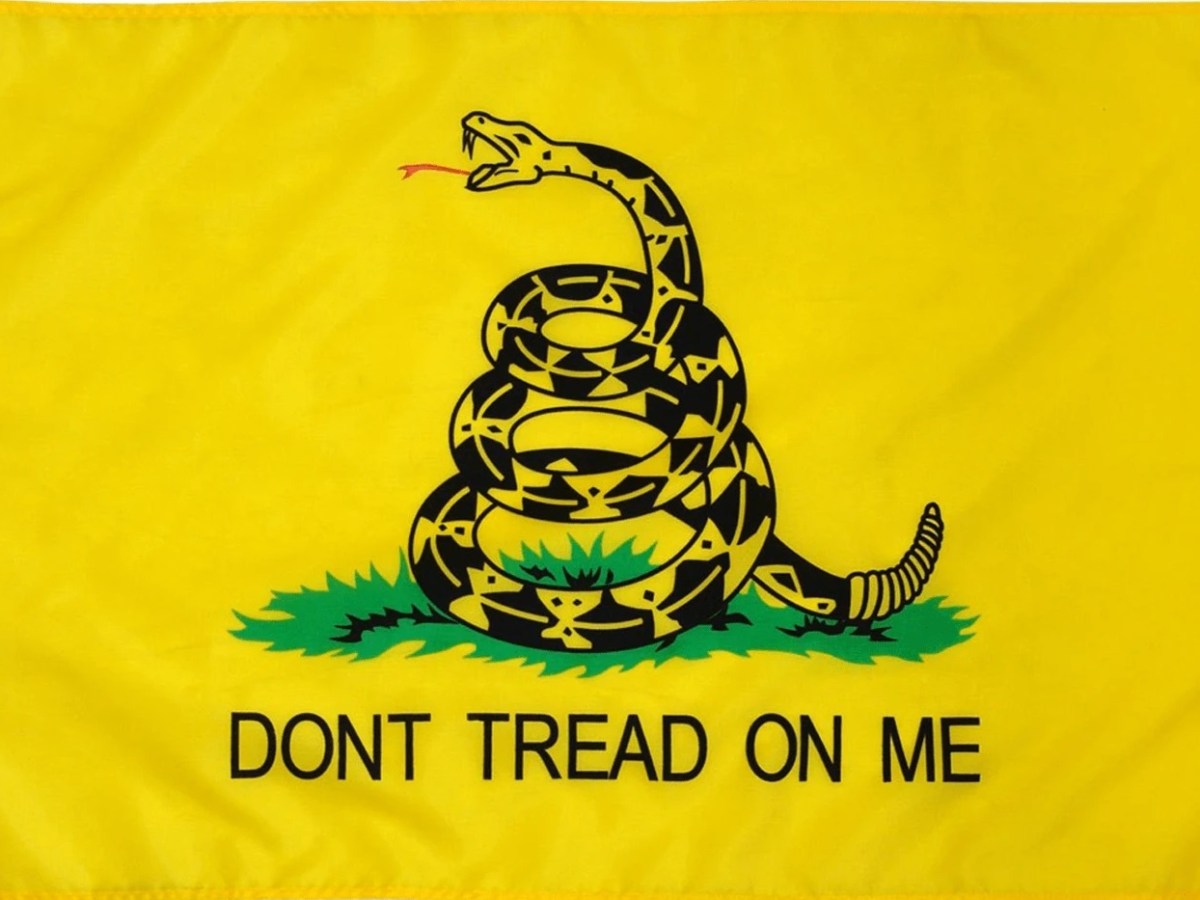
Every once in a while, you are struck by how truly strange our political world has become. I am not referring to the disfunction in our US government (directly) but rather our day-to-day interactions between seemingly normal, patriotic Americans. Case in point: I had a very interesting interaction with my SAR compatriots, on Washington’s Birthday…
Tonight is Purim
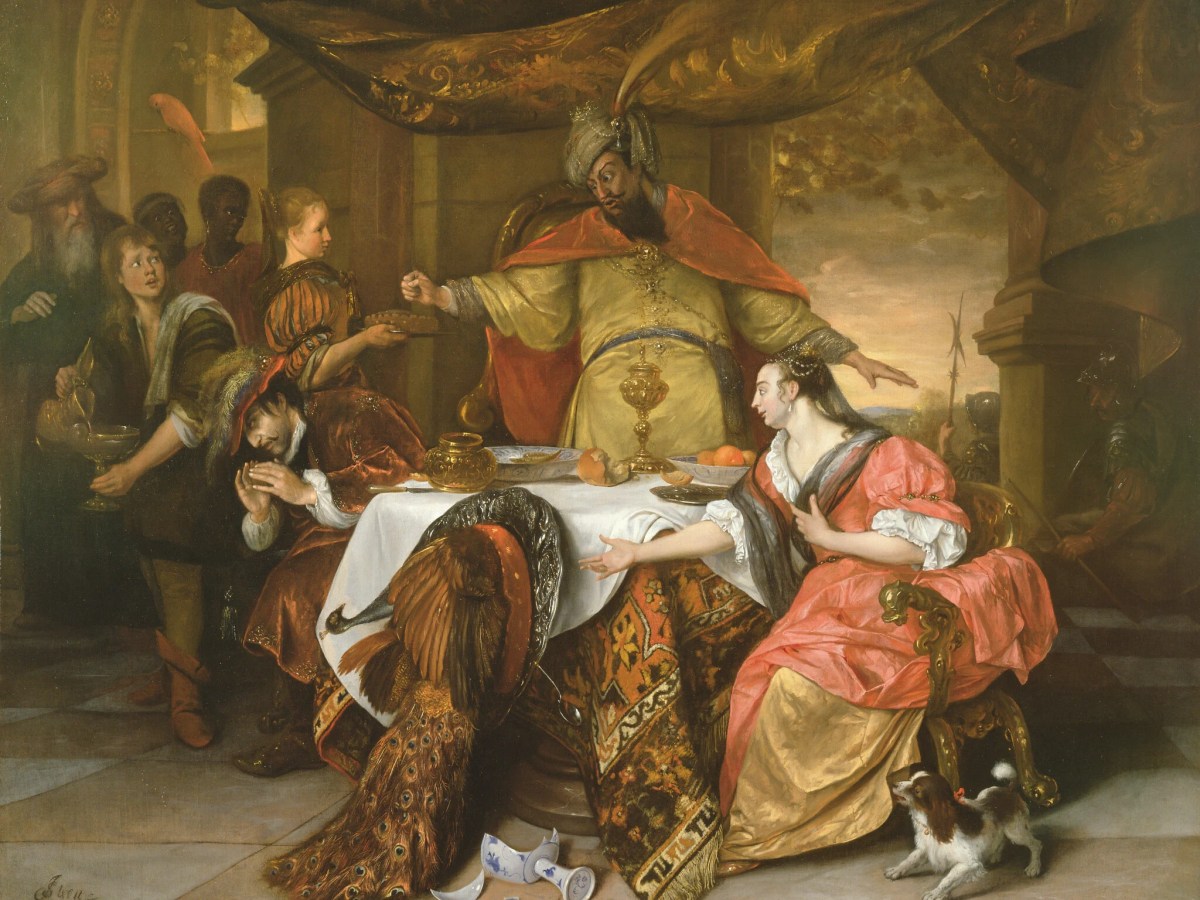
Purim is celebrated every year on the 14th of the Hebrew month of Adar (late winter/early spring). This year is a poignant celebration given that Israel is at war with Iran (historic Persia). In the 4th century BCE, Persian King Ahasuerus had his wife, Vashti, executed for failing to follow his orders, then he arranged a beauty pageant to find a…
Siege Weekend @ Fort Mifflin
Well its official, the Regimental Brewmeister will be returning to Fort Mifflin’s Siege Weekend this year on November 14. Want to have the Regimental Brewmeister at your site or event? You can hire me. https://colonialbrewer.com/yes-you-can-hire-me-for-your-event-or-site/
The Tavern Sign
Because of their abundance, the names pubs take were designed to be memorable—but more than that, they were designed to be visual. Outside any traditional pub worthy of its title, you’ll find a hanging signboard with a unique illustration that represents the name of the business. The first British pub signs were created in the…
Help Wanted — Immersion Weekend in New York
I am looking for 10 solid tavern goers who are interested in an immersion weekend and willing to travel to Albany, NY. On August 8, the Admiral of the Blue Apron will be hosting an immersion weekend on 18th Century beverages and tavern culture. The program will include a full tavern in a fully restored…
A Yiddish Version of the Declaration of Independence
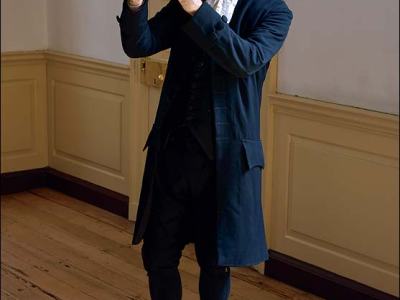
British officers were stunned to find the Declaration of Independence together with an unintelligible document – a Yiddish translation. Just as the Torah is intended to be read aloud, a practice that continues in synagogues to this day, the Continental Congress ordered that copies of the Declaration be sent “to the several Assemblies, Conventions, and…
Open your purse on Plough Monday
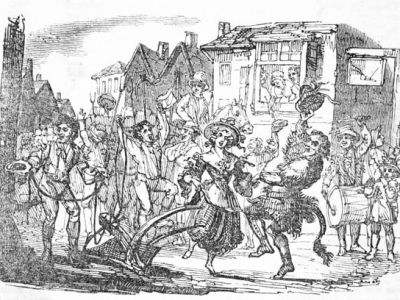
Plough Monday (the first Monday after Epiphany or January 6) marks the traditional start of the English agricultural year. It is often celebrated with some unorthodox partying/fundraising. A boy dressed as an old woman (called the “Bessy”) and man dressed as an animal (called the “Fool”), accompanied by roving musicians, drag a plough from house to house to…
The Holiday of Hansel
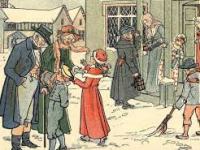
Handsel Monday, the first Monday after January 1, was an old 18th century Scottish tradition where masters would give their servants presents and give them the day off. Sweet! “Handsel” is a Middle English word meaning good luck or good omen. The handsel present was typically money, meaning even the poorest servant had a little extra cash…

The DUTCH East India Company
The Vereenigde Oostindische Compagnie (VOC), better known as the Dutch East India Company was set up in 1602 and head-quartered in the Oost-Indisch Huis (East-India House) in downtown Amsterdam, which still stands today. The company was first company to officially issue stocks, which peaked during the Dutch “Tulip Mania”, a craze for tulip bulbs that…
Historical Tidbits — 1st Bank of North America established
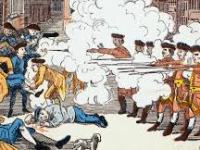
When reenacting or acting as a historical interpreter, its good to have a few historical dates and stories to share. This series will publish a few. December 31, 1781 1st Bank of North America established Chartered May 26, 1781, by the Continental Congress under the Articles of Confederation, this enterprise was the first national and truly…
Auld Lang Syne
At midnight on December 31st, throughout the English-speaking world, the song “Auld Lang Syne” is sung practically everywhere. This song — actually a poem by Robert Burns — is indelibly linked to New Year’s celebrations, but what does it mean? You’ve all seen Billy Crystal in Harry met Sally: “Does that mean that we should…
Historical Tidbits — Arnold Attacks Quebec City
When reenacting or acting as a historical interpreter, its good to have a few historical dates and stories to share. This series will publish a few. December 31, 1775 — Patriot forces under Colonel Benedict Arnold and General Richard Montgomery attempted to capture the British-occupied city of Quebec and with it win support for the…
Historical Tidbits — General Montgomery killed
When reenacting or acting as a historical interpreter, its good to have a few historical dates and stories to share. This series will publish a few. December 31, 1775 General Montgomery killed General Richard Montgomery launched a courageous attack on the lower city of Quebec (along the river beneath the walls) in the middle of…
Did Jews Participate in the American Revolution? Well here are a few stories. (Jewish Pirates)
When the Spanish expelled the Jews in 1482, many came to the “New World” is search of freedom and safety. Not surprising, many turned to piracy as both a means of income and as retribution for their mistreatment in Spain. Similarly, many Jews, already heavily involved in shipping and trade, began to arm merchant ships…
Bonhomme Richard Spice Ale
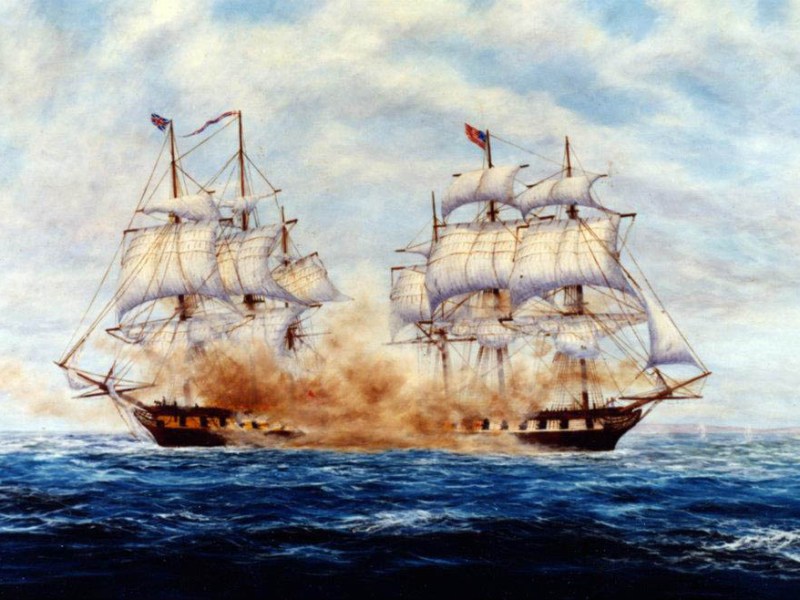
Bonhomme Richard was originally a merchant ship built at L’Orient for the French East India Company in 1765. Her design allowed her to be quickly transformed into a man-of-war in case of necessity to support the navy. She made two voyages to China, the first in 1766 and the second in 1769, was transferred briefly…
Did Jews Participate in the American Revolution? Well here are a few stories. (Moses Franks)
In 1776, as Washington was preparing in Boston to move against New York, the general requested Congress to send him $250,000 in hard coin to pay the militia whose term of service had expired. Washington’s problem was not to raise the money, but to transport it to Boston past hostile Tories. Shipping the specie by…
Historical Tidbits — Savannah taken by the British
When reenacting or acting as a historical interpreter, its good to have a few historical dates and stories to share. This series will publish a few. December 29, 1778 Savannah taken by the British In 1778, British policymakers and strategists decided to refocus their efforts on the southern colonies, where they believed the crown would…

And Now for Something Completely Different.
Finnish Wife Carrying Competitions Rosov Ronkainen, a notorious Finnish man from the 1800s, is known for stealing both women and food from nearby villages. He required his accomplices to go through an obstacle course while carrying something heavy on their backs to be sure they could handle the stolen bounties. Now, Finland has both a…
The Other East India Companies
When we talk about 18th Century trade monopolies, the big three (British East India Company, Hudson Bay Company, and the Dutch East India Company). The era of Spanish hegemony in trade was well in the decline by 1700 but what about the other imperial powers. Let’s not forget that France, Austria, Demark, Sweden, and Portugal…
Did Jews Participate in the American Revolution? Well here are a few stories. (David Salisbury Franks and Solomon Bush)
Yesterday we discussed Mordecai Sheftall’s career during the Revolution. There were two other Jewish soldiers that became staff officers in the Continental Army – David Salisbury Franks and Solomon Bush. When General Richard Montgomery took Montreal from the English, David Salisbury Franks (then a Canadian civilian) lent the American Army money and sold them supplies,…
Did Jews Participate in the American Revolution? Well here are a few stories. (the "Jew Company")
In South Carolina of at least thirty-four Jewish soldiers served in what would become known as the “Jew Company” under Captain Richard Lushington. The Jews who served in Lusington’s company did not constitute a majority, but since most of them had been conscripted as a group from the King Street shopkeepers of Savanah, they all…
Historical Tidbits — 1st Battle of Trenton
When reenacting or acting as a historical interpreter, its good to have a few historical dates and stories to share. This series will publish a few. December 26, 1776 1st Battle of Trenton Having successfully crossed the Delaware on Christmas day, the Continental Army attacked a Hessian garrison at Trenton on December 26, 1776. Although…
Did Jews Participate in the American Revolution? Well here are a few stories. (Francis Salvador)
Francis Salvador owned a large plantation South Carolina’s Ninety-Six District. Salvador soon emerged as a Whig leader. In a time when only men who had accepted Christian oaths were allowed to serve in military and political office, Salvador was the first unconverted Jew to serve in an American legislature. He was elected to the provincial…
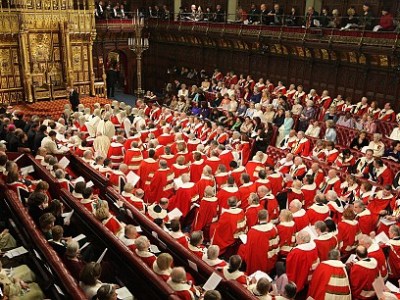
Lords a Leaping…
Social Stratification in English Society Under English Common Law, you are entitled (in some situations) to a “Jury of your Peers.” As Americans, we frequently misinterpret “peers” to mean people like us. This is because with the adoption of the US Constitution in 1787, we officially renounced all references to “peerage” and titles of nobility…

Edmund Halley’s Famous Prediction
The first known observation of Halley’s Comet, or Comet Halley, took place in 239 BCE., when Chinese astronomers recorded its passage in the Shih Chi and Wen Hsien Thung Khao chronicles. When Halley’s returned in 164 BCE. and again in 87 BCE, it was noted in Babylonian records. It’s also thought that another appearance of…
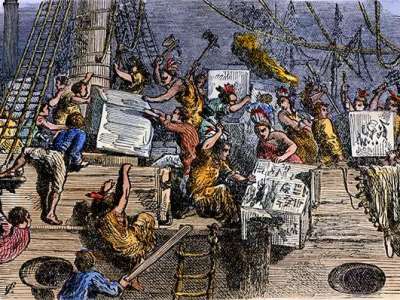
The Philadelphia Tea Party
We all know that on December 16, 1773 protestors boarded the Dartmouth, the Eleanor and the Beaver, ships of the East India Company, and threw their cargo of tea into the Boston Harbor but this story neither begins nor ends in Boston. The idea for the acts of defiance against the British Empire was birthed in Philadelphia at…
Historical Tidbits — Washington crosses Delaware
When reenacting or acting as a historical interpreter, its good to have a few historical dates and stories to share. This series will publish a few. December 25, 1776 Washington crosses Delaware On blustery Christmas Day in late 1776, George Washington led a daring attack on the Hessian garrison in Trenton. After a series of…
Did Jews Participate in the American Revolution? Well here are a few stories. (Levy Solomons)
Since the quartermaster department of the Revolutionary armed forces was primitive and inadequate, the government turned to civilian purveyors for badly needed supplies. Many, if not most, Jewish merchants of that day were purveyors on a large or small scale, offering the government clothing, gunpowder, and lead. Harassed for lack of funds, the authorities took…
Chanukah in Colonial America
What religious story most resonates with the spirit of the American Revolution? Yes, there are many stories in many religions that people overcoming atrocities and oppression. But consider for just a moment the story of Judah Maccabee. In the late 6th century BCE, the Persian emperor Cyrus the Great let the Jews go home after…
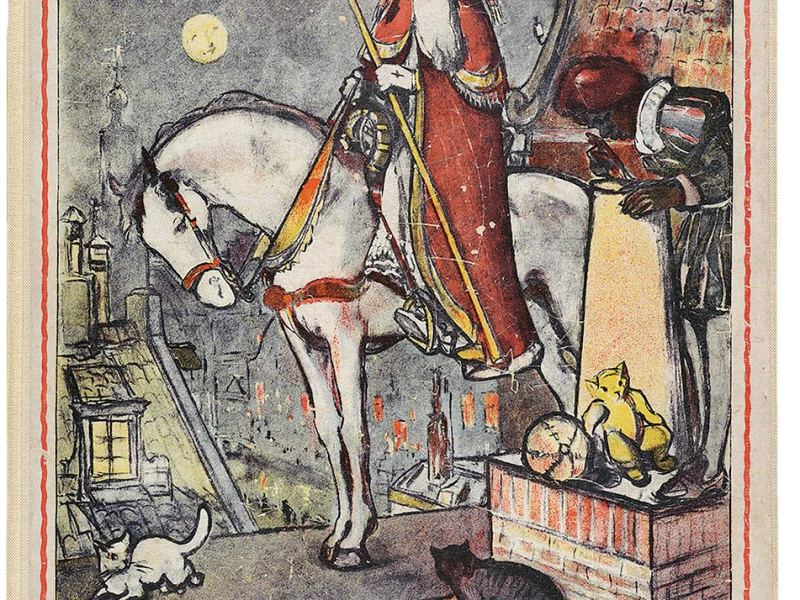
SinterKlaas
During the American War of Independence, the inhabitants of New York City, formerly New Amsterdam), celebrated the tradition of Sinterklaas as symbol of the city’s non-English past. In the 1770s the New York Gazetteer noted that the feast day of “St. a Claus” was celebrated “by the descendants of the ancient Dutch families, with their usual festivities.” Sinterklaas is…
Did Jews Participate in the American Revolution? Well here are a few stories. (Haym Salomon)
I am going to conclude this short series with a note on someone I consider to be one of the nation’s unrecognized Founding Fathers for without the sacrifices of Mr. Salomon, the Revolutionary War would have likely ended in New Jersey in 1776 as the Continental Congress ran out of funds to support the army.…

The 2026 Calendar of Events
While I am still accepting bookings, here are the events currently on the docket fo the Regimental Brewmeister in 2026: 2026 Calendar of Events for Regimental Brewmeister[1] January 4 Battle of Princeton Princeton Battlefield January 24 History Matters INHP January 28 Talk on Importance of Taverns in Colonial America Blue Ball Tavern February 28 Tavern…
Historical Tidbits — Washington resigns as Commander in Chief
When reenacting or acting as a historical interpreter, its good to have a few historical dates and stories to share. This series will publish a few. December 23, 1783 Washington resigns as Commander in Chief “Having now finished the work assigned to me, I retire from the great theatre of action; and bidding an affectionate…
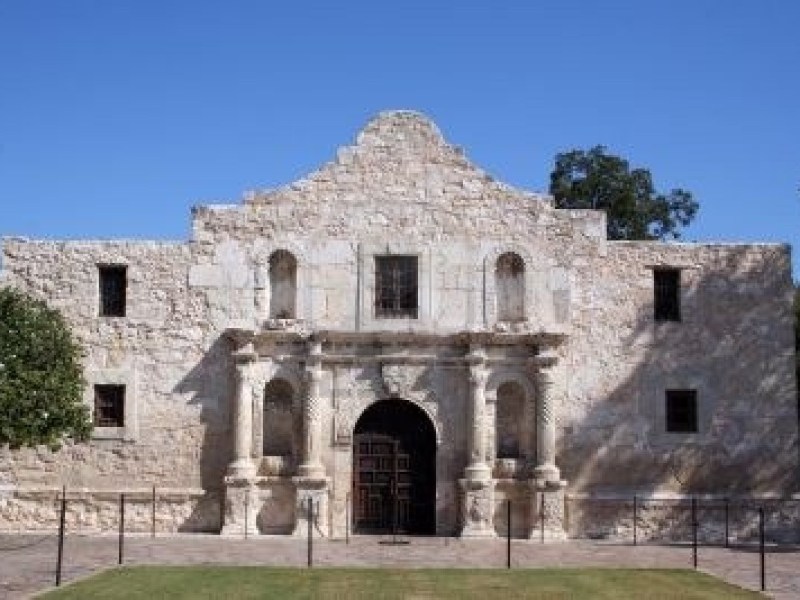
Texas and the American Revolution
In discussions on the American Revolutionary War, the contributions of Texas are seldom brought up.[1] But in the 1770s, Texas, inhabited by Spaniards and Native Americans, was a hub of activity. While the signing of the Declaration of Independence occurred on July 4, 1776 in Philadelphia, Tejanos (Texans) manned outposts, guarded New Spain’s claims, and reconnoitered neighboring…
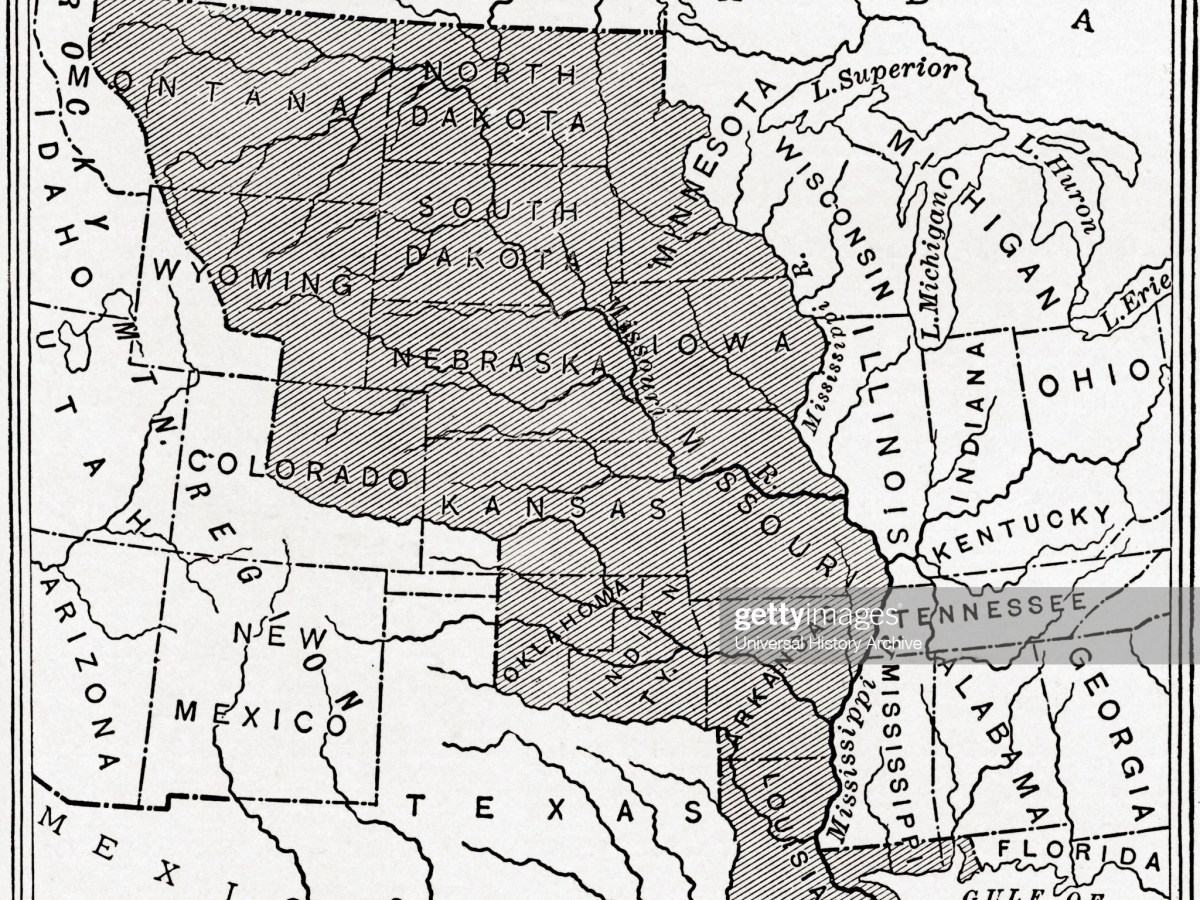
Louisiana Purchase finalized 12/20/1803
On December 12, 1803 the United States completed the purchase of the Louisiana Territory from Frans for $15 million. This territory encompassed 530,000,000 acres of territory. As the United States spread across the Appalachians, the Mississippi River became an increasingly important conduit for the produce of America’s West (which at that time referred to the…
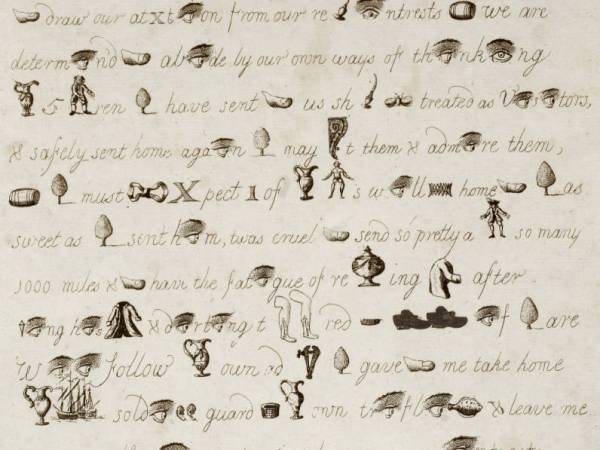
Britain’s Failed Attempt at Peace Talks
Stunned by Britain’s defeat at Saratoga and fearing that its former colonies would enter into an alliance with France, Lord North reversed direction in early 1778 and proposed to Parliament that Britain send a peace commission with powers to negotiate with the Continental Congress. Parliament approved the “Royal Instructions to the Peace Commission” on 16…
Historical Tidbits — Encampment at Valley Forge
When reenacting or acting as a historical interpreter, its good to have a few historical dates and stories to share. This series will publish a few. December 19, 1777 Encampment at Valley Forge With the campaign season ending and cold weather rapidly approaching, Washington moved his army into winter quarters. For his winter encampment, Washington…
The American Crisis
The American Crisis, or simply The Crisis, was a pamphlet series by Thomas Paine between December 19, 1776 and April 19, 1783 to “recharge the revolutionary cause” during the American Revolution. Sixteen numbered pamphlets were published between 1776 and 1783 in various newspapers. Paine believed ordinary Americans were more apt to continue under the protection…
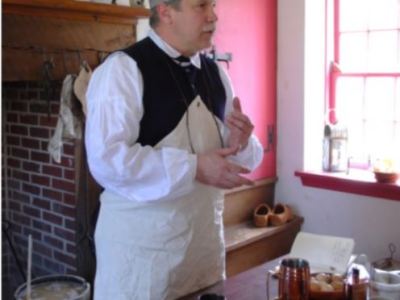
Basic Colonial Brewing #5 –Why use Copper?
Go to almost any brewery or distillery and you will see lots of gleaming copper. This is not some quaint historical holdover nor is it there for show. We use copper in brewing for real and practical purposes. The reasons for using copper were well understood by the Colonial Brewer but why it worked has…
Historical Tidbits — XYZ Affair
When reenacting or acting as a historical interpreter, its good to have a few historical dates and stories to share. This series will publish a few. December 18, 1801 XYZ Affair The XYZ Affair was a diplomatic incident between French and United States diplomats that resulted in a limited, undeclared war known as the Quasi-War.…
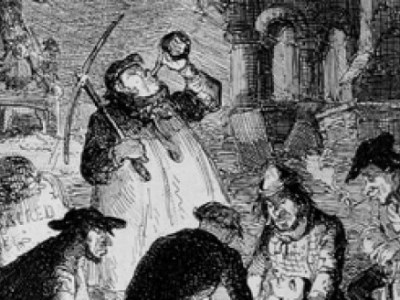
“Colonials were a despicable people — hardly worthy to call themselves the king’s subjects.”
The French and Indian War gave many British aristocrats their first view into what their American colonists were like. They were not impressed! War thrust people of diverse backgrounds and views into close contact, the French and Indian War was no exception. Britons and Americans learned first-hand that many of the commonalities that they believed…
America’s First True Disaster Area — New Madrid, MO
In the early hours of December 16, 1811, the residents of New Madrid, a Mississippi River town once part of the Louisiana Territory, rushed from their homes as the ground rolled beneath their feet. Trees were uprooted and thrown to the ground. Huge chasms opened in the earth, and the Mississippi River ran backward! Somewhere…
Historical Tidbits — Siege Fort Mifflin
When reenacting or acting as a historical interpreter, its good to have a few historical dates and stories to share. This series will publish a few. November 16, 1777 Siege Fort Mifflin On September 22, Howe succeeded in achieving an uncontested crossing of the Schuylkill River and four days later occupied Philadelphia. Having taken the city,…
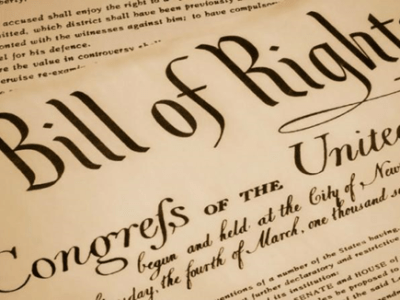
Bill of Rights Day — December 15, 1791
On December 15, 1791, the new United States of America ratified the Bill of Rights, the first ten amendments to the U.S. Constitution, confirming the fundamental rights of its citizens. The Bill of Rights draws influence and inspiration from the Magna Carta (1215), the English Bill of Rights (1689), and various later efforts in England…
Historical Tidbits — General Lee captured
When reenacting or acting as a historical interpreter, its good to have a few historical dates and stories to share. This series will publish a few. December 15, 1776 General Lee captured General Charles Lee left his army and rode to Widow White’s Tavern in Basking Ridge, New Jersey, with a minimal guard. The following…
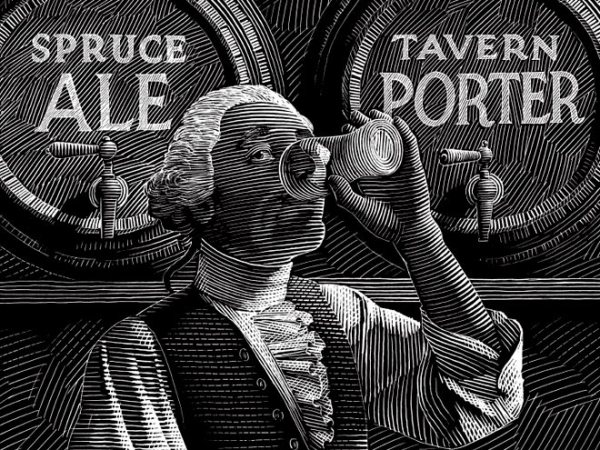
The Regimental Brewmeister does “Talks” as well as brewing demonstrations.
The Regimental Brewmeister is happy to give talks and lectures at your site to audiences of any size. I ask that you provide appropriate auto visual projection equipment and event promotion. I typically come in 18th Century attire and conduct interactive discussions. While I am happy to consider talks on other subjects, I have delivered…

Join the Regimental Brewmeister
People are always welcome to come to my events and if you come in 18th Century kit, you can be part of the program or just hang out in the tent as you see fit. However, if you are truly interested in really learning the process, teaching the public, and being the brewer, you should…
Join the Regimental Brewmeister
People are always welcome to come to my events and if you come in 18th Century kit, you can be part of the program or just hang out in the tent as you see fit. However, if you are truly interested in really learning the process, teaching the public, and being the brewer, you should…
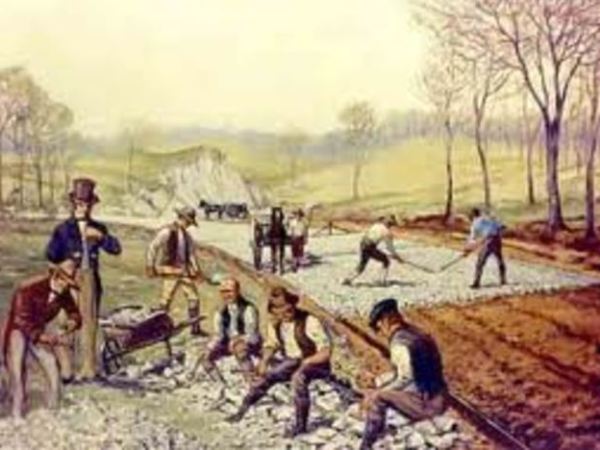
The Pennsylvania Turnpike — 1791
In June, 1791, a private turnpike company was formed ‘for making an artificial road from the City of Philadelphia to the Borough of Lancaster’ — a distance of sixty-six miles. It was the first stone paved turnpike of substantial length in the country, and the most costly and ambitious public works project undertaken up to…
Debtors’ Prison
Well, Tis the Season when many of you are in a Dickens of a mood so let’s talk about 18th Century debtors in England. Prior to the Bankruptcy Act (1869), missing even a small debt payment could lead to decades of imprisonment. If you are familiar with Charles Dickens’ novel Little Dorrit, originally published as…
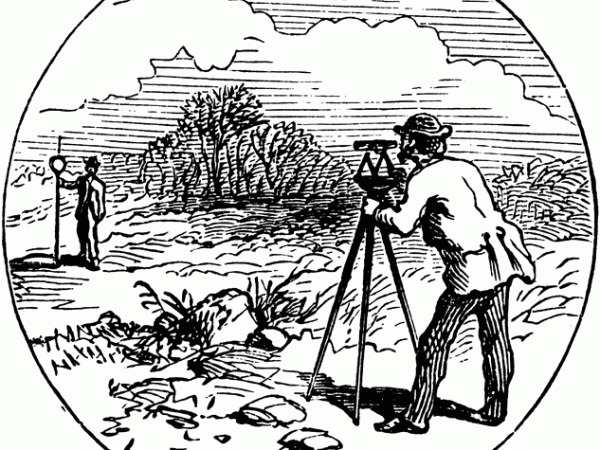
How to Survey Land with 18th Century Tools – Measuring Elevations
Measuring how high a hill rises or whether a field is level involves the following equipment: Determining the elevation between points closer than 1 rod: This is the method most commonly used by architects and carpenters in the 18th Century but also employed by surveyors. This method only works for short distances. Determining the elevation…
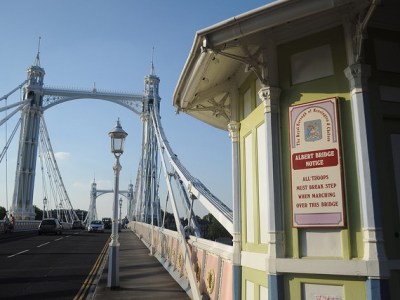
The danger of always marching in lockstep
If you’ve ever been part of an organization that marches — not just the military but even marching bands and re-enactors (sort of) — you know what it means to march in lockstep. Everyone steps in precision to a standard cadence (usually 120 steps/min, 28 in/step) and one person takes a step with his left…
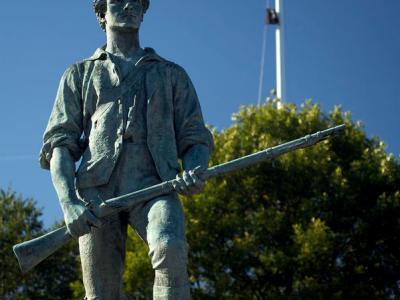
On December 13, 1636 our First “Citizen Soldiers” were Mustered.
While several of our military branches can be justifiably proud of over 246 years of service to our nation, one component of the military goes back much further! The National Guard is the direct descendent of America’s first militias. The oldest regiments drilled for the first time on the village green in Salem, Massachusetts, on…
Louisiana Purchase finalized 12/20/1803
On December 12, 1803 the United States completed the purchase of the Louisiana Territory from Frans for $15 million. This territory encompassed 530,000,000 acres of territory. As the United States spread across the Appalachians, the Mississippi River became an increasingly important conduit for the produce of America’s West (which at that time referred to the…
The Scourge of Slavery (#12) — How the Liberty Bell got its name
Every year millions of people come to Philadelphia to see the “Liberty Bell.” This large bell was commissioned in 1751 by the Pennsylvania Provincial Assembly to hang in the new State House in Philadelphia. At the time it was commissioned, there was no thought about Independence. Philadelphia was the third most important city in the…
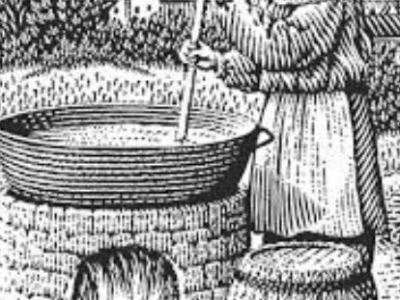
Don Antonio de Medoza
On December 12, 1543 Don Antonio de Medoza granted authorization to Alfonso de Herrera to build and operate a brewery in Mexico City. Truly a landmark event, it was the first brewery in all of the America’s. Want to have the Regimental Brewmeister at your site or event? You can hire me. https://colonialbrewer.com/yes-you-can-hire-me-for-your-event-or-site/

Switchel
Switchel or “Haymaker’s Punch” is a drink made of water mixed with vinegar, and often seasoned with spices like ginger. It is usually sweetened with molasses or brown sugar. Switchel originated in New England, and it became a popular summer drink in the American Colonies in the late 17th century. By the 19th century, it…
Historical Tidbits — Congress adjourns to Baltimore
When reenacting or acting as a historical interpreter, its good to have a few historical dates and stories to share. This series will publish a few. December 12, 1776 Congress adjourns to Baltimore In mid-December 1776 Congress decided to move to Baltimore to escape capture by the advancing British. The time in Baltimore was a…
The British East India Company
Founded in 1600 by royal charter, the East India Company was established as a joint-stock trading company to exploit opportunities east of the Cape of Good Hope where it was granted a trade monopoly. Crucially, to conduct this trade, the EIC was permitted to ‘wage war’. Although the EIC did not hold sovereignty in its…

Apple Jack
Applejack is a uniquely American type of apple brandy which was widely produced during the 1700’s in North America. It was made by placing hard cider in wooden barrels and exposing them to freezing temperatures during winter. The water in the hard cider froze in the top of the barrel and could easily be removed. …
The Scourge of Slavery (#11) — Gradual Manumission, a small step toward Abolition
Perhaps in no other state did the ideals espoused during the American Revolution take hold as much as they did in Pennsylvania. The gradual emancipation act was just one example of Pennsylvanians attempting to follow through on Revolutionary promises but trying to abolish slavery outright was very difficult. The Pennsylvania legislature, however, suggested a gradual…

And Now for Something Completely Different…
In the last decades of the 18th Century, in the south of England, there was a trend It was often referred to as a ‘shift’ or ‘smock’ marriages. These even went so far as to sometimes be puris naturalibus or naked marriages. It seems, in the tradition of Lady Godiva of Mercia, If a woman…
Historical Tidbits — Retreats across the Delaware
When reenacting or acting as a historical interpreter, its good to have a few historical dates and stories to share. This series will publish a few. December 8, 1776 Washington crosses Delaware (retreat) On 8 December 1776, after a long retreat through New Jersey under pressure from the British Army, American General George Washington…
Historical Tidbits — Delaware became the first state to ratify the US Constitution
When reenacting or acting as a historical interpreter, its good to have a few historical dates and stories to share. This series will publish a few. December 7, 1787 – Delaware became the first state to ratify the US Constitution. The Constitution was not ratified by all states until May 29, 1790, when Rhode Island…

Economic Crash — Tulip Mania
The Dutch tulip mania of the 1600s is often cited as an example of greed, excess, and financial mania, with the prices driven by the fear of missing out and crowd psychology. Tulips were imported into Europe in the 16th century by the Dutch East India Company, arriving via the spice trading routes that lent…

Curaçao
In 1499 the Spanish sent an expedition to the Caribbean island of Curaçao in an attempt to cultivate Seville oranges. Oranges were vital to naval operations in the region as they were used to fight scurvy. The Seville oranges, however, struggled under the island’s harsh equatorial sun, arid climate, and infertile soil eventually evolving into a small, bitter,…

Every Wonder Why We Call it a “Duffle” Bag?
If you make your tent out of ordinary “canvas” you are going to get wet in the rain. Canvas is a stout cloth, probably named after cannabis (Latin: “hemp”), made by tightly weaving material, mostly cotton, wool, and linen. This definition has not been that precise forever since the word canvas has come to signify…
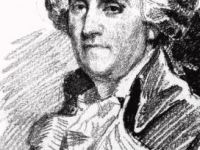
Gov Franklin made each soldier brew their own beer.
On December 6, 1769 Governor of New Jersey William Franklin (son of Benjamin Franklin) worried about using the colony’s dwindling beer supply to provide British troops with rations. To address the crisis he issued a proclamation: ENACTED: That… in Lieu and Stead of Four Pints of Small Beer hereby allowed each man per day it…
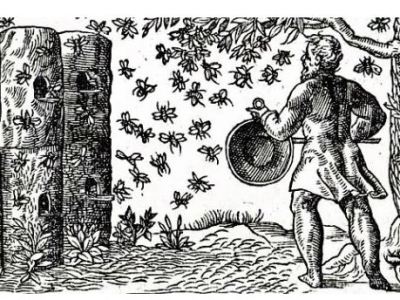
Mead was not Mainstream in Colonial America
Honey bees are not native to North America. They were originally imported from Europe in the 17th century. In a letter written December 5, 1621 by the Council of the Virginia Company in London and addressed to the Governor and Council in Virginia, “Wee haue by this Shipp and the Discouerie sent you diurs [divers]…
The Scourge of Slavery (#10) — Concessions were made to slave owners in the US Constitution — the 3/5ths Compromise
At the Constitutional Convention in Philadelphia, it is important to remember that none of the delegates called for an actual the end of slavery. While some of them expressed their discomfort with it — George Mason of Virginia called for anti-slave trade laws and Gouverneur Morris of New York called slavery “a nefarious institution –…
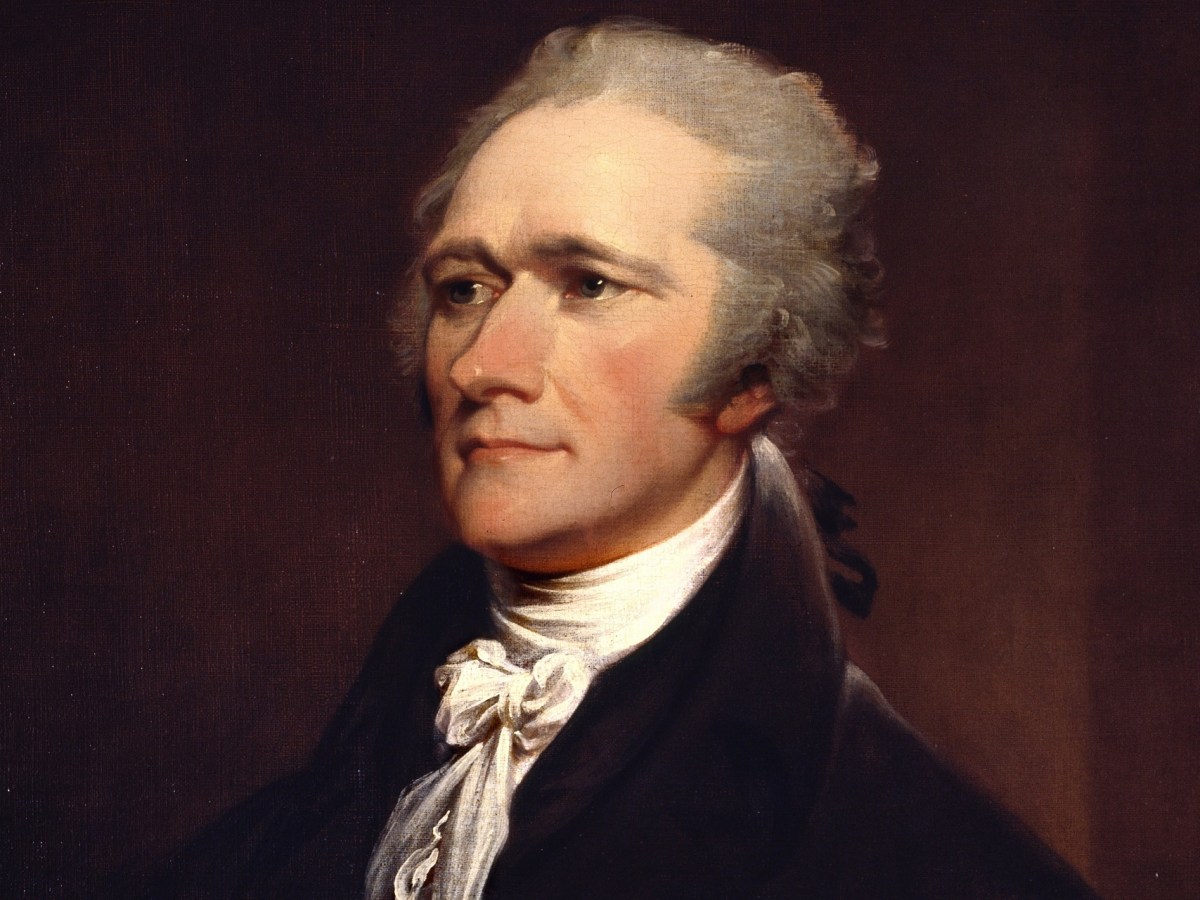
Could one of our Founding Fathers have been a Jew?
While writing the blog on Chanukah in Colonial America, I came across some lectures and articles by Andrew Porwancher, a professor at the University of Oklahoma, who has an interesting hypothesis. It seems that while researching the early life of Alexander Hamilton, Porwancher uncovered some interesting facts. Alexander Hamilton is the son of Rachel Faucette…
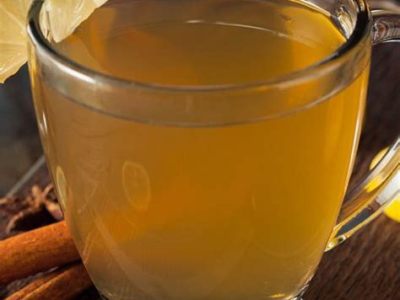
Glögg
Hot spiced wine has been offered to messengers and postmen in Norway who travelled on horseback or skis in cold weather since at least the 16th century. Glögg is a common winter drink consisting of sweet wine or grape juice mixed with syrup and some harder spirits like rum, brandy or cognac. Glögg begins by…
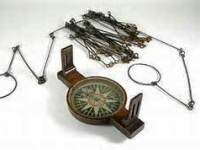
How to Survey Land with 18th Century Tools – Measuring Lines
Land surveys consist of six basic tasks: In this series we will discuss the fundamentals of doing these tasks in the manner and with tools similar to those available to surveyors in the 18th Century. Let’s suppose you want to fence part of your acreage maybe section off the back 400 feet for a small…
Prescription Julep
Most people in the United States associate Julips drinks with The Kentucky Derby and certainly mint juleps have a storied history in that event but julep drinks have been around a lot longer and there are more julep drinks than the mint julep. This cocktail has origins back to the late 1700s, and ‘Julep’ is based…
The “beer before liquor” rule has no scientific basis.
I am sure you’ve heard “Beer before liquor, never been sicker; liquor before beer, you’re in the clear.” This is an adage of unknown origin claiming that low alcohol-by-volume (ABV) beverages (like beer) are best imbibed at the end of a night of drinking rather than early on. There are, however, NO scientific studies supporting…
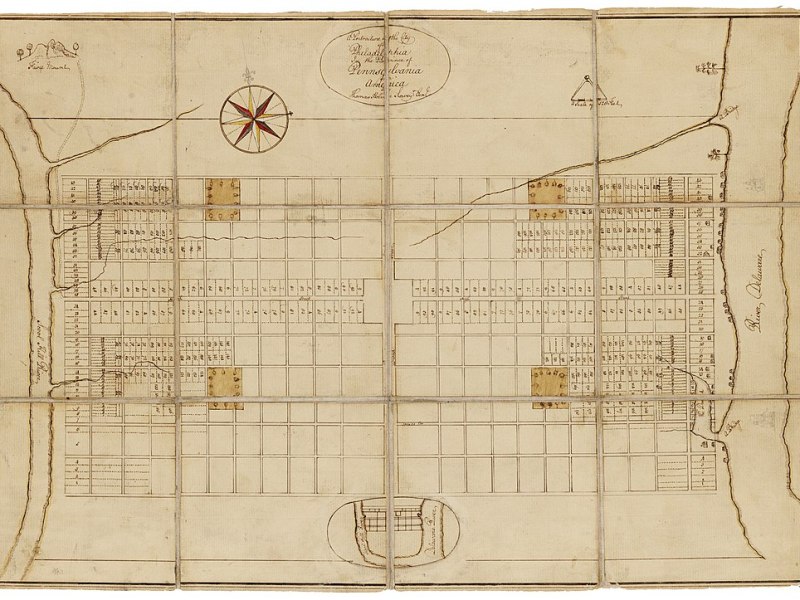
The Birth of Urban Planning in America
Despite what you may think today, Philadelphia was America’s first planned city. William Penn had a broad vision for the new settlement and started a revolution in city planning: the open grid plan that became Philadelphia. Having witnessed plague in London in 1665 and the famously calamitous fire of 1666, Penn wanted his Philadelphia to…
Historical Tidbits
When reenacting or acting as a historical interpreter, its good to have a few historical dates and stories to share. This series will publish a few. December 1, 1779 2nd Encampment at Morristown While much in made of the harsh conditions at Valley Forge, the winter of 1779 was the harshest in the war. “A…

The Regimental Brewmeister’s Vanilla Extract
For hundreds of years, the Totonac people, who lived on the east-central coast of Mexico, have grown and harvested the Tlilxochitl vine, an orchid that can only grow in very specific climates. In the mid 1400’s the Aztecs conquered the Totonac people and forced them to provide regular tributes. These tributes included the fruits of…
Baked Apple Wassail
The word “wassail” appears as early as the 8th century in the poem Beowulf. Originally, it was used as salutatory gesture (wassail!) from Old Norse ves heill “be healthy.” By the 12th Century, Wassail was used as a drinking salutation, similar to the use of “Cheers” or “Probst” today, and his use seems to have…
The Scourge of Slavery (#9) — George Washington as a Slave holder
George Washington owned enslaved people from age eleven until his death. At the time, large-scale tobacco planting was carried out by enslaved labor. Large portions of the social, political, and economic society of colonial Virginia revolved making full use of enslaved labor and the buying and selling enslaved people. Washington made no official public statements on slavery or emancipation as…
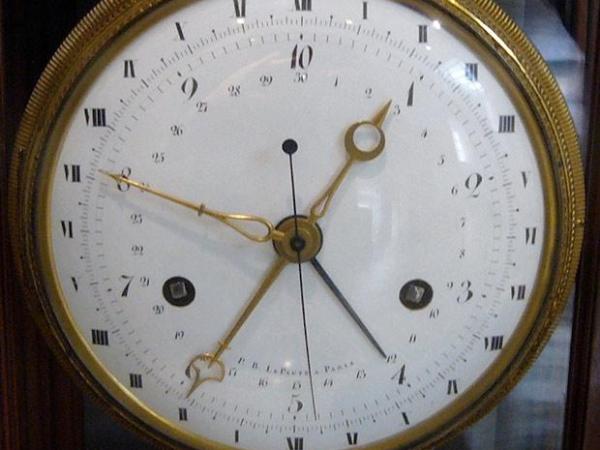
Metric Time
There are 24 hours in a day, seven days in a week, and (roughly) 365 days in a year. There are 60 minutes in an hour and 60 seconds in a minute. You probably knew all that. But you know it because you’ve committed it to memory — it’s not something you can reason out.…
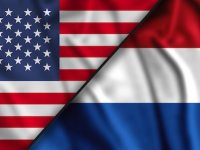
The Act of Abjuration and the Declaration of Independence — A strong link between the Netherlands and USA
On July 27, 1581, the newly formed Dutch Republic issued a declaration — Plakkaat van Verlatinghe, formally declaring the Netherlands’ independence from the King Philip II of Spain. The Seventeen Provinces of the Habsburg Netherlands were united by Holy Roman Emperor and King of Spain Charles V IN 1544. Under Charles, these provinces were governed…
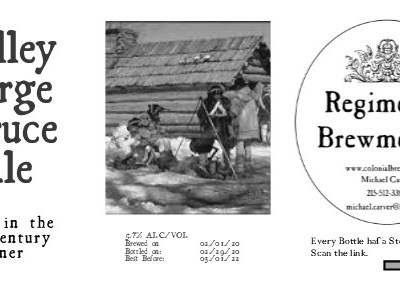
Hey Brewmeister, why are there all those QR codes on your bottles and kegs?
Okay, I don’t give away bottles but you may have noticed that every bottle and every keg have a QR code on it and its not a SKU because I am not selling beer outside of events and I am not that sophisticated in my inventory management. So, what are these? Well, brewing beer is,…

The Coow Woow
“Coow woow” was an Indian term for rum, and this makes sense since most of the drink is rum. The history of the Coow Woow is a bit murky but the Wayside Inn in Sudbury, MA claims it dates back to the early days of 1664 making it one of if not the first cocktail…
Hot Ale Flip
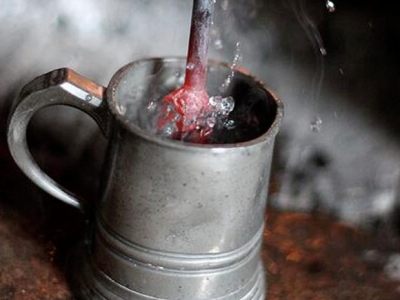
If you were traveling through Colonial New England, chances are the drink of choice is Rum Flip, which is quite a treat to see prepared with vigorous mixing and a final heating using a long metal rod known as a loggerhead or in the south a mulling iron. Flip was a common hot cocktail made…
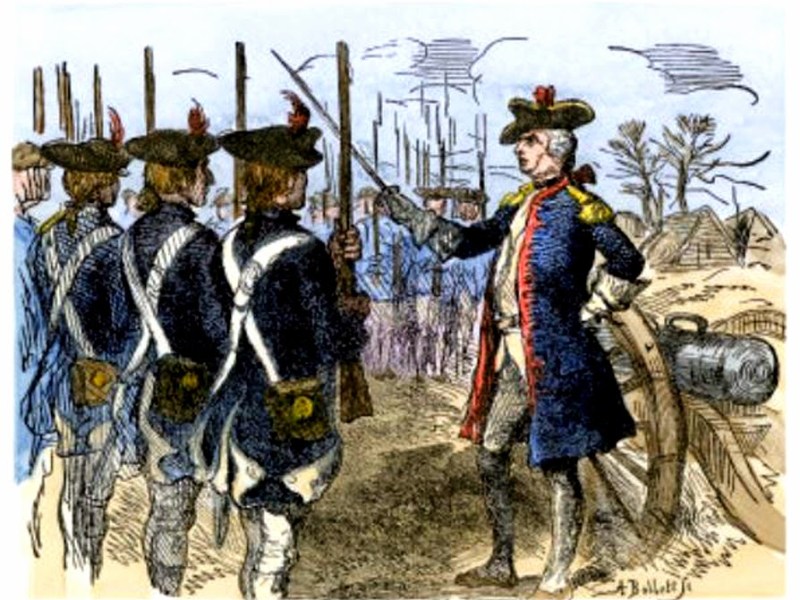
Von Stueben Altbier
During the early American Revolutionary War, Continental Army lacked strong central command and was made up of state-run militias operating independently of each other. Each militia operated by its own rules and regulations and there was very little standardization or guidance for the duties and responsibilities of soldiers and officers. In 1777, Friedrich von Steuben…

Thanksgiving – 1770’s Style
In 1789, President George Washington issued a proclamation designating November 26 of that year as a national day of thanksgiving to recognize the role of providence in creating the new United States and the new federal Constitution. Thanksgiving as a celebration of surviving the first year of the Plymouth Colony had been celebrated in Massachusetts…
What’s in a Name? Why are Pennsylvania, Kentucky, Massachusetts, and Virginia called “Commonwealths?”
The United States is made 46 states and 4 commonwealths — Pennsylvania, Massachusetts, Virginia, and Kentucky. While in modern politics, this is an academic distinction, the term “commonwealth” defined as a political entity founded for the good of the people; whereas a “state” existing for the benefit of its citizens. The term UnitedStates, was deliberately…
THE RATTLESKULL
If you read this blog enough, you are familiar with 18th Century taverns being the social and business hubs of many communities. Early taverns weren’t just bars, they were used for business meetings, post offices, news agents, militia headquarters, judicial meetings, polls, and as places for lively political debates. To overcome social anxiety and help…
And Now for Something Completely Different: The State Sport of Maryland is Jousting!?
Typically associated with either its military or aristocratic origins, jousting is a martial art we associate with 13th century medieval tournaments. Mention jousting and images of knights galloping headlong toward armored opponents, aiming wooden lances, and smashing against each other in an explosion of splinters comes to mind. Aside from the sometimes with deadly results,…
Historical Tidbits — Blackbeard Captured
When reenacting or acting as a historical interpreter, its good to have a few historical dates and stories to share. This series will publish a few. November 22, 1718 – William Teach (AKA Blackbeard) was captured and executed by the Royal Navy off the coast of North Carolina. His mythical buried treasure has not been…
The Regent’s Punch
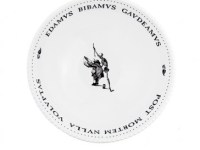
George Augustus Frederick, Prince of Wales, was born on August 12, 1762 at St James’ Palace, the eldest son of George III and Queen Charlotte. When his father became incapacitated due to mental instability and ill health, he ruled for nine years as Regent (1811 – 1820) before becoming King upon his father’s death in…
History of Curry Powder
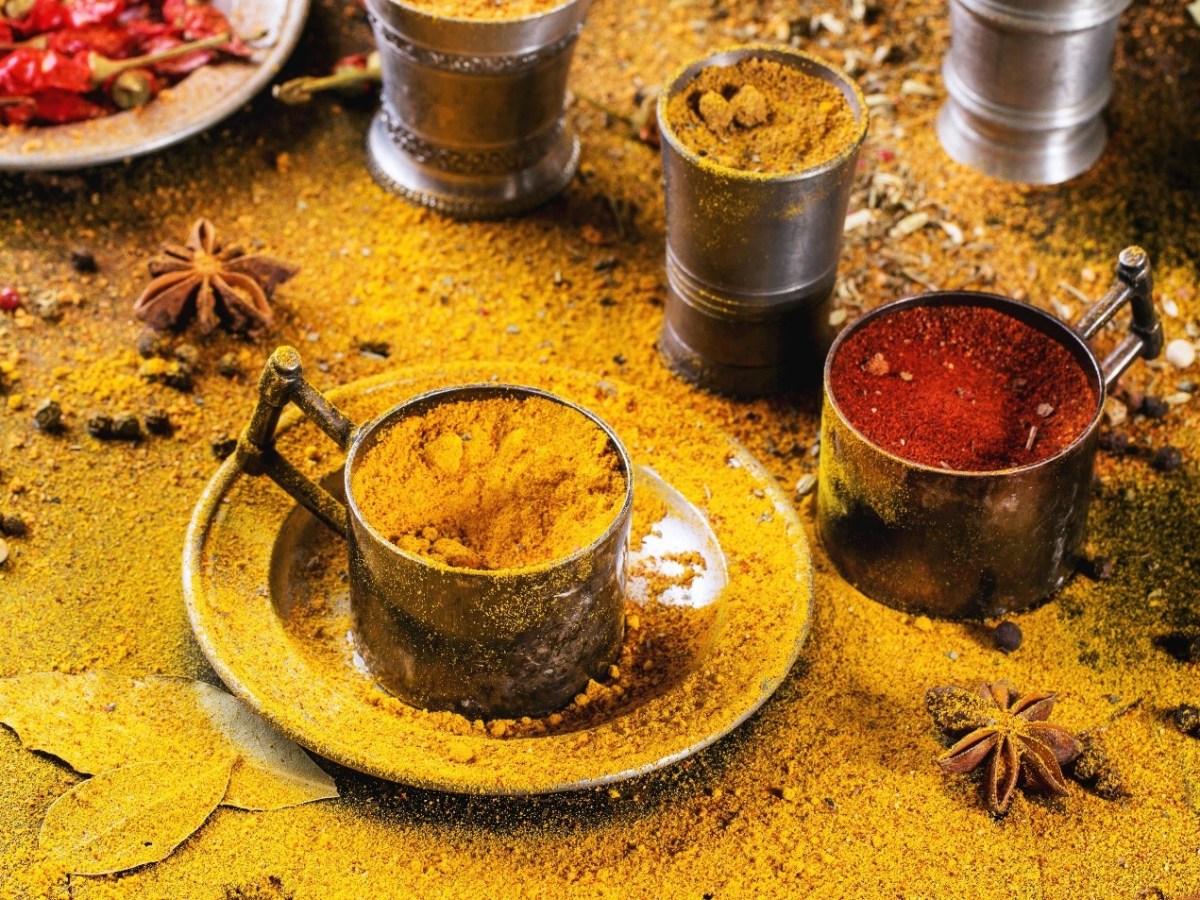
I truly love Indian food and I am not alone. I once asked an Englishman what the national dish of Great Britian was and his unreserved rely was “Curry.” While it’s not quite as ubiquitous in the USA, Indian food is common throughout the former British empire and the lasting reminder of the absolute power…
Turkey? Why Turkey?
For many a Thanksgiving meal is centered on turkey. Turkeys are indigenous only to parts of North America and Europeans only first came into contact with turkeys roughly 500 years ago. So how did turkeys (the bird) end up being named so similarly to Turkey (the country)? As far as we can tell, the first European…
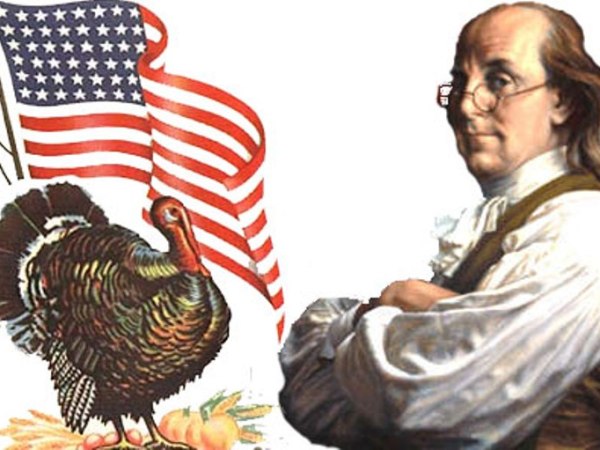
Despite Today’s Politics, the Turkey was Never Considered as Our National Symbol
There is a myth that the turkey almost came to represent the United States. The story goes that after the Declaration of Independence was signed, Congress asked Benjamin Franklin, Thomas Jefferson, and John Adams to design a seal for our new nation. Since many of the Germanic nations, incorporate eagles into their pageantry, the eagle…
The Scourge of Slavery (#8) — Thomas Jefferson, a Slaveholder, argues to end slavery in new United States
There were 87 edits to Jefferson’s original draft of the Declaration of Independence. Most were trivial, shortened phrases here or word substitutions there, but there is one glaring omission. One entire paragraph highlighting perhaps the greatest CRIME committed by King George, Parliament, the various “companies” (like the East India Company) and other agents of British…
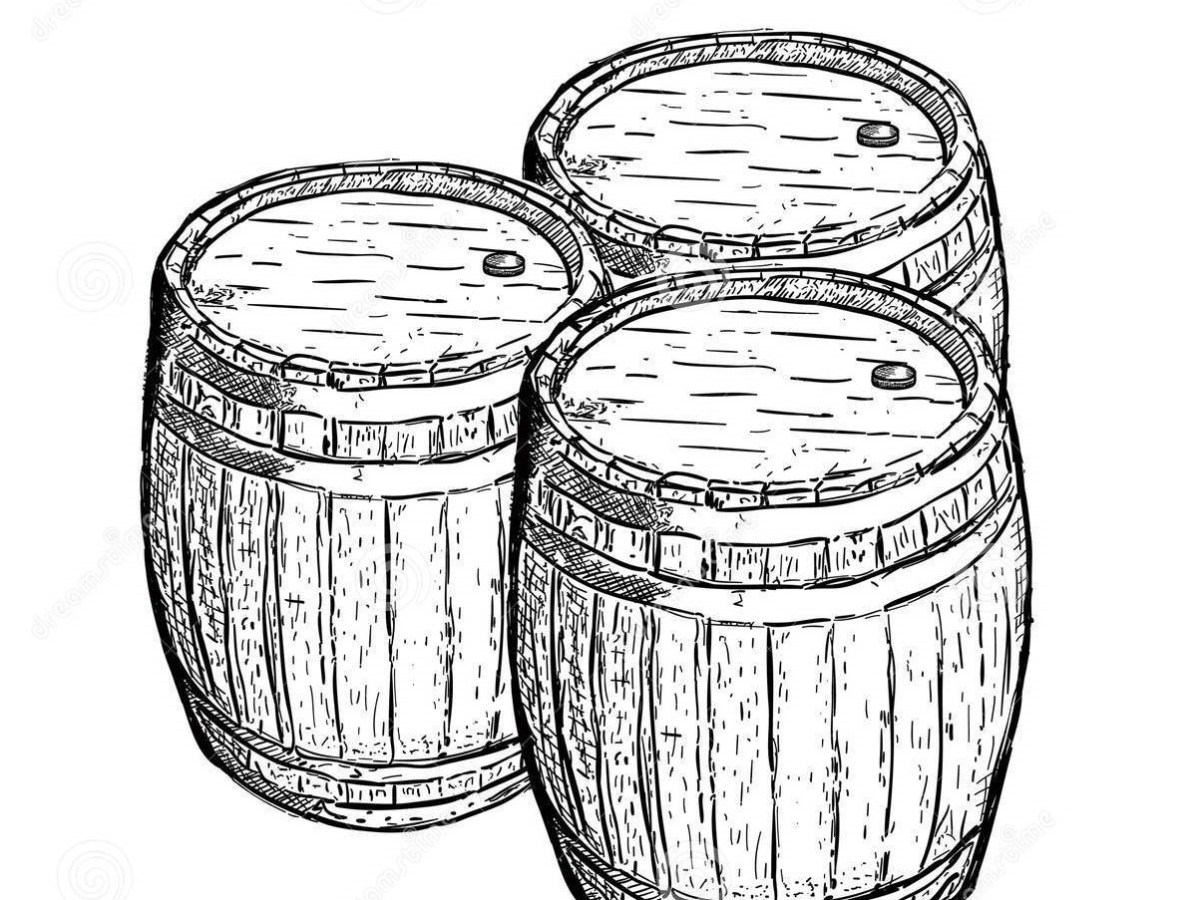
Dutch Courage — Gin
Gin comes to us from the Netherlands and took its current form in the sixteenth century. The predecessor to gin is Dutch ‘genever.’ There are two basic categories of genever, traditional ‘Oude Genever,’ (old style genever) with a high malt content for its base (15%-50%) and ‘Jonge Genever’, the newer style with only 15% malt…
“Beer” Recipe: Dutch East India Company Cider
The Vereenigde Oostindische Compagnie (VOC), better known as the Dutch East India Company was set up in 1602 and head-quartered in the Oost-Indisch Huis (East-India House) in downtown Amsterdam as an official colonial agency. The company was given massive financial backing and the legal power to wage war, create overseas settlements, and uphold its own…
Follow My Blog
Get new content delivered directly to your inbox.
 Michael Carver -- Historical Interpreter/Reenactor