Purim is celebrated every year on the 14th of the Hebrew month of Adar (late winter/early spring). This year is a poignant celebration given that Israel is at war with Iran (historic Persia).
In the 4th century BCE, Persian King Ahasuerus had his wife, Vashti, executed for failing to follow his orders, then he arranged a beauty pageant to find a new queen (sounds Epstein-like doesn’t it?). A Hebrew woman, Esther, found favor in the King’s eyes and became the new queen, but Ahasuerus was unaware, or uncaring, of her nationality.
Meanwhile, the king’s prime minister of the empire, Haman, demanded that all Persians bow to him and show deference (you pick – which MAGA does this remind you most of?). When a Jew, Mordechai, refused to bow to Haman, Haman was incensed, and he convinced the king to issue a decree ordering the extermination of all the Jews on the 13th of Adar, a date chosen by a lottery.
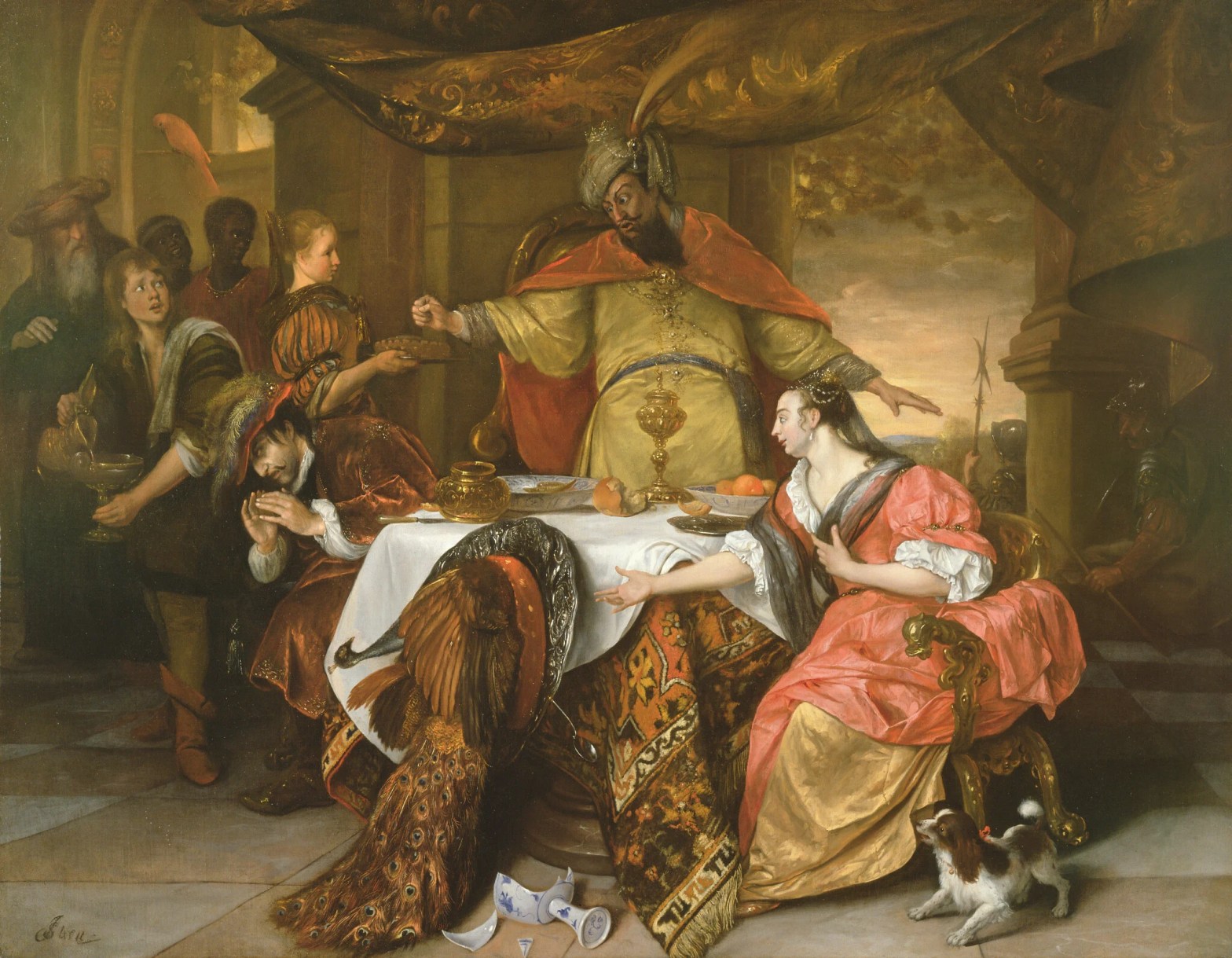
Ester, Mordechai’s niece, asked the king and Haman to join her for a feast. At a subsequent feast, Esther revealed to the king her Jewish identity and that per Haman’s decree, she was to be killed on Adar 13. Ahasuerus was enraged and ordered Haman hanged, Mordechai was appointed prime minister in his stead, and a new decree was issued, granting the Jews the right to defend themselves against their enemies.
On the 13th of Adar, the Jews mobilized and killed many of their enemies. On the 14th of Adar, they rested and celebrated. In the capital city of Shushan, they took one more day to finish the job.
So, what does this have to do with the Regimental Brewmeister, other than the obvious, I am a Jew? Well, that tradition on Purim is that you engage in a raucus celebration and DRINK. In fact, according to Abba ben Joseph bar Ḥama a Babylonian rabbi who lived between 280 and 352 CE, a person must get drunk on Purim until he cannot distinguish between “cursed be Haman” and “blessed be Mordechai.”
Another reason I am writing you today is a true 18th Century tradition – Hamantaschen. Hamantaschen are three-sided cookies associated with the holiday of Purim. These pastries are shaped like tricorn hats.
Some time during the 18th Century, the tricorn hat, long a popular accoutrement of Spanish nobility, became associated with Haman (Haman likely wore more traditional Persian attire). This is in no small part due to the abuses of the Catholic Church and its Inquisition.
Prune filling became the traditional fillings for these Hamantaschen in the 18th century. In 1731 a Jewish plum preserve merchant named David Brandeis living in the Czech town of Jungbunzlau. He was briefly imprisoned for allegedly poisoning his plum preserves. When he was acquitted, the Jews of Jungbunzlau filled their hamantaschen with povidl, plum preserves (prunes are dried plums), and thereafter referred to the holiday as Povidl. When Rhineland Jews moved east to Poland, Russia, and Hungary, they brought this hamantaschen tradition along with them.
To Make your Own Hamantaschen, here is a traditional recipe:
DOUGH:
- 3 1/4 cups flour
- 1/2 cup sugar
- 1/2 teaspoon salt
- Zest of one small lemon
- 1 stick margarine
- 1 stick unsalted butter, cut into eighths
- 1 egg yolk
- 1 1/2 teaspoons vanilla
- 2 or more tablespoons brandy or rum
- Milk (optional)
- Confectioner’s sugar
Combine flour, sugar, salt, and lemon zest in a bowl
Work in butter with a fork
In a separate bowl, combine the yolk, vanilla, and brandy
Mix the liquid ingredients into the flour mixture until a ball of dough begins to form.
Turn the dough out on a lightly-floured board and gently knead it into a ball. Divide the dough ball into two or three portions and chill.
FILLING:
- 2 cups pitted prunes
- 1 cup brandy or rum
- 1/4 cup orange juice
- 1 teaspoon orange zest
- 1/4 teaspoon salt
- 1/3 cup brown sugar
Combine all of the ingredients in a pan except for the brown sugar and bring to a boil for one minute.
Reduce heat to medium low so the mixture simmers slowly and constantly. Cover the pot. Let the mixture simmer for 20 minutes, stirring every few minutes.
Remove the lid from the pan, add the sugar and let the prunes continue to simmer for 3-5 more minutes, stirring frequently, until most of the liquid has evaporated/absorbed. When there are about 3 tbsp of liquid left in the pan, remove from heat.
Mash the prune mixture until a smooth puree forms.
Let cool to room temperature.
MAKE THE COOKIES
Roll out the dough to 1/8-inch thickness on a surface that has been liberally coated with Confectioner’s sugar.
Cut into 3-inch circles and place a small amount of prepared filling in the center of each circle. Shape the dough into triangles, pinching the edges together. You should have approximately 30 cookies.
Place the cookies on 2 parchment-lined cookie sheets and bake for 12-15 minutes at 350°F oven until golden brown.
The Regimental Brewmeister is preparing talks on the Jews of the American Revolution and looking for community groups who are interested in learning these stories. If you are interested in hosting this or one of my other talks, please let me know.
Want to have the
Regimental Brewmeister
at your site or event?
You can hire me.
https://colonialbrewer.com/yes-you-can-hire-me-for-your-event-or-site/

