
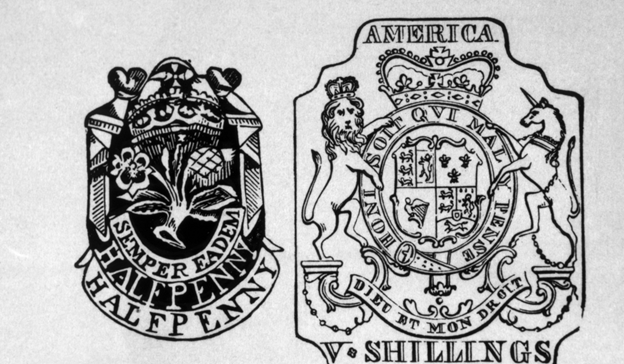
Benjamin Franklin once observed there were two guarantees in life – death and taxes. From ancient times to present, beer has ever been in the sights of the taxman. Some of our earliest writings are records of taxes paid on beer. Even the celebrated Reinheitsgebot, or German Purity Law, contains a tax regulation setting the price for beer and subsequently, its tax.
Beer is thought to have first been produced in Fertile Crescent of Mesopotamia and Babylonia. In fact, there is a strong debate as to whether the agriculture that created these great civilizations was developed to support the manufacture of beer or vice versa. Beer was integral to public life in ancient Babylon. It was more than merely a drink or dietary staple, beer had a major role in religion, commerce and culture. This eventually led to its use as a form of currency and where there is liquid currency (pun intended), there are taxes.
Later, the kingdom of Egypt relied heavily on beer taxes to pay the enormous cost of monuments, pyramids and tombs. Some Pharaohs argued taxes on beer would curb drunkenness but let’s be clear, their motive was revenue. Egyptians were even buried with jars of beer, packed around them in their tombs, both as provisions for the journey to the afterlife and a means to pay the toll over the river Sphinx.
As the Romans and then the Catholic Church pushed into Europe, they quickly sought to pay for military and civic institutions. Throughout the Middle Ages the church touched nearly every part of life, and this included both the production and taxation of beer. Beer in a time when safe drinking water was rare, beer become the dominant drink of northern Europe. Local monasteries and abies quickly recognized producing and collecting tithes against beer as a reliable source of revenue.
Taxes on beer were levied in the form of licensing fees against brewers and taverns as well as on farmers who grew hops, a key ingredient in beer. Payment of beer tax in any form was sober business. In Aix-la-Chapple, the council of 1272 confronted the non-payment of beer tax with extreme penalties. Brewers found guilty of avoiding or cheating on taxes were punished by chopping off their right hand. Wisely, the council also saw there was cheating in the alehouses.
Like all taxes, people sought ways of avoiding these levies. One common means was to produce gruit, the mixture of herbs, grains, and fruits, which has its origins in the local Druid and Celtic societies. Naturally, the production of gruit threatened the revenue streams of the Church so they sought ways to combat its production. Laws dictated by the church limited transport and sale of gruit. Sometimes the ingredients needed to produce gruit were outlawed, often by labeling their use as witchcraft. In one notable case, Wilhelm and Ludwig Wittelsbach, issued the Reinheitsgebot, which they enforced across feudal Bavaria in 1516. Often touted as a “purity law,” Reinheitsgebot is actually an attempt by the Catholic Church to stamp out the production of gruit by making only beer made from barley, water, hops, and yeast legal. The laws go on to set price controls on beer making it impossible for secular brewers to compete with Church (who were tax exempt as they collected rather than paid the tithes). As German principalities outside Bavaria (Nurnburg, Erfurt, Essen, and Munich) passed similar edicts, gruit production all bu ceased and the Church developed a monopoly on the sale of beer.
Tavern keepers sometimes tried to avoid the beer tax by importing beer. To stop this, the Church stipulated that any tavern avoiding the tax was to be destroyed. Even England adopted similar laws, and in 1625 declared that any tavern keeper failing to pay the annual licensing fee was to be whipped. A second offense was subject to a month in jail.
Modern History offered no more chance of escape from death and taxes than in all the previous centuries of human experience. In the US, State and Federal Politicians saw beer as an easy way of bolstering the treasury, and ‘Sin Taxes’ increasingly became a favorite method of raising money. Use of ‘Sin Taxes’ was insidious enough, but the worst political blunder of the last century was prohibition where ALL production, sale and import of alcohol was prohibited. The country went dry, breweries died, and so did scores of Americans.
In 1932, while campaigning for the presidency, Franklin Roosevelt made repeal of prohibition one of his objectives, but secretly it was a restoration of the tax revenue that motived the repeal. FDR was certain that reopening breweries, in the middle of the Great Depression, would mean instant jobs for more than 150,000 out-of-work brewers. On the surface it looked as though his motivation was employment and increasing the circulation of money through beer sales. The windfall of beer tax to help drag the government out of its financial crisis.
Beer taxes are with us to stay. In Pennsylvania (where the Regimental Brewmeister lives) the state collects 18% on the sale of beer and wine. This is in addition to the 6% sales tax. But these rates only apply to sales at the place of manufacture (like a brewpub). If you want beer for off premise consumption, the tax is 25%. Beer and taxes are bedfellows.
Want to have the
Regimental Brewmeister
at your site or event?
You can hire me.
https://colonialbrewer.com/yes-you-can-hire-me-for-your-event-or-site/
 Michael Carver -- Historical Interpreter/Reenactor