
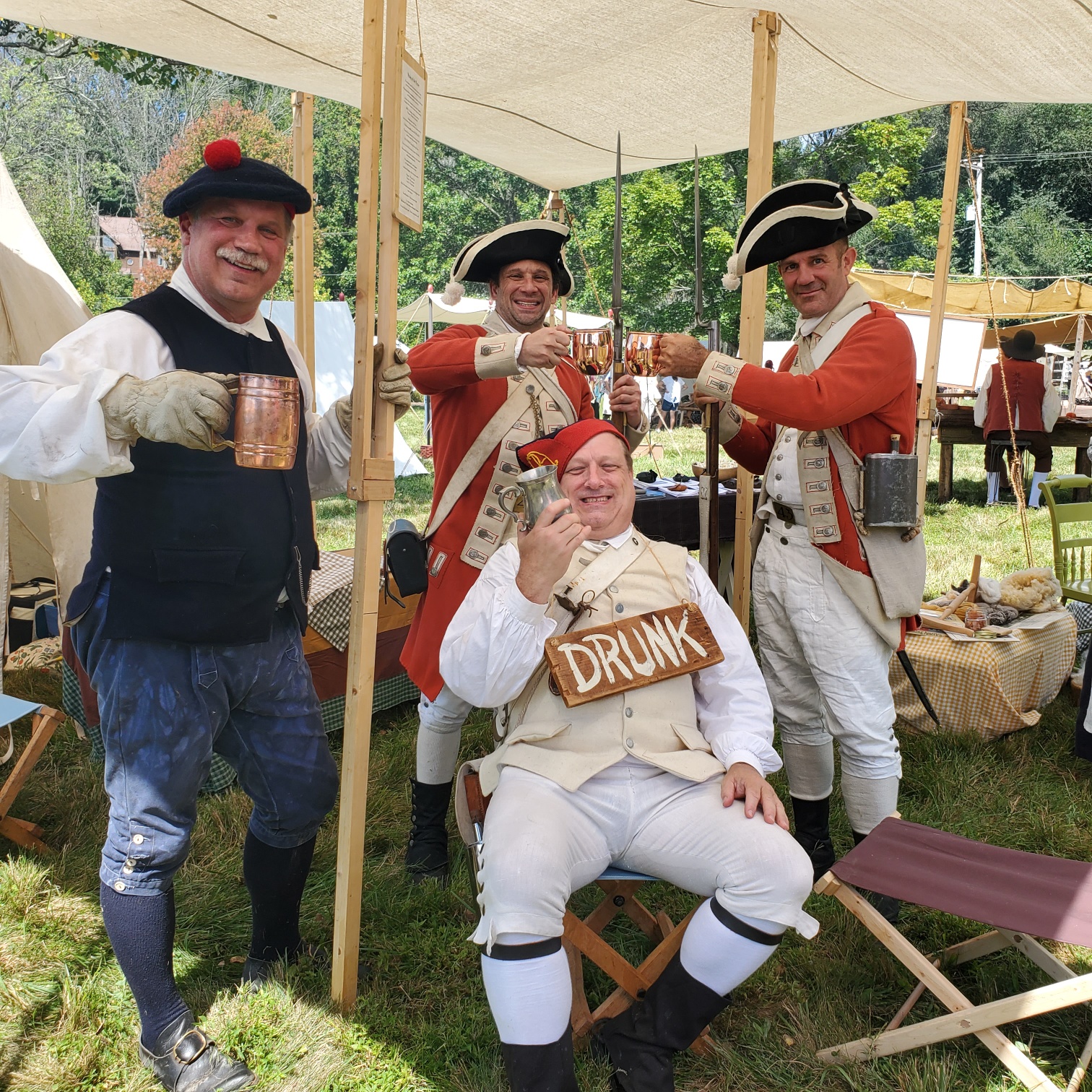
Imagine getting DRAFTED into office where your job is to drink beer. Well, that is exactly what happened in medieval England. Ale conners (also known as ale-tasters or ale-cunners) were local officials appointed by a baron or marquis to ensure the quality and fairness of ale and beer production in their county. Their job was to inspect alehouses, breweries, and the market stalls of local alewives.
Unlike Bavaria, 14th Century England had not ”Purity Laws.” Beer was often poorly or improperly made, stored and still sold. In an era when water contained enough pathogens to kill, it was critical that beer be properly brewed or else patrons of a brewer or alewife would be a significant risk. This was especially true of “public houses” which not only served the public at large but were licensed by the Crown to serve the military and courts. Poorly brewed beer had the potential to render armies incapable of doing their duties and shutting down markets and the courts.
This risk to public safety motivated King Richard II to order, in 1393, that every inn and pub licensed by the Crown display his personal emblem, a white hart (stag)on their signage. This law made it easy for the ale-conners to identify premises making or serving beer and ensure that these establishments made healthful and wholesome beer. Failure to hang a sign with the hart resulted in the forfeiture of the establishment’s license, and prevented them from selling ale to public officials, soldiers, sailors, and other agents of the Crown.
The biggest risk of improperly brewed ale was that it contained too much unfermented sugar. Beer is made by fermenting barley sugars but if a brewer wishes to speed up the process or boost the alcohol levels in their beers, they can add cheap cane sugar from the Caribbean or North Africa to the wort. This sugar often failed to fully ferment (yeast have an attenuation factor that limits how much alcohol they can tolerate before they die off) and because the beer could not be refrigerated, unfermented sugar in the beer promoted microbial growths that could easily spoil the beer and infect the drinker.
So, the ale-conner had a fairly simple task. He would make the rounds to all the pubs and breweries in his county and taste the ale to see if it was “off.” Here was a job where you literally were paid to drink beer all day. Why then was it necessary to “impress” or conscript ale conners?
Well, it’s a dangerous job. If the beer was infected, you could become ill and even die. It was also dangerous because if the ale conner found beer to be unsatisfactory, he reported that finding to the dispenser of fines, often making an ale-conner unpopular in the community. Finally, since taste is a malleable sense (drink enough beer and you become insensitive to minor contamination), the authorities devised a more demonstrative, and humiliating, means of testing for excess sugars in the beer. Wearing leather breeches, the ale conner would pour half the sample pint they were given onto a wooden bench and then sit on the damp wood. He would then “taste” the remaining half. If after half an hour, when the man stood up, his leather breeches stuck to the bench – then there was too much sugar in the ale and the brewery failed the tasting.
Hops, along with safe brewing methods, and improved yeast strains have rendered the role of ale conner obsolete. It is rare that you get a sickly-sweet brew without such obvious infection that it immediately dumped. Furthermore, since brewing supplies are generally cheaper today, there is no incentive for a brewer or publican to attempt to pass off bad beer. You can keep your day job. You can taste all that you brew, all while knowing it’s brewed well. The custom of having an ale conner is, however, still practiced (as a ceremonial ”joke”) in some Inns and Taverns in Surrey (England). Should someone wish to proclaim themselves the ale conner at one of my taverns, I will provide the appropriate free beer. When it passes, I expect the conner would announce “I proclaim this ale to be of good quality. God save the King!”.
Want to have the
Regimental Brewmeister
at your site or event?
You can hire me.
https://colonialbrewer.com/yes-you-can-hire-me-for-your-event-or-site/
 Michael Carver -- Historical Interpreter/Reenactor