
When the British imposed the Stamp Act of 1765, John Hancock helped lead the opposition in urging a boycott of British-made goods. Far from an act of patriotism, Hancock, a smuggler of tea, rum, and wine, used these boycotts earn obscene profits. But the boycotts did impact the Crown and eventually lead to the repeal …
Author Archives: Michael Carver
That Guy

That Guy So, when I choose to represent a Continental Soldier, I carry my Brown Bess. My son has a Charleville and I could use that but I contend that the Brown Bess is the quintessential military weapon of the 18th Century British Empire. I enjoy working the crowd and explaining that men between 16 …
Historical Tidbits — The Louvre becomes a public museum

When reenacting or acting as a historical interpreter, its good to have a few historical dates and stories to share. This series will publish a few. The Louvre opens August 10, 1793 as a public art museum for all Frenchmen In 1546 Francis I, who was a great art collector, had a 12th Century castle …
Continue reading “Historical Tidbits — The Louvre becomes a public museum”
Why would an American Soldier carry a Brown Bess Musket?

In my last post I talked about THAT GUY. You all know that type, the know-it-all who wants to show off by starting an argument with the presenter over something the presenter knows WAY more about. These guys come looking for a axe fight only to discover that … “wait, they all HAVE axes in …
Continue reading “Why would an American Soldier carry a Brown Bess Musket?”
Beer Recipe: Nightingale on a Stone Wall
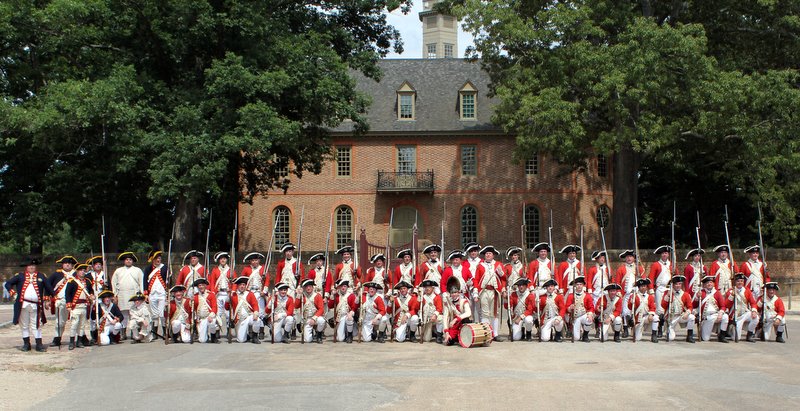
The British army punished its soldiers mercilessly. The purpose was to inspire terror by setting an example. Soldiers were frequently whipped leading to the derisive moniker “bloody backs” by which Redcoat soldiers were frequently known. The most common offence was drunkenness, which could merit 100 lashes. The sentence was carried out in front of the …
Historical Tidbits — Battle of Oriskany and St. Leger
When reenacting or acting as a historical interpreter, its good to have a few historical dates and stories to share. This series will publish a few. August 6, 1777 Battle of Oriskany and St. Leger The Battle of Oriskany occurred on August 6, 1777, when the local Tryon County Militia attempted to come to the …
Continue reading “Historical Tidbits — Battle of Oriskany and St. Leger”
Historical Tidbits
When reenacting or acting as a historical interpreter, its good to have a few historical dates and stories to share. This series will publish a few. August 6, 1777 Battle of Oriskany and St. Leger The Battle of Oriskany occurred on August 6, 1777, when the local Tryon County Militia attempted to come to the …
Joseph Priestly and Carbon Dioxide

In Leeds Joseph Priestley’s home was situated near a brewery. Whenever he walked by the brewery, Priestley observed an unusual phenomenon. He noticed that “fixed air” (carbon dioxide) was released in the process of fermentation and that this new “air” would extinguish burning pieces of wood and then drift to the ground. At home Priestley …
Historical Tidbits — Signing of the Declaration of Independence
When reenacting or acting as a historical interpreter, its good to have a few historical dates and stories to share. This series will publish a few. August 2, 1776 – Fifty-five members of the second Continental Congress met in Philadelphia to formally sign the Declaration of Independence. Benjamin Franklin is oft quoted as having said …
Continue reading “Historical Tidbits — Signing of the Declaration of Independence”
Historical Tidbits
When reenacting or acting as a historical interpreter, its good to have a few historical dates and stories to share. This series will publish a few. August 2, 1776 – Fifty-five members of the second Continental Congress met in Philadelphia to formally sign the Declaration of Independence. Benjamin Franklin is oft quoted as having said …
 Michael Carver -- Historical Interpreter/Reenactor