

When reenacting or acting as a historical interpreter, its good to have a few historical dates and stories to share. This series will publish a few. September 22, 1776 – Nathanial Hale is executed as a spy on Long Island without trial. “My only regret is that I have but one life to give to …
Author Archives: Michael Carver
Why would an American Soldier carry a Brown Bess Musket?

In my last post I talked about THAT GUY. You all know that type, the know-it-all who wants to show off by starting an argument with the presenter over something the presenter knows WAY more about. These guys come looking for a axe fight only to discover that … “wait, they all HAVE axes in …
Continue reading “Why would an American Soldier carry a Brown Bess Musket?”
That Guy

That Guy So, we had this event in Littiz, Celebrate America, and I set my tents to represent Fort Mifflin. Part of our display was the gear of a Revolutionary Soldier and, naturally, I brought my Brown Bess. Now, you have to understand the nature of this event. It was not a reenactment nor a …
Is This the Way it Was Really Done? My Policies on Historical Accuracy.

Okay, we are not LARPing. I know there are some out there who are gung-ho for the fantasy or mythical reality of the American Revolution but we are trying to teach history so historical accuracy is a must. At my events, I strive to be as accurate as possible with the following caveats: When being …
Continue reading “Is This the Way it Was Really Done? My Policies on Historical Accuracy.”
Historical Tidbits
When reenacting or acting as a historical interpreter, its good to have a few historical dates and stories to share. This series will publish a few. September 21, 1776 — Great Fire of New York erupted destroying 10 to 25 percent of buildings in the city. The British Army accused revolutionaries of deliberately setting the …
Historical Tidbits
When reenacting or acting as a historical interpreter, its good to have a few historical dates and stories to share. This series will publish a few. Medical Ketchup During the 1800’s ketchup was used for medicinal purposes. Want to Buy Beer from the Colonial Brewmeister? Help us build a Tavern and Brewery. Visit our GoFundMe …
Historical Tidbits
When reenacting or acting as a historical interpreter, its good to have a few historical dates and stories to share. This series will publish a few. September 20, 1777 Massacre at Paoli On the evening of September 20, 1777, near Paoli, Pennsylvania, General Charles Grey and nearly 5,000 British soldiers launch a surprise attack …
Early Meteorology — Predicting the Weather 18th Century Style: scientific beginnings in England

The shift from superstition to scientific study of meteorology began when proper measuring instruments became available in the mid-17th century. By the early 18th century, Daniel Fahrenheit produced accurate mercury thermometers calibrated to a standard scale that ranged from 32 to 96 degrees (i.e., from the melting point of ice to body temperature). Early work …
Making Whiskey

Whiskey’s origin lies somewhere between 1,000 and 1,200 AD when traveling monks migrating across Europe, introduced the distillation practice into Scotland and Ireland. Because of the lack of vineyards in these countries, the monasteries turned to fermenting grain mashes and then distilling them into whiskey. For the next 400 years, whiskey spread throughout the Celtic countries. …
Colonial Spymaster (#2) — Caesar Cypher
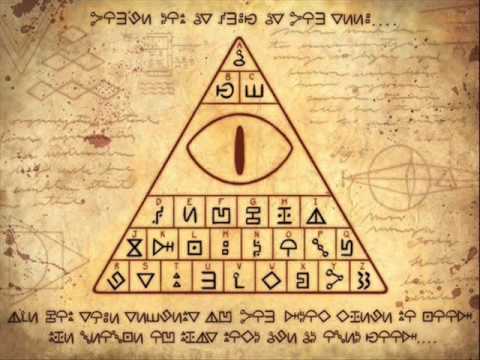
The Caesar cypher is one of the earliest known and simplest cyphers. It is a type of substitution cipher in which each letter in the plaintext is ‘shifted’ a certain number of places down the alphabet. For example, with a shift of 1, A would be replaced by B, B would become C, and so …
 Michael Carver -- Historical Interpreter/Reenactor