Dirty Business and Politics are Often Bedfellows

We all think of Benjamin Franklin as a grandfatherly type who invented and published things, sort of that eccentric neighbor who was everyone’s friend, but there was a ruthless side to Franklin.  In 1728, a printer named Samuel Keimer founded the Pennsylvania Gazette, the second newspaper ever printed in the colony. It did not do …

Historical Tidbits — Cook Crosses Antarctic Circle

When reenacting or acting as a historical interpreter, its good to have a few historical dates and stories to share. This series will publish a few. January 17, 1773 – HMS Resolution, under the command of James Cook, became the first vessel to cross the Antarctic Circle. The Royal Society and the government were eager …

Benjamin Franklin was born on 17 Milk Street in Boston, Massachusetts Bay Colony, on January 17, 1706.

Benjamin Franklin was born on January 17, 1706 in the city of Boston in a small house on 17 Milk Street, across the street from the Old Meeting House.  His father was Josiah Franklin, a chandler (soap and candle maker).  Josiah Franklin, emigrated from England in 1682. He had seven children with his first wife, …

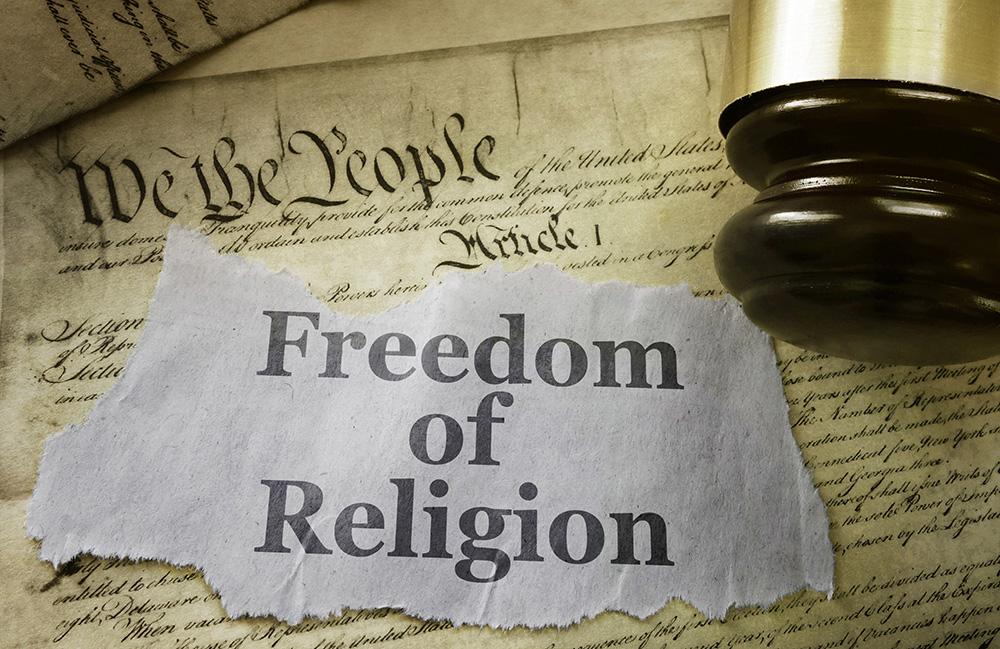
The Secular Argument for the Establishment Clause of Amendment 1

It is great to argue that the first Congress was inspired to adopt the Establishment Clause[i] by stories of Puritans and other separatist fleeing religious persecution in Europe and some mythical ideal that Americans are somehow more tolerant of other religions than their forebears but this is clearly NOT TRUE.  Jews, atheists, Wiccans and Muslims …

The OTHER Clock at Independence Hall

When you visit the Philadelphia State House (AKA Independence Hall), you will be told the story of the Liberty Bell and it multiple recastings before being hung in the tower behind the hall. You will no doubt hear the bells (now the Centennial Bell) as it chimes on the hour and of course most photos …

The Centennial Bell

In 1876, Philadelphia city officials discussed what role the Liberty Bell should play in the nation’s Centennial festivities. Some wanted to repair it so it could sound at the Centennial Exposition being held in Philadelphia, but the idea was not adopted; the bell’s custodians concluded that it was unlikely that the metal could be made …

Historical Tidbits — Common Sense

When reenacting or acting as a historical interpreter, its good to have a few historical dates and stories to share. This series will publish a few. January 10, 1776 – Common Sense, a fifty-page pamphlet by Thomas Paine, was published.  It sold over 500,000 copies in America and Europe, influencing both the authors of the …

George Washington Elected as President

On January 7,  1789, the Congress of the United States of America, having recently adopted the Constitution, held its first presidential election. Despite having retired to his Virginia plantation after the war, the Electoral College cast a unanimous vote (69 electoral votes) for George Washington.   Under the original Constitution, the electors each cast two …

Historical Tidbits — 1st Encampment at Morristown

When reenacting or acting as a historical interpreter, its good to have a few historical dates and stories to share. This series will publish a few. January 6, 1777                 1st Encampment at Morristown Remnants of the American forces (2,000 – 4,000 troops) after the battles of Trenton and Princeton are billeted in homes and structures …