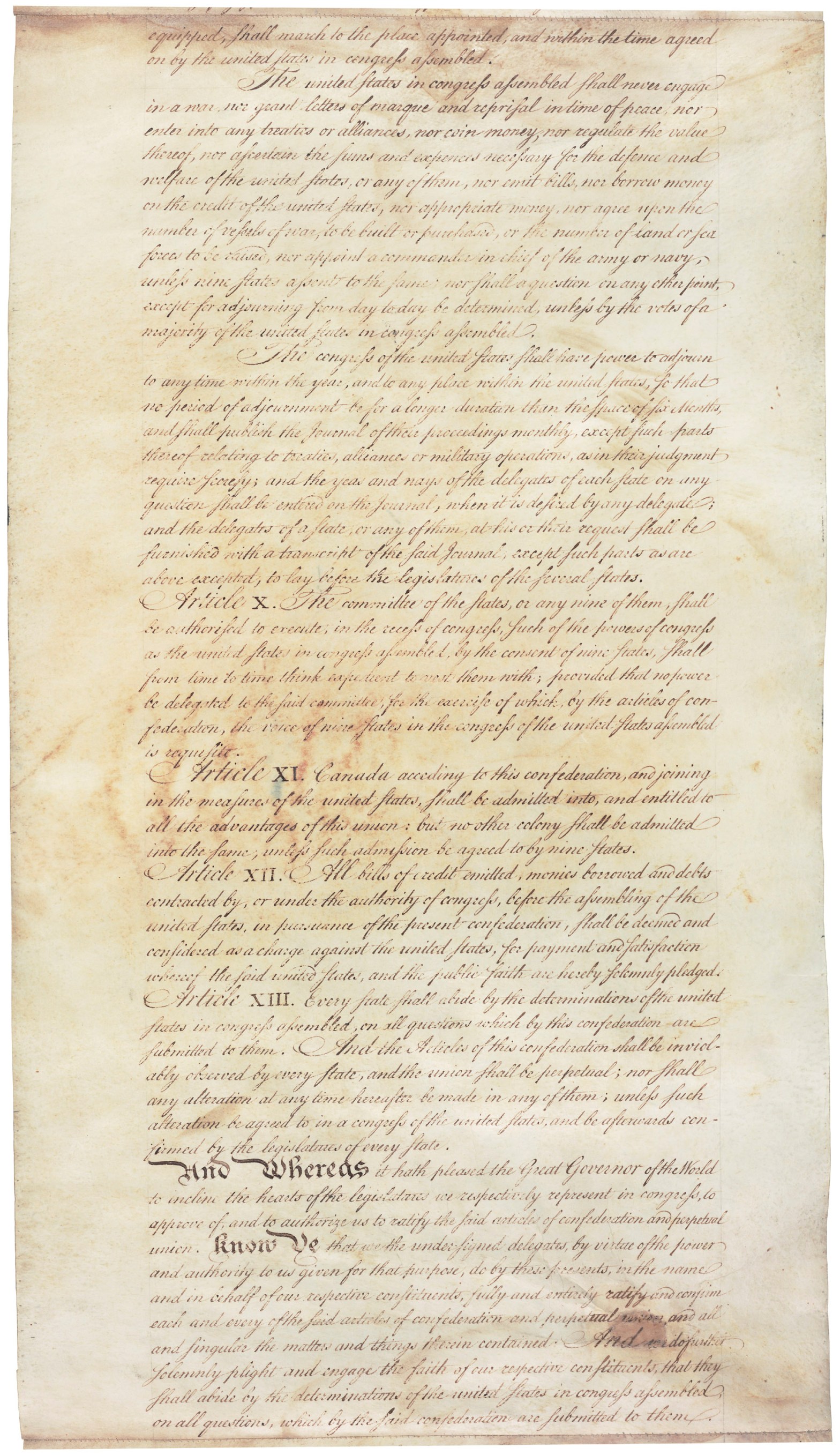
What Language is that written in? Understanding 18th Century Handwriting

Several years ago, I was giving tours at Independence Hall when one of the guests approached me outside Congress Hall to ask questions about the Articles of Confederations (BTW, volunteers love to be asked questions, that’s why we do this so don’t hold back.  If you ask us a question that we don’t know the …

Second Annual Cast Iron Chef at Fort Mifflin

On January 28th, Fort Mifflin on the Delaware (www.fortmifflin.us) and the Regimental Brewmeister (www.colonialbrewer.com) will be conducting a very unique program at Fort Mifflin in Philadelphia.  This is our second annual Cast Iron Chef program and it promises to be spectacular.  Cast Iron Chef is an opportunity our guest to gain hands on experience working …

Fighting the War behind a Desk

History books are filled with glorification of exploits on the battlefield and we have all heard the story of Alexander Hamilton bristling at the role of Aide-du-Camp and demanding his opportunity to prove himself in the field.  The reality of military operations, however, is very different.  Much of the real WORK of a military commander …

The Whitesmith

Whitesmithing, or tinsmithing, is a much newer form of metalworking that developed in the late 1600s and gained popularity in the 18th and 19th centuries. Although found worldwide, whitesmithing was popular in mainland Europe and especially Britain. Whitesmiths work with thin sheets of iron or steel that were dipped in molten tin to protect the metal from …

The Secular Argument for the Establishment Clause of Amendment 1

It is great to argue that the first Congress was inspired to adopt the Establishment Clause[i] by stories of Puritans and other separatist fleeing religious persecution in Europe and some mythical ideal that Americans are somehow more tolerant of other religions than their forebears but this is clearly NOT TRUE.  Jews, atheists, Wiccans and Muslims …

Historical Tidbits — Common Sense

When reenacting or acting as a historical interpreter, its good to have a few historical dates and stories to share. This series will publish a few. January 10, 1776 – Common Sense, a fifty-page pamphlet by Thomas Paine, was published.  It sold over 500,000 copies in America and Europe, influencing both the authors of the …