

When reenacting or acting as a historical interpreter, its good to have a few historical dates and stories to share. This series will publish a few. January 17, 1780 Battle of Cowpens Shortly after sunrise, the American rifleman encountered the lead elements of Colonel Balastre Tarleton’s British Legion, the 7th Regiment of Foot, 71st Regiment …
Category Archives: Ideas
GOP vs Founding Fathers
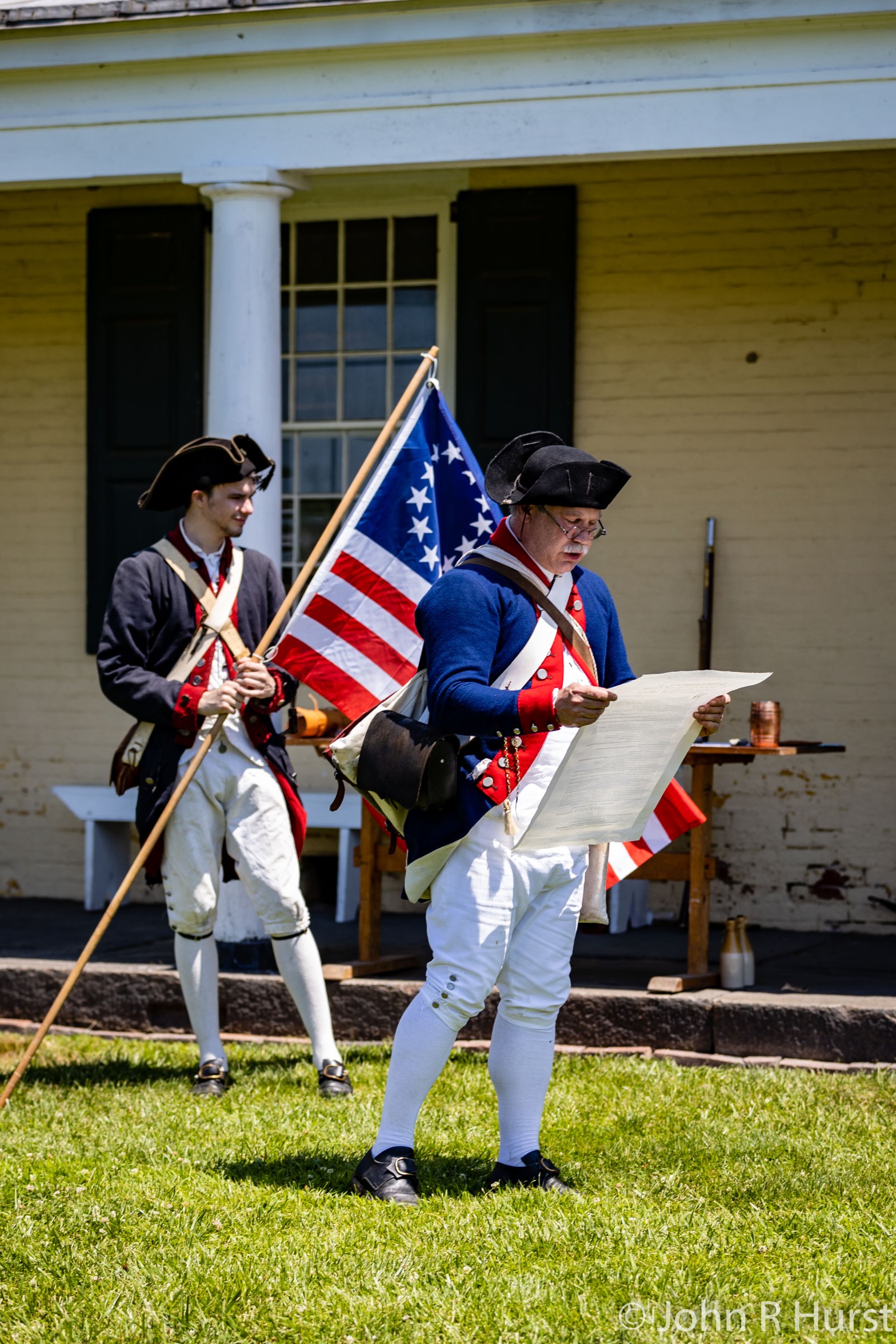
Round 6 — The Right to Keep and Bear Arms Well folks, this is an election year. This guarantees we will disagree on many things but please heed this bit of advice – wear boots! The Republican Party likes to claim that they are “originalist” and that they know the intentions that the Founding Fathers …
Fighting the War behind a Desk

History books are filled with glorification of exploits on the battlefield and we have all heard the story of Alexander Hamilton bristling at the role of Aide-du-Camp and demanding his opportunity to prove himself in the field. The reality of military operations, however, is very different. Much of the real WORK of a military commander …
The Regimental Brewmeister does “Talks” as well as brewing demonstrations.
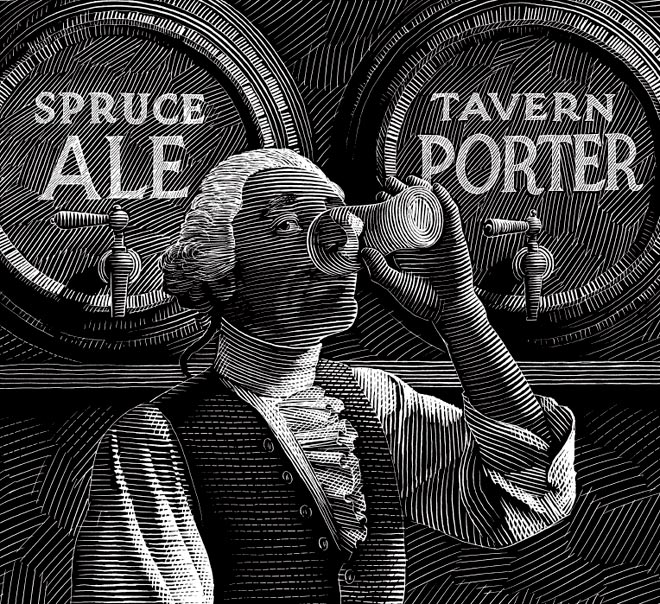
The Regimental Brewmeister is happy to give talks and lectures at your site to audiences of any size. I ask that you provide appropriate auto visual projection equipment and event promotion. I typically come in 18th Century attire and conduct interactive discussions. While I am happy to consider talks on other subjects, I have delivered …
Continue reading “The Regimental Brewmeister does “Talks” as well as brewing demonstrations.”
GOP vs Founding Fathers

Round 5 — Scientific Reason Well folks, this is an election year. This guarantees we will disagree on many things but please heed this bit of advice – wear boots! The Republican Party likes to claim that they are “originalist” and that they know the intentions that the Founding Fathers had when they penned the …
How to Survey Land with 18th Century Tools — Using the Sector

The sector and the related proportional compasses (proportional dividers) were developed in the second half of the 16th century. There are several inventors, most of them from Italy but most people attribute its development to Galileo Galilei. The sector consists of two arms connected by a pivot joint. For example, linear, trigonometric, and logarithmic scales …
Continue reading “How to Survey Land with 18th Century Tools — Using the Sector”
The Admiral of the Blue Apron
In Francis Grose’s A Classical Dictionary of the Vulgar Tongue, first published in 1785, I found an entry that I have adopted as the moniker for my tavern impression — The Admiral of the Blue Apron. The ADMIRAL OF THE BLUE, is a publican wearing a blue apron, as was formerly the custom among gentlemen …
Gouverneur Morris — Genius or Cad?

“We the People of the United States” is perhaps the most famous phrase in the Constitution – and it wasn’t penned by James Madison like the most of the Constitution. We owe this enigmatic phrase to an equally enigmatic delegate to the Constitutional Convention — Gouverneur Morris, the author of the Preamble to the US Constitution. …
GOP vs Founding Fathers
Round 4 — Socialism Well folks, this is an election year. This guarantees we will disagree on many things but please heed this bit of advice – wear boots! The Republican Party likes to claim that they are “originalist” and that they know the intentions that the Founding Fathers had when they penned the US …
Historical Tidbits — Treaty of Paris
When reenacting or acting as a historical interpreter, its good to have a few historical dates and stories to share. This series will publish a few. January 14, 1784 – Congress formally accepts the terms of the Treaty of Paris, ending American participation in the Revolutionary War. George III will not sign this treaty for …

