
Juan de Córdoba of Seville became the first merchant to send an African slave to the New World in 1502. By 1504, a small group of Africans, likely slaves, who were captured from a Portuguese vessel, made their way to the court of King James IV of Scotland but the English will not join the …
Category Archives: Ideas
Man does Not Live on Beer Alone — Punch

Okay, so “Punch” has been around much longer than the 18th Century. In fact, the idea of punch is, well, old, really old. The word can be traced back to the 15th Century and it’s all tied to the reason sailors wanted a shorter route to Asia – Nutmeg. At its peak, nutmeg bought at …
Let’s talk about Tankards and Steins

The word stein is a shortened form of Steinzeugkrug, which literally means a stoneware jug or tankard. By common usage, however, stein has come to mean any beer container regardless of its material or size. The English will call these tankards. Both vessels come with and without lids, handles, or ornamentation. The tankard or beer …
Let’s Talk about Punch Bowls
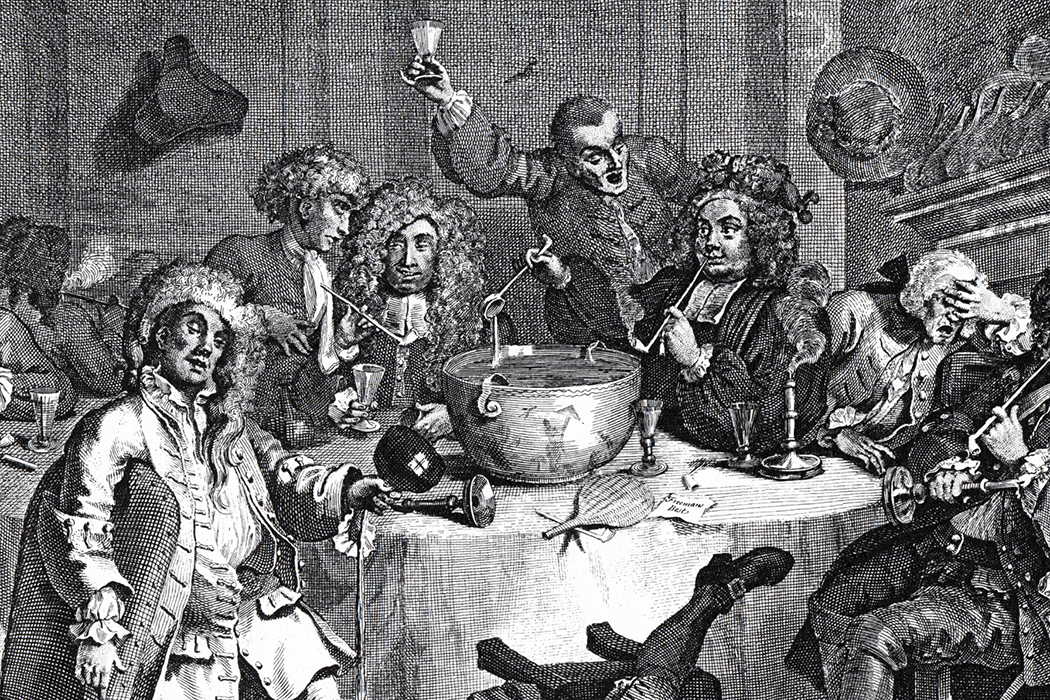
Most of us grew up associating Punch Bowls with a huge, overly ornate bowl, often bucket sized, that our parents or grandparents kept on a sideboard and only used for fancy parties. In the 18th Century, that punchbowl would have seen much more use. According to legend, punch was introduced to England in the early-to mid-17th century …
Hire the Regimental Brewmeister for your Event or Site
Add excitement and authentic color to your special event, or create one for your site, with Philadelphia’s best Colonial Brewer and tradesman. Whether it is a reenactment, motion picture, a tavern night for a private event, or other endeavor, I can bring can bring a real sense of authenticity and fun to your event and …
Continue reading “Hire the Regimental Brewmeister for your Event or Site”
The Scourge of Slavery (#3c) — Penal Transportation

Banishment or forced exile has been used as a punishment since at least the 5th century BCE but the British Empire turned it into an industry during the 18th and 19th centuries. Penal transportation was the relocation of convicted criminals and other undesirable people (chiefly the poor) to a distant colony for incarceration. Transportation was …
Continue reading “The Scourge of Slavery (#3c) — Penal Transportation”
The Scourge of Slavery (#3b) — Indentured Servants
The acquisition of indentured servants and slaves began with the earliest days of the settling of America. Before 1680, the most common form of bound labor was the white indentured servant. Up to two-thirds of the English migrants who came to Virginia between 1630 and 1680 arrived in servile status. In return for the cost …
Continue reading “The Scourge of Slavery (#3b) — Indentured Servants”
The Scourge of Slavery (#3a) — African Slaves brought to British Colonies in 1619
On August 20, 1619, “20 and odd” Angolans, kidnapped by the Portuguese, arrive in the British colony of Virginia and sold English colonists. These slaves were captured by Kongo and Ndonga kingdoms in western Africa and sold to Spanish slave traders who loaded them onto the San Juan Bautista and set sail for Veracruz on the Spanish …
Continue reading “The Scourge of Slavery (#3a) — African Slaves brought to British Colonies in 1619”
Mead was not Mainstream in Colonial America
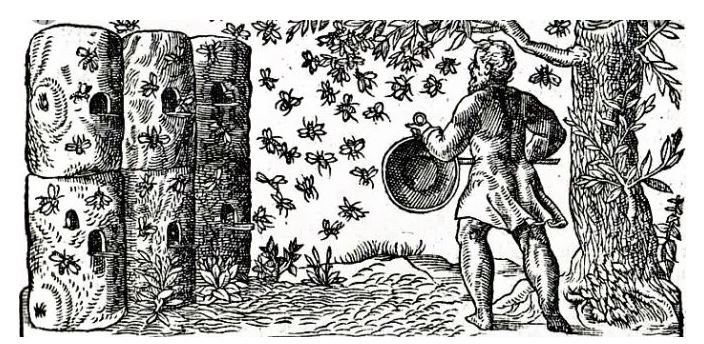
Honey bees are not native to North America. They were originally imported from Europe in the 17th century. In a letter written December 5, 1621 by the Council of the Virginia Company in London and addressed to the Governor and Council in Virginia, “Wee haue by this Shipp and the Discouerie sent you diurs [divers] …
Continue reading “Mead was not Mainstream in Colonial America”
The New Guy Fawkes — the real legacy of Donald Trump
On January 6, 2021, following the defeat of U.S. President Donald Trump in the 2020 presidential election, a mob of his supporters attacked the United States Capitol Building in Washington, D.C. The mob sought to keep Trump in power by preventing a joint session of Congress from counting the electoral college votes. While still President …
Continue reading “The New Guy Fawkes — the real legacy of Donald Trump”
 Michael Carver -- Historical Interpreter/Reenactor