

When reenacting or acting as a historical interpreter, its good to have a few historical dates and stories to share. This series will publish a few. January 10, 1776 – Common Sense, a fifty-page pamphlet by Thomas Paine, was published. It sold over 500,000 copies in America and Europe, influencing both the authors of the …
Category Archives: Ideas
Winning the War with Beer
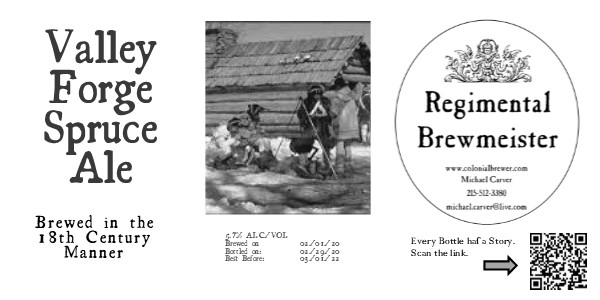
More 18th Century soldiers died of malnutrition and disease than by the hands of their enemies. For the British, each soldier was an investment of a nation’s time and resources so keeping them “fit for duty” was not just a humanitarian concern, it was protecting the nations investment. Getting soldiers trained and transported North America …
Becoming a Colonial Brewer

In 1994, I became interested in the someone rebellious and definitely an anachronistic hobby of home-brewing. Brewing beer at home became legal (again) in 1979 so by the time I got involved it was a weird mix of semi-commercial home-brew supply stores that sold malt, yeast, and hops in various forms plus a hodgepodge of …
The Scourge of Slavery (#14) — Outlawing Slavery
When does slavery end? That is not a simple question. Slavery was “abolished” several times: 1807 – Britain passes Abolition of the Slave Trade Act, outlawing British Atlantic slave trade. 1808 the Migration or Importation Clause (Article I, section 9) of the US Constitution (ratified in 1787) allowed Congress to end the importation of slaves …
Continue reading “The Scourge of Slavery (#14) — Outlawing Slavery”
What Language is that written in? Understanding 18th Century Handwriting
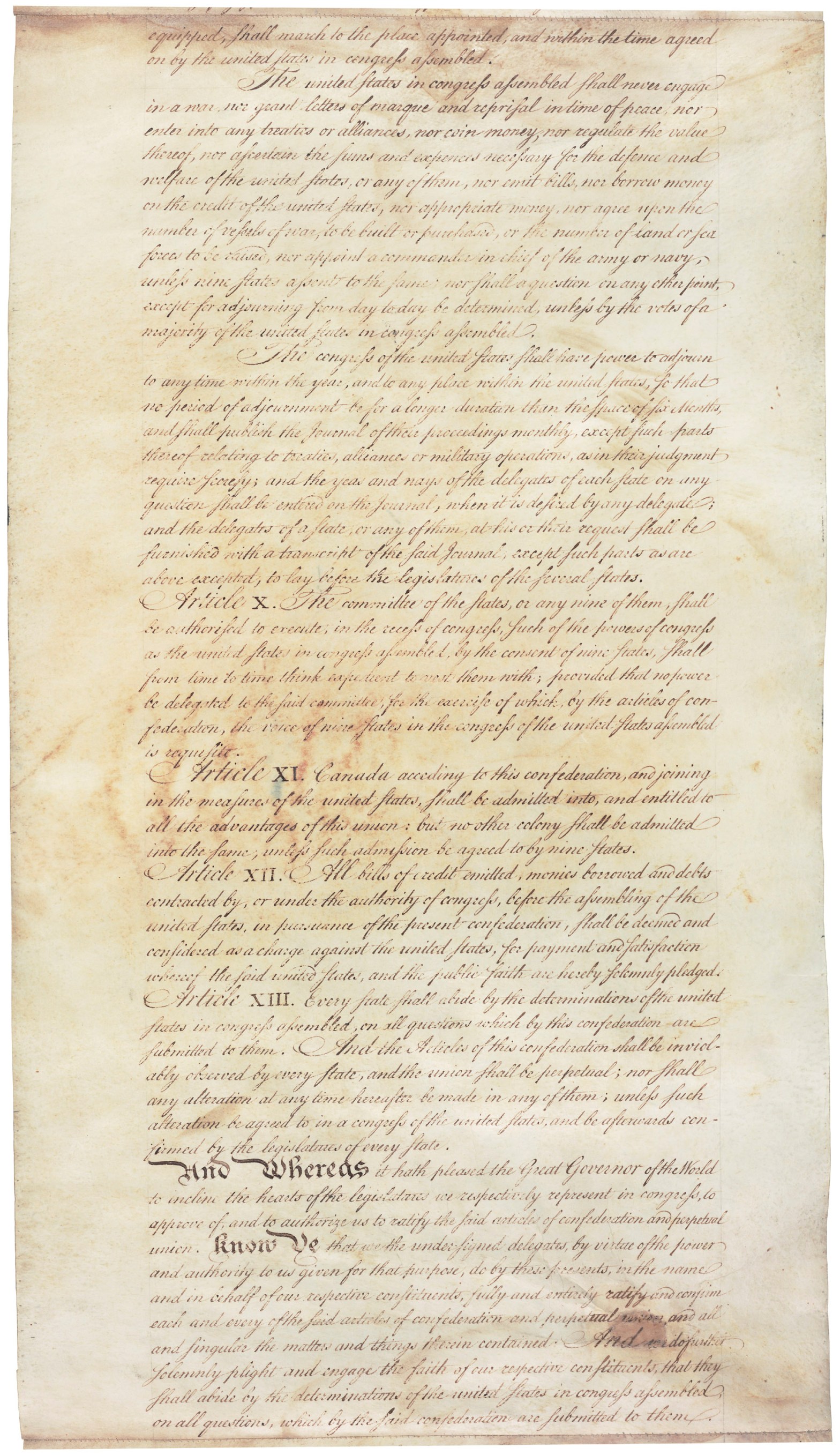
Several years ago, I was giving tours at Independence Hall when one of the guests approached me outside Congress Hall to ask questions about the Articles of Confederations (BTW, volunteers love to be asked questions, that’s why we do this so don’t hold back. If you ask us a question that we don’t know the …
Continue reading “What Language is that written in? Understanding 18th Century Handwriting”
Poor Richard’s Almanack
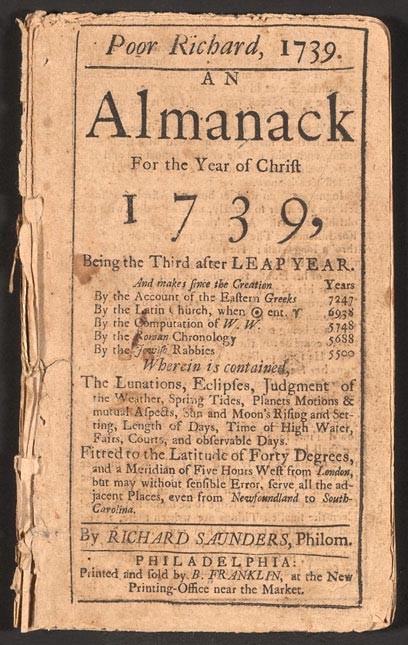
Poor Richard’s Almanack, which Franklin began publishing at the end of 1732, espoused his greatest life goals: the making of money and the promotion of virtue. It became, in the course of its twenty-five-year run, America’s first great humor classic. The fictional Poor Richard Saunders and his nagging wife, Bridget, helped to define what would …
Historical Tidbits — 2nd Battle of Trenton
When reenacting or acting as a historical interpreter, its good to have a few historical dates and stories to share. This series will publish a few. January 7, 1777 2nd Battle of Trenton On New Year’s Day, Washington’s force of 5,000 massed again in Trenton. The next day Cornwallis arrived with an army 5,500. After …
Continue reading “Historical Tidbits — 2nd Battle of Trenton”
Historical Tidbits — Battle of Princeton
When reenacting or acting as a historical interpreter, its good to have a few historical dates and stories to share. This series will publish a few. January 5, 1777 Battle of Princeton Preparing to crush Washington’s Army at Assunpink Creek, Cornwallis ordered reinforcements brought down to his position at Trenton. This left only a small …
“Beer” Recipe: Battle of the Bees Mead

Bees played a small role in the Revolutionary War on two notable occasions. The first is “The Battle of the Bees” that occurred Oct. 3, 1780 at McIntyre’s Farm, in Mecklenburg County, North Carolina. Loyalists, led by Capt. John Doyle, were traveling down Beattie’s Ford Road with 60 wagons. Their mission: to plunder area farms …
Freedom From Religion was needed even in the 18th Century.

The wonder of lightning has captivated and intrigued humans throughout history, often sparking mythological interpretations (eg Thor is the Norse god of thunder). These interpretations occurred long before science could answer some of the questions that kept humans in awe. Even in more traditional religions, thunder and lightning have spiritual connotations. In Judaism, it’s customary …
Continue reading “Freedom From Religion was needed even in the 18th Century.”
 Michael Carver -- Historical Interpreter/Reenactor