
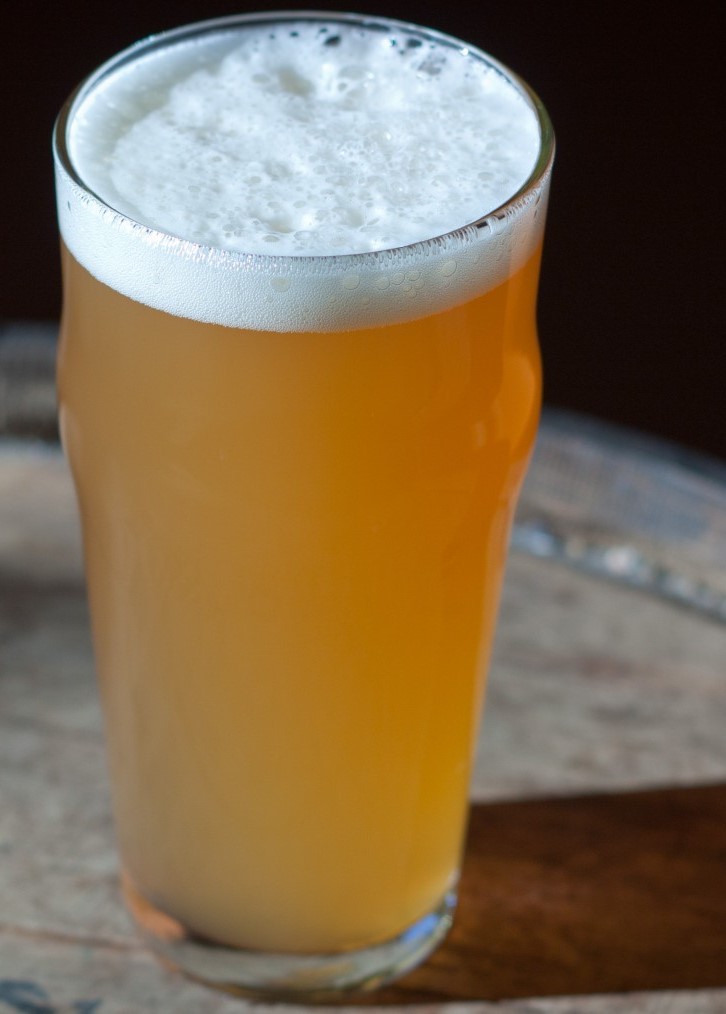
For thousands of years beer served as food and medicine; it had antiseptic, anti-bacterial and anti-viral properties. The health benefits of beer not only come from the grains and yeast but also the hops. Hops contain a flavonoid called xanthohumol that strongly suppresses CYP1A2 (suppressing is good), a liver enzyme that metabolizes various environmental procarcinogens …
Tag Archives: Colonial Brewer
To the Last Extremity – Spruce Ale

Americans love the idea of a last stand, a battle to the end. We see this in the Battle of Bunker Hill, WE see this during the War of 1812 at both Fort McHenry and at Chalmette, Louisiana, we see this during the Texas Revolution at the Alamo, at the Little Big Horn, WWII’s during …
How was Colonial Beer Different
We recently held a brewing class at Fort Mifflin and one question was asked that deserves clarification in this blog: “How were beers of the 18th Century different from what we drink today?” I hope the table below adds some clarification. Colonial Beers vs Modern Beers: Key Differences Colonial BeerModern BeerMaltMixture of malted grains including …
Beer Recipe: Air and Exercise — Rattleskull
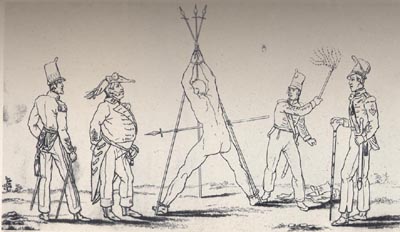
“Air and Exercise” = being whipped with a Cat-o-Nine-Tails. Prior to the arrival of Baron Friedrich Wilhelm von Steuben, American officers often imitated their British peers. In a rather startling example, George Washington once lobbied congress for permission to allow 500 lashes — “Air and Exercise”– as punishment to maintain discipline the Continental soldiers! Congress …
Continue reading “Beer Recipe: Air and Exercise — Rattleskull”
Basic Colonial Brewing #4 — Minding your “P’s” and “Q’s”

Which weighs more, a ton of lead or a tun of feathers? Sounds absurd today but in the 18th Century this is actually a legitimate question. How many feathers can you pack in a 256-gallon cask? A lot more than 2000 pounds! In Colonial America, minding your “P’s and Q’s” isn’t about etiquette, its about …
Continue reading “Basic Colonial Brewing #4 — Minding your “P’s” and “Q’s””
Beer Recipe: Cuddalore IPA
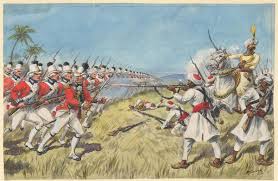
Where was the final battle of the American Revolutionary War fought? If definitely was not at Yorktown! As humiliating as Cornwallis’ defeat at Yorktown was it did not cripple the British war effort in America. Most of the British Army was in New York where Washington and Rochambeau originally planned to engage them. Losing Cornwallis’ …
The Kieve
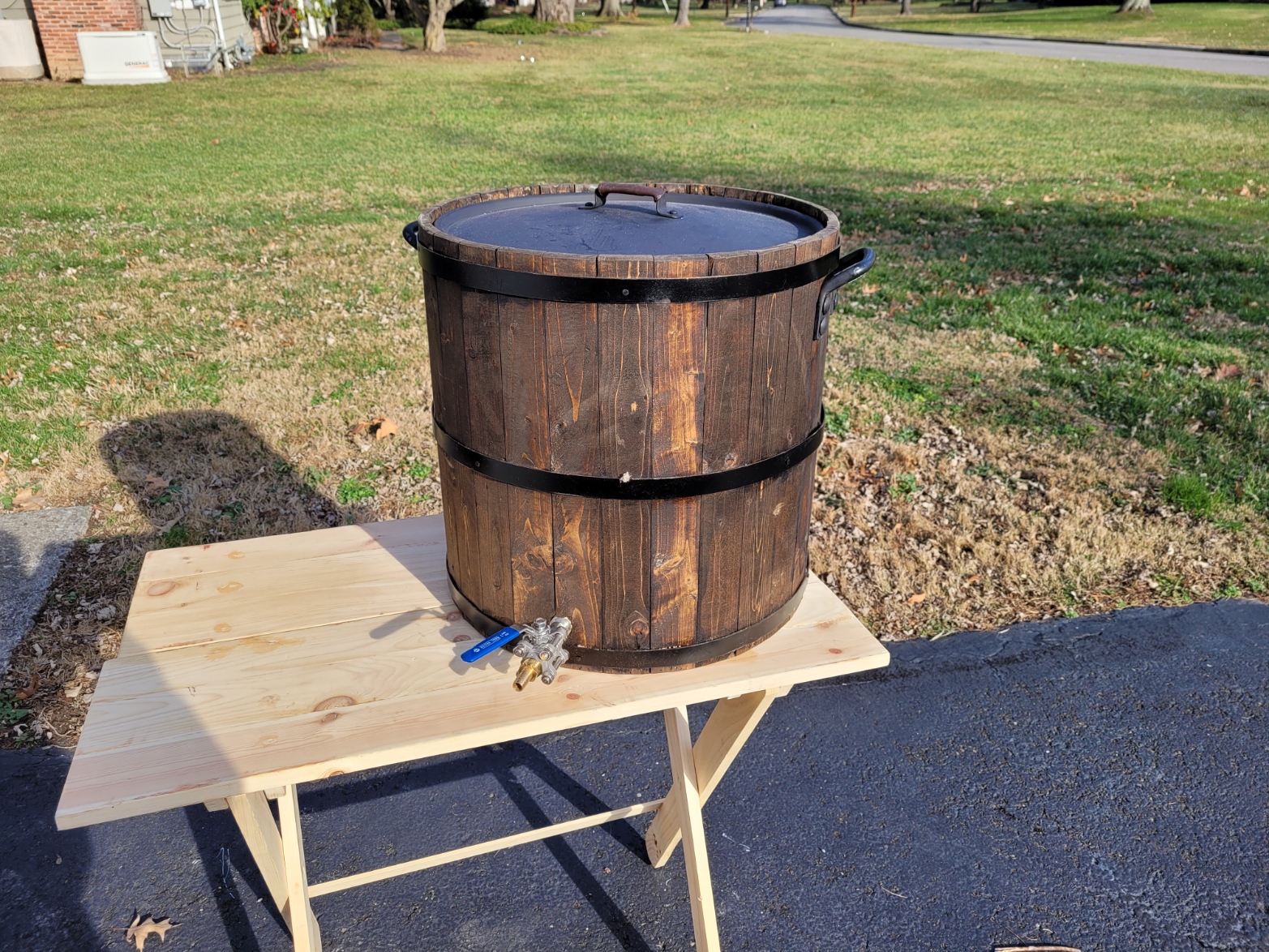
The Regimental Brewmeister uses a 1 barrel brewery set up including a 30-gallon kieve (aka keeve) and a 30 gallon kühlschipp.(AKA koelschip). As we strive for ever increasing levels of authenticity to both the beer and our experience brewing, this new equipment takes us back to the basics of 18th Century zymology. In our previous …
Basic Colonial Brewing — The Koelschip

The Regimental Brewmeister uses a 1 barrel brewery set up including a 30-gallon kieve (aka keeve) and a 30 gallon kühlschipp.(AKA koelschip). As we strive for ever increasing levels of authenticity to both the beer and our experience brewing, this new equipment takes us back to the basics of 18th Century zymology. Modern breweries make …
Apple Jack
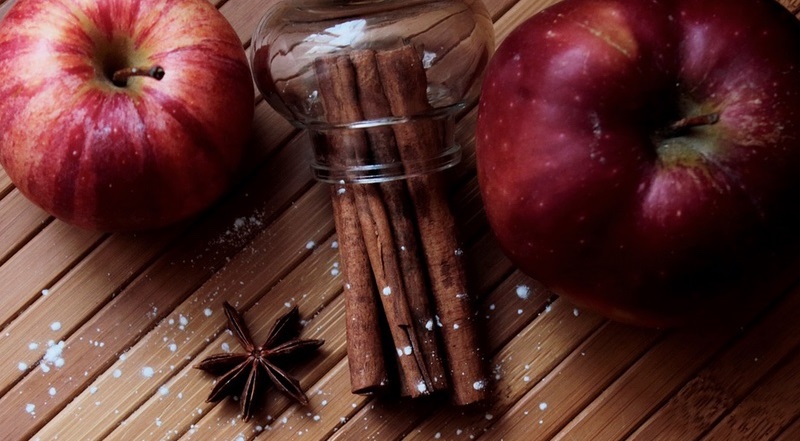
Applejack is a uniquely American type of apple brandy which was widely produced during the 1700’s in North America. It was made by placing hard cider in wooden barrels and exposing them to freezing temperatures during winter. The water in the hard cider froze in the top of the barrel and could easily be removed. …
Von Stueben Altbier
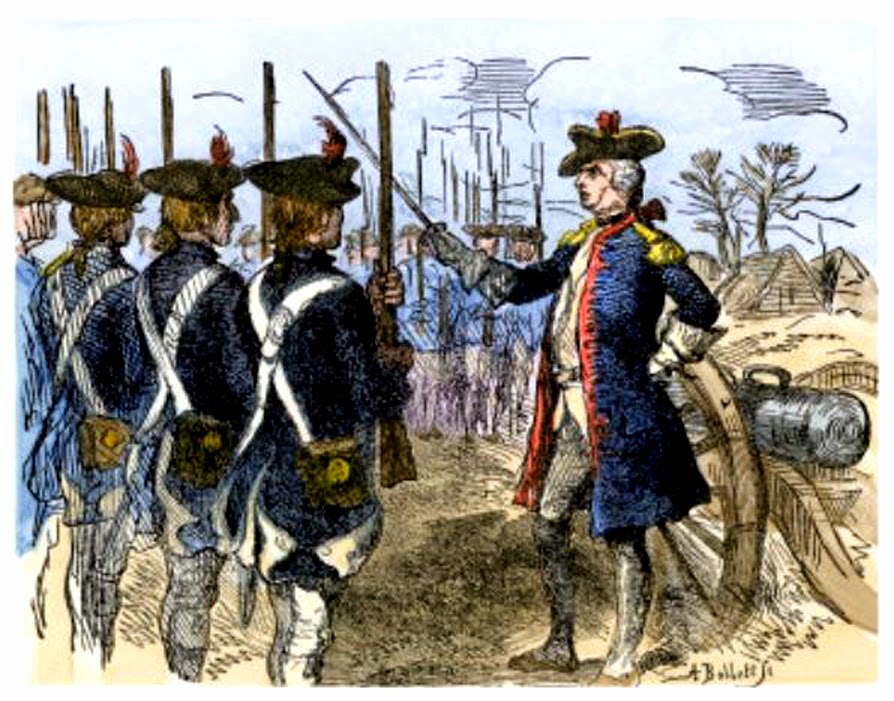
During the early American Revolutionary War, Continental Army lacked strong central command and was made up of state-run militias operating independently of each other. Each militia operated by its own rules and regulations and there was very little standardization or guidance for the duties and responsibilities of soldiers and officers. In 1777, Friedrich von Steuben …
 Michael Carver -- Historical Interpreter/Reenactor