
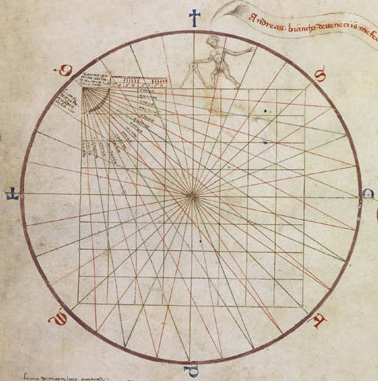
Vector Computations without the Benefit of Modern Trigonometry

Navigating from point to point is a relatively simple task for most surveyors or mariners.  You establish a compass bearing from where you are to your intended location then measure out the distance (or in the case of sailing a speed and a time) to the new location giving what we call today a vector.  …

Wow, that took off! The Regimental Brewmeister now has an “Author Page” on Amazon.

A few years ago, I put my brewing notes into a book for sale at events — Beers and Beer Stories by the Regimental Brewmeister . Later I added a similar volume on cocktails and tavern culture — Admiral of the Blue Apron’s Bartender Guide Book . The year I published a short companion book …

Vector Computations without the Benefit of Modern Trigonometry

Navigating from point to point is a relatively simple task for most surveyors or mariners.  You establish a compass bearing from where you are to your intended location then measure out the distance (or in the case of sailing a speed and a time) to the new location giving what we call today a vector.  …

Vector Computations without the Benefit of Modern Trigonometry

Navigating from point to point is a relatively simple task for most surveyors or mariners.  You establish a compass bearing from where you are to your intended location then measure out the distance (or in the case of sailing a speed and a time) to the new location giving what we call today a vector.  …

How to Survey Land with 18th Century Tools — Using the Gunter’s Rule

Using the Gunter’s Rule So how was multiplication done in the 18th Century.  Sure, you could and people did do long-hand multiplication just like you were taught in elementary school.  For example, we can multiply 384×56. The number with more digits is usually selected as the multiplicand: The long multiplication algorithm starts with multiplying the …

Vector Computations without the Benefit of Modern Trigonometry

Navigating from point to point is a relatively simple task for most surveyors or mariners.  You establish a compass bearing from where you are to your intended location then measure out the distance (or in the case of sailing a speed and a time) to the new location giving what we call today a vector.  …