
When reenacting or acting as a historical interpreter, its good to have a few historical dates and stories to share. This series will publish a few. November 15, 1777 – Articles of Confederation, the first US Constitution, is passed on this date in 1777. Two days later, the Continental Congress sent the Articles to the …
Monthly Archives: November 2022
Republican vs republican
I don’t normally like to promote businesses in my blog. Its unseemly. This time, however, there is a story and a biting comment to share. On Thursday, 11/11, the Sons of the American Revolution Color Guard, performed honors for our Veterans at the National Constitution Center. Following this event, I took the opportunity to visit …
How the British Perceived the American Revolution

The American revolution was a matter of great interest for the people in Britain. The British press weighed in on economics, military success and failures, the morality of the revolution, and more, through the press and private correspondence. As the British enjoyed one of the freest press systems in the world, not everyone felt obliged …
Continue reading “How the British Perceived the American Revolution”
Holiday Spirits with the Regimental Brewmeister
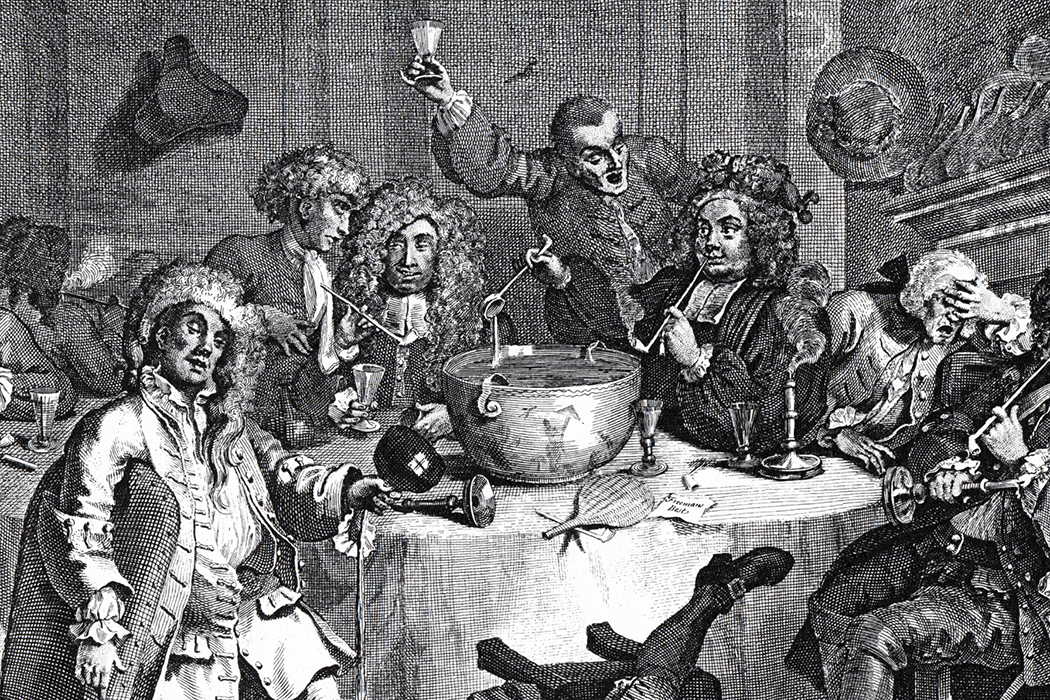
November 24 — Fort Mifflin Spent too much time with your in-laws for Thanksgiving … Come learn about the OTHER spirits that reside at Fort Mifflin. For the last several years, we have run a very successful program on 18th Century brewing class and our original plan was to repeat this on Black Powder Friday. …
Continue reading “Holiday Spirits with the Regimental Brewmeister”
Why Do We Fold the American Flag into a Triangle?

Actually, tradition calls for us to fold the flag into the shape of a tri-cornered hat, the kind worn by George Washington and other soldiers who served in the Continental Army during the Revolutionary War. While the troops carried a variety of flags during that war, the tradition of folding the flag in the manner …
Continue reading “Why Do We Fold the American Flag into a Triangle?”
Is There Meaning Behind Each Fold of the American Flag?
Is There a Meaning Behind Each Fold of the American Flag? Well, that depends… For more than 200 years, the American flag has been the symbol of our nation’s unity, as well as a source of pride and inspiration for millions of citizens. Born on June 14, 1777, the Second Continental Congress determined that the …
Continue reading “Is There Meaning Behind Each Fold of the American Flag?”
Adam Smith — Wealth of Nations

Adam Smith was a Scottish economist who in 1776 wrote book, An Inquiry into the Nature and Causes of the Wealth of Nations). This book profoundly influenced economic thought, and until the current disintegration of conservative politics in the United States, was the bedrock of economic and political theory with regard to the merits of …
Playing Court Whist

Whist is a classic English trick-taking card game which was widely played in the 18th and 19th centuries. Although the rules are simple, there is scope for scientific play. Derived from the popular 17th Century trick taking game known as “Ruff and Honours,” Whist literally takes its name from the old English word whist meaning …
Come Help Us Create a Unique Portable Bar at Fort Mifflin
On September 17, 2022, Fort Mifflin took possession of an Amish surrey style wagon approximately 5 ft wide and 7 feet long in serviceable condition. This buggy was donated by Warehouse on Watts and transported to the fort by Fort Mifflin staff. The buggy is in “good” condition but not roadworthy and does need minor …
Continue reading “Come Help Us Create a Unique Portable Bar at Fort Mifflin”
Ben Franklin DID NOT Invent Daylight Savings Time!

Well, today we say goodbye to Daylight Savings time. I hope you all enjoyed your extra hour of sleep. Before the middle of the 19th Century, keeping time was more of an art than a science. Time pieces and clocks were available, even common in certain circles but they were notoriously inaccurate. However, the act …
Continue reading “Ben Franklin DID NOT Invent Daylight Savings Time!”
 Michael Carver -- Historical Interpreter/Reenactor