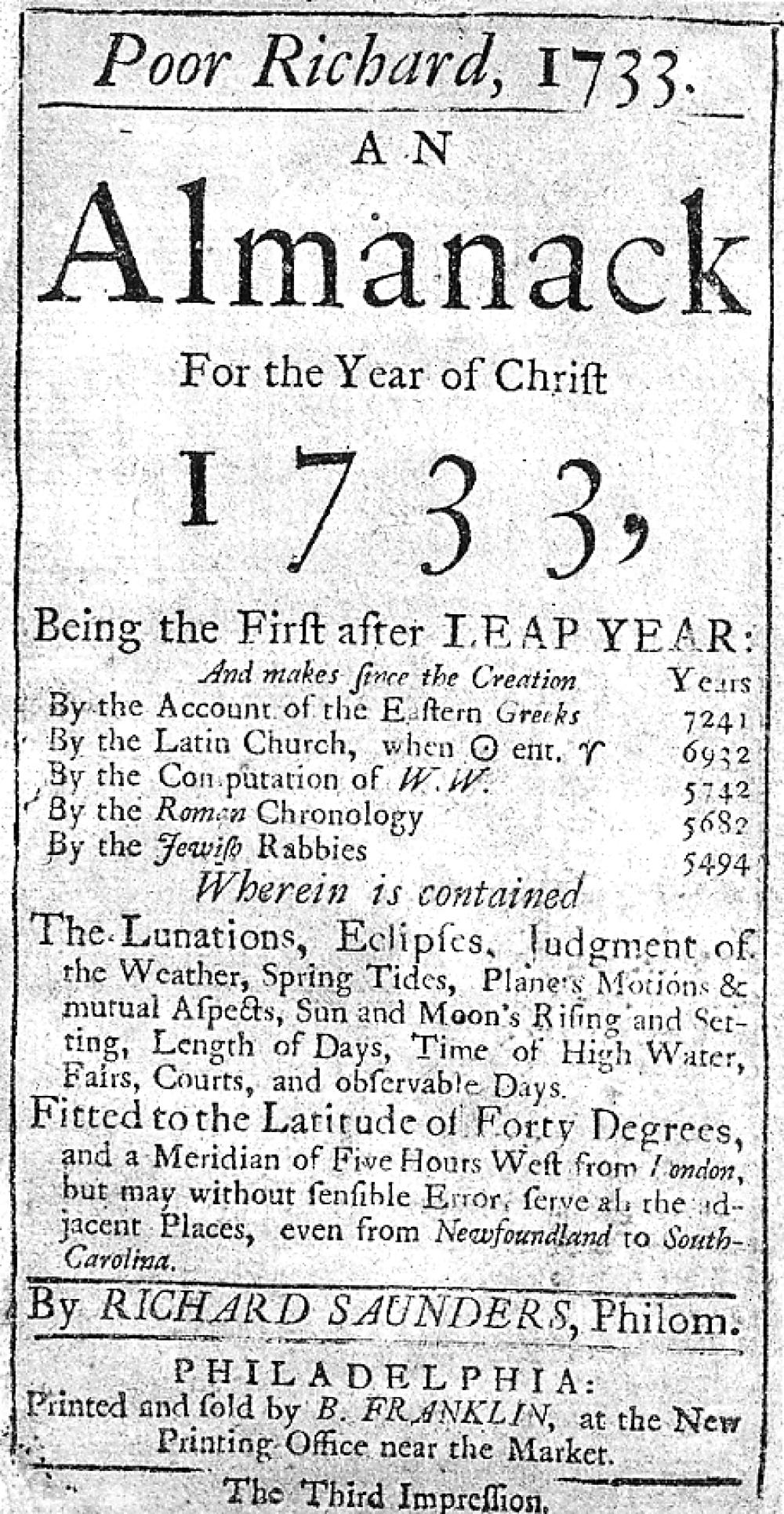
Wind is perhaps one of the most obvious weather phenomena and was of critical importance to commerce in the 18th Century. Wind propels not just ships at sea but the earliest industrial processes like milling grain and pumping water (especially in the Netherlands).
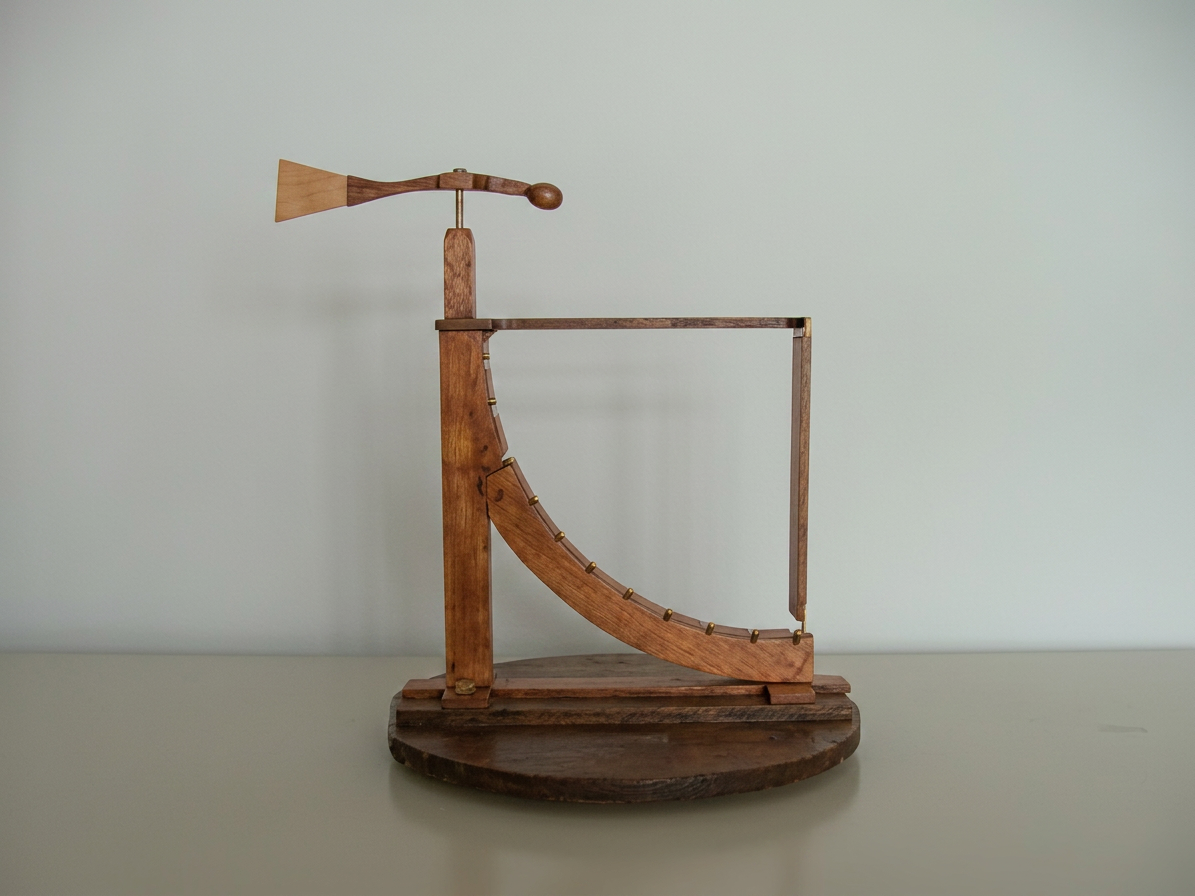
There is some controversy over the invention of the anemometer. Some historians suggest that Leonardo da Vinci’s fascination with flight inspired him to create the anemometer. The device attributed to Da Vinci has an arched frame with a rectangular piece of wood hanging in the center by a hinge. When the wind blows, it raises the piece of wood inside the arched frame. Printed on the frame would be a scale. By noting the highest point that the wood reached on the scale, a person could measure the force of the wind. More credible sources indicate that this device, often incorporated into weathervanes also indicating the direction of the wind, was developed by the Italian architect Leon Battista Alberti in 1450.
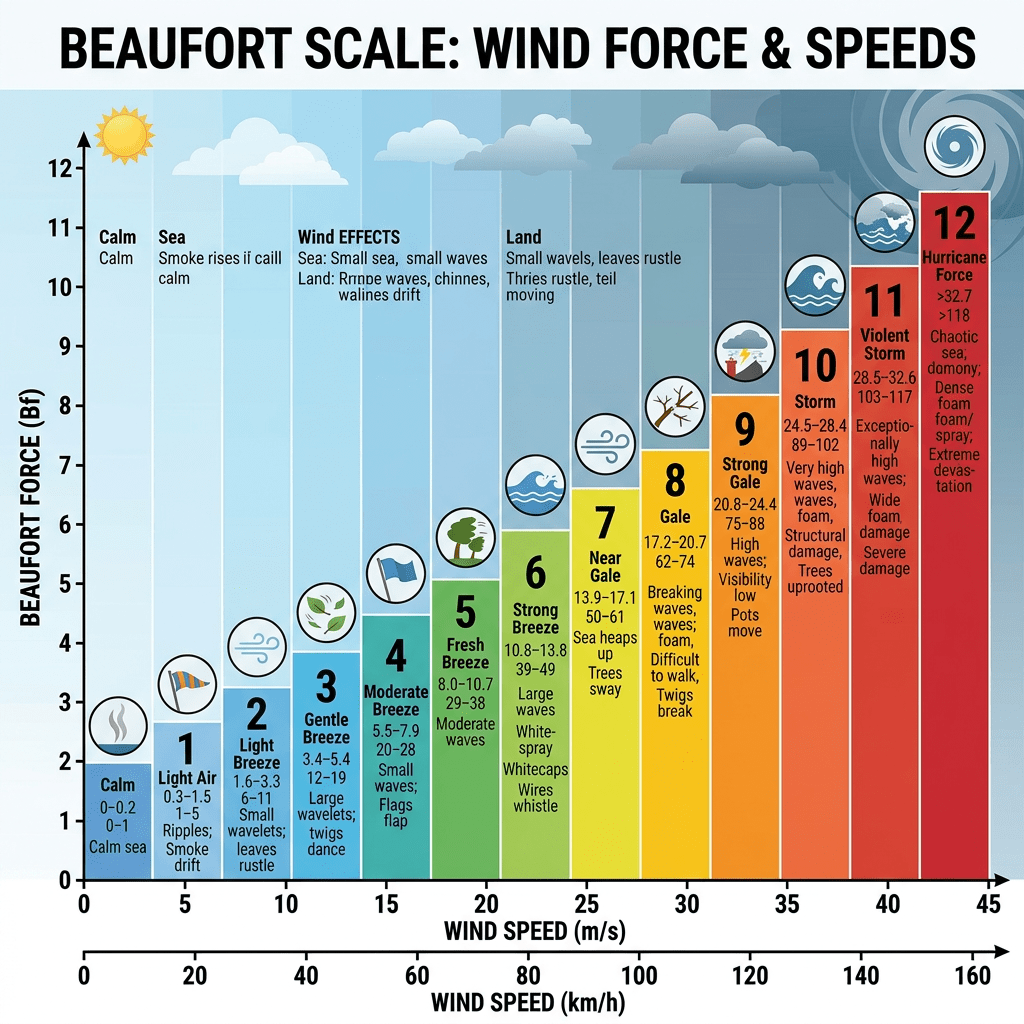
This device was generally considered a curiosity until more formal measurements of wind pressure (related to speed) were developed by Daniel Defoe (author of Robinson Crusoe) following the Grate Storm of 1703. Defoe’s scale was largely qualitative and from 1 (“Stark Calm”) to 12 (“A Tempest”). In the 18th century, naval officers made regular weather observations, and while they used the Defoe Scale, these could be very subjective — one man’s “stiff breeze” might be another’s “soft breeze”. In 1805, Admiral Francis Beaufort standardized this scale based on the effect that the wind had on the sails of a frigate. The initial scale of 13 classes (zero to 12 with 0 as dead calm) began with 1 as “just sufficient to give steerage” to 12 as “that which no canvas sails could withstand”. This scale became standard throughout the Royal Navy and was used during the 1831–1836 voyage of the HMS Beagle under Captain Robert FitzRoy, which carried Charles Darwin to the Galápagos Islands.
The Cup Anemometer that is commonly used today was not developed until 1846 by John Thomas Romney Robinson. Robinson’s anemometer uses several hemispherical cups on a rotating frame to drive mechanical gears to log rotations.
Want to have the
Regimental Brewmeister
at your site or event?
You can hire me.
https://colonialbrewer.com/yes-you-can-hire-me-for-your-event-or-site/

