The weather glass is a small open barometer filled with water. It is a simple instrument designed to indicate atmospheric pressure rises and falls as the water in its spout falls or rises. It does not provide quantitative measurements of atmospheric pressure but indicates changes. Falling water in the glass (water pushed into the sealed cavity) indicates an increase in atmospheric pressure and fair weather whereas rising water (low pressure) portends storms. The exact inventor of the water weather glass is lost to history. The best sources attribute its development to the Dutch nobleman Gheijsbrecht de Donckere of Liège, Belgium. We do, however, know that these instruments were common on ships of the Dutch East India Company (VoC) and that the Pilgrims who traveled to America in the 1620s brought this device on the Mayflower.
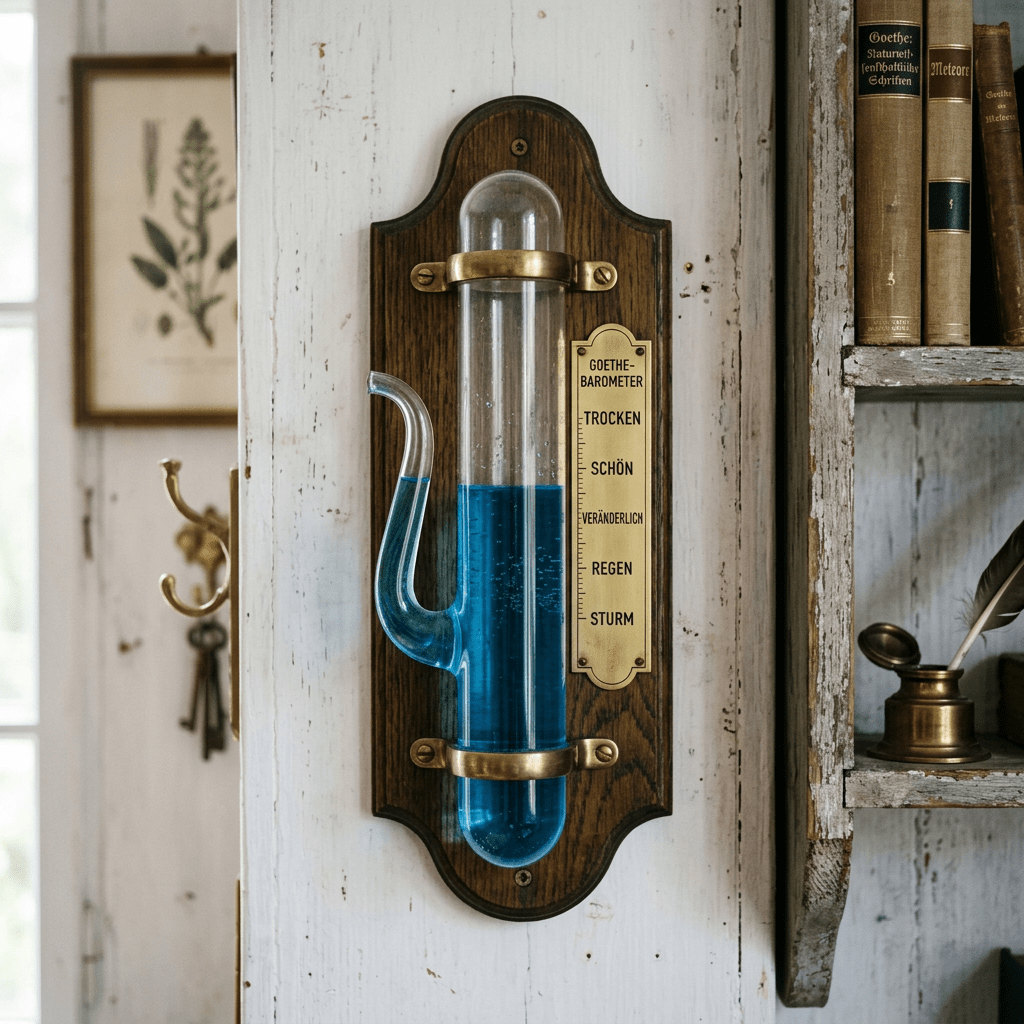
The German poet Johan Wolfgang von Goethe (1749-1832) had a great interest in the weather and became one of the most famous users of the weather glass in Europe. His promotion of the instrument linked it to him to the point where it became known as the Goethe barometer. His personal weather glass continues to hang in his former home (now a museum) in Weimar, Germany.
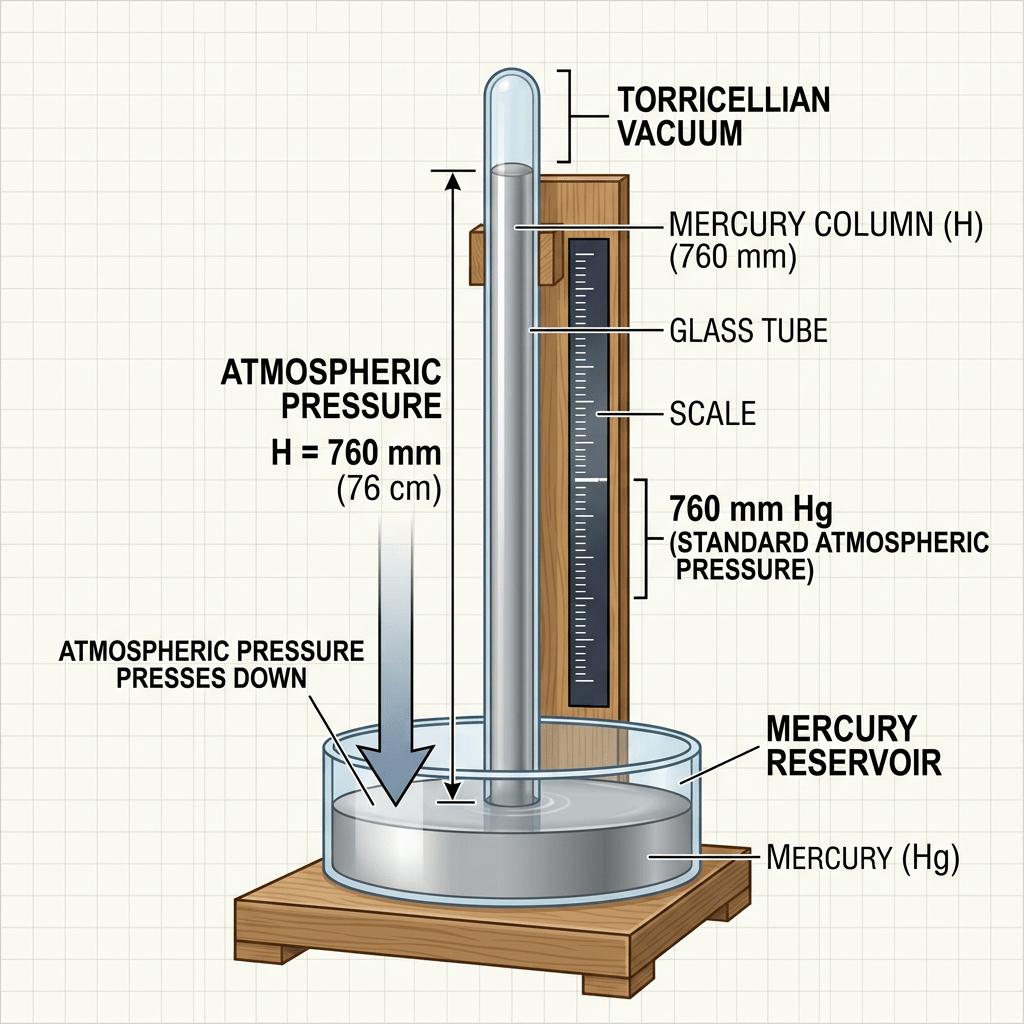
The mercury barometer is both an older and more useful device. This device was developed by Evangelista Torricelli (a collaborator of Galileo). In 1641, Evangelista Torricelli moved to Florence where he became interested in vacuums. It was Galileo who originally suggested to Torricelli that he should use mercury in his vacuum experiments. Torricelli proceeded to fill a four-foot-long glass tube with mercury and inverted the tube into a dish. It was when some of the mercury didn’t escape from the tube that Torricelli observed the vacuum that was created. Torricelli then realized that the height of the mercury varied from day to day. It rose on clear sunny days and fell on stormy days. Because the mercury barometer is stable and easy to affix to a scale (literally how many inches of mercury above the dish at the bottom) it became the standard for weather reporting. It is, however, a fragile instrument not well suited to frontier observations in the New World.
Want to have the
Regimental Brewmeister
at your site or event?
You can hire me.
https://colonialbrewer.com/yes-you-can-hire-me-for-your-event-or-site/

