

Whitesmithing, or tinsmithing, is a much newer form of metalworking that developed in the late 1600s and gained popularity in the 18th and 19th centuries. Although found worldwide, whitesmithing was popular in mainland Europe and especially Britain. Whitesmiths work with thin sheets of iron or steel that were dipped in molten tin to protect the metal from …
Category Archives: Ideas
The Admiral of the Blue Apron
In Francis Grose’s A Classical Dictionary of the Vulgar Tongue, first published in 1785, I found an entry that I have adopted as the moniker for my tavern impression — The Admiral of the Blue Apron. The ADMIRAL OF THE BLUE, is a publican wearing a blue apron, as was formerly the custom among gentlemen …
The Secular Argument for the Establishment Clause of Amendment 1
It is great to argue that the first Congress was inspired to adopt the Establishment Clause[i] by stories of Puritans and other separatist fleeing religious persecution in Europe and some mythical ideal that Americans are somehow more tolerant of other religions than their forebears but this is clearly NOT TRUE. Jews, atheists, Wiccans and Muslims …
Continue reading “The Secular Argument for the Establishment Clause of Amendment 1”
Historical Tidbits — Common Sense

When reenacting or acting as a historical interpreter, its good to have a few historical dates and stories to share. This series will publish a few. January 10, 1776 – Common Sense, a fifty-page pamphlet by Thomas Paine, was published. It sold over 500,000 copies in America and Europe, influencing both the authors of the …
Poor Richard’s Almanack
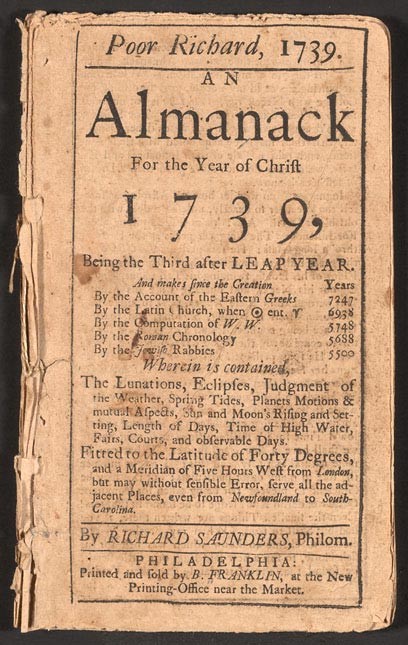
Poor Richard’s Almanack, which Franklin began publishing at the end of 1732, espoused his greatest life goals: the making of money and the promotion of virtue. It became, in the course of its twenty-five-year run, America’s first great humor classic. The fictional Poor Richard Saunders and his nagging wife, Bridget, helped to define what would …
Winning the War with Beer
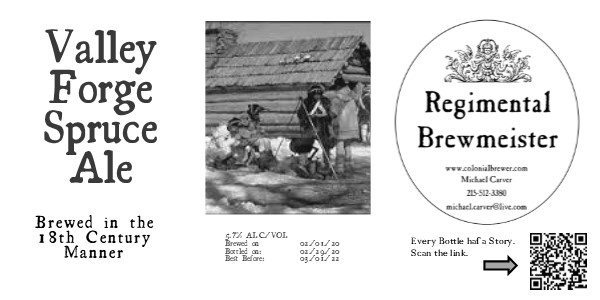
More 18th Century soldiers died of malnutrition and disease than by the hands of their enemies. For the British, each soldier was an investment of a nation’s time and resources so keeping them “fit for duty” was not just a humanitarian concern, it was protecting the nations investment. Getting soldiers trained and transported North America …
Historical Tidbits — 2nd Battle of Trenton
When reenacting or acting as a historical interpreter, its good to have a few historical dates and stories to share. This series will publish a few. January 7, 1777 2nd Battle of Trenton On New Year’s Day, Washington’s force of 5,000 massed again in Trenton. The next day Cornwallis arrived with an army 5,500. After …
Continue reading “Historical Tidbits — 2nd Battle of Trenton”
Basic Colonial Brewing #1 — The Importance of Beer in the 1700’s Colonial America
Today we think of beer as a luxury item, something to enjoy during our leisure times and beverage known and imbibed for its intoxicating properties. This was not always true. In fact, beer was once considered the most healthy drink to give to children and vital to survival. To understand this, you must first understand …
Continue reading “Basic Colonial Brewing #1 — The Importance of Beer in the 1700’s Colonial America”
Becoming a Colonial Brewer

In 1994, I became interested in the someone rebellious and definitely an anachronistic hobby of home-brewing. Brewing beer at home became legal (again) in 1979 so by the time I got involved it was a weird mix of semi-commercial home-brew supply stores that sold malt, yeast, and hops in various forms plus a hodgepodge of …
Historical Tidbits — Battle of Princeton
When reenacting or acting as a historical interpreter, its good to have a few historical dates and stories to share. This series will publish a few. January 5, 1777 Battle of Princeton Preparing to crush Washington’s Army at Assunpink Creek, Cornwallis ordered reinforcements brought down to his position at Trenton. This left only a small …

