

The first known observation of Halley’s Comet, or Comet Halley, took place in 239 BCE., when Chinese astronomers recorded its passage in the Shih Chi and Wen Hsien Thung Khao chronicles. When Halley’s returned in 164 BCE. and again in 87 BCE, it was noted in Babylonian records. It’s also thought that another appearance of …
Category Archives: Science
Basic Colonial Brewing #5 –Why use Copper?

Go to almost any brewery or distillery and you will see lots of gleaming copper. This is not some quaint historical holdover nor is it there for show. We use copper in brewing for real and practical purposes. The reasons for using copper were well understood by the Colonial Brewer but why it worked has …
Continue reading “Basic Colonial Brewing #5 –Why use Copper?”
The danger of always marching in lockstep

If you’ve ever been part of an organization that marches — not just the military but even marching bands and re-enactors (sort of) — you know what it means to march in lockstep. Everyone steps in precision to a standard cadence (usually 120 steps/min, 28 in/step) and one person takes a step with his left …
Continue reading “The danger of always marching in lockstep”
American Historical Mythology
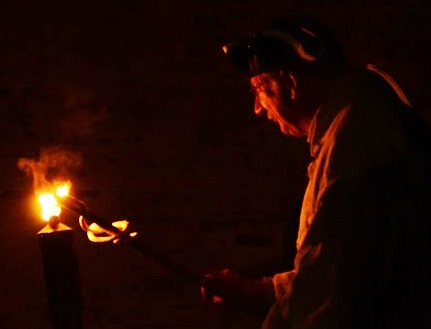
If you hang around Fort Mifflin very long you will, no doubt, be regaled with stories of the supernatural and the pseudoscience that supports its existence. These are all good fun but let’s be clear, SOME people actually believe these things and even though the scientifically minded dismiss THESE beliefs, they are quick to then …
Supplying the Army with Muskets – The birth of Mass Production in America

“A good musket is a complicated engine and difficult to make — difficult of execution because the conformation of most of its parts correspond with no regular geometrical figure.” – Eli Whitney We all know Eli Whitney for his invention of the Cotton Gin but it was his contribution to industrial engineering and the manufacture …
Continue reading “Supplying the Army with Muskets – The birth of Mass Production in America”
Serendipity!

Sometimes the most interesting things are the things you learn by accident. So, I did my normal Spymaster program at Princeton on September 12, 2021 and in this program, I demonstrate invisible inks. My invisible ink (for cost and safety constraints) is a Na2HCO3 (baking soda) and turmeric reaction. Unfortunately, when the people who graciously …
The Yeast Ring
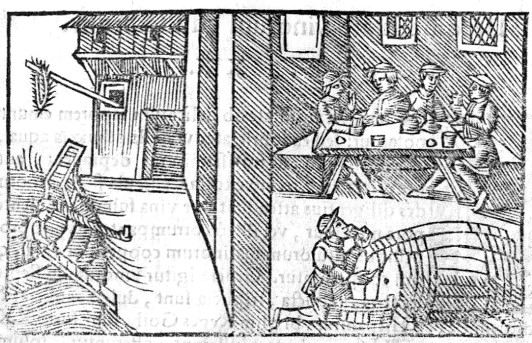
This year, I am adding a somewhat archaic bit of brewing equipment to the gear brought out by the Regimental Brewmiester. The yeast ring or gjarkrans is a piece of traditional brewing gear from medieval Sweden and Denmark. This tool resembles a complicated wreath of small pieces of whittled wood. Yeast harvested from one batch …
The First Steamboat Sailed on the Delaware

The era of the steamboat began in America in 1787 when John Fitch made the first successful trial of a forty-five-foot steamboat on the Delaware River on August 22, 1787, in the presence of members of the Constitutional Convention. Fitch later built a larger vessel that carried passengers and freight between Philadelphia and Burlington, New Jersey. …
Continue reading “The First Steamboat Sailed on the Delaware”
The Surveyor’s Artificial Horizon
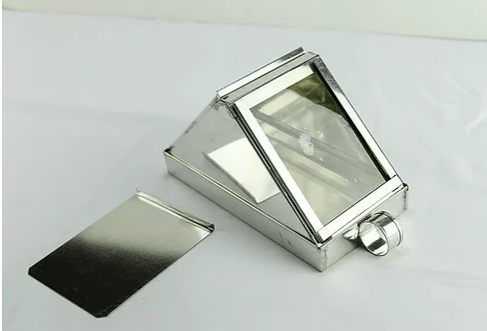
Much of what you read about celestial navigation is focused on ocean navigation where you have a reasonably unrestricted line of sight to the horizon. Terrestial navigators and surveyors often do not have this and must make adjustments in their technique. One very common approach is to use an ARTIFICIAL HORIZON. An “artificial horizon” is …
Joseph Priestly and Carbon Dioxide

In Leeds Joseph Priestley’s home was situated near a brewery. Whenever he walked by the brewery, Priestley observed an unusual phenomenon. He noticed that “fixed air” (carbon dioxide) was released in the process of fermentation and that this new “air” would extinguish burning pieces of wood and then drift to the ground. At home Priestley …
 Michael Carver -- Historical Interpreter/Reenactor