Galileo Galilei is credited with the invention of the thermoscope, a device for gauging heat. But it’s not the same as a thermometer. It couldn’t measure temperature because it had no scale. Today, we see Galileo Thermometers, but these are modern inventions dependent upon ultra-modern mass and density measurement. Galileo’s thermoscope simply demonstrated that the balls rose and fell as the day heated up.
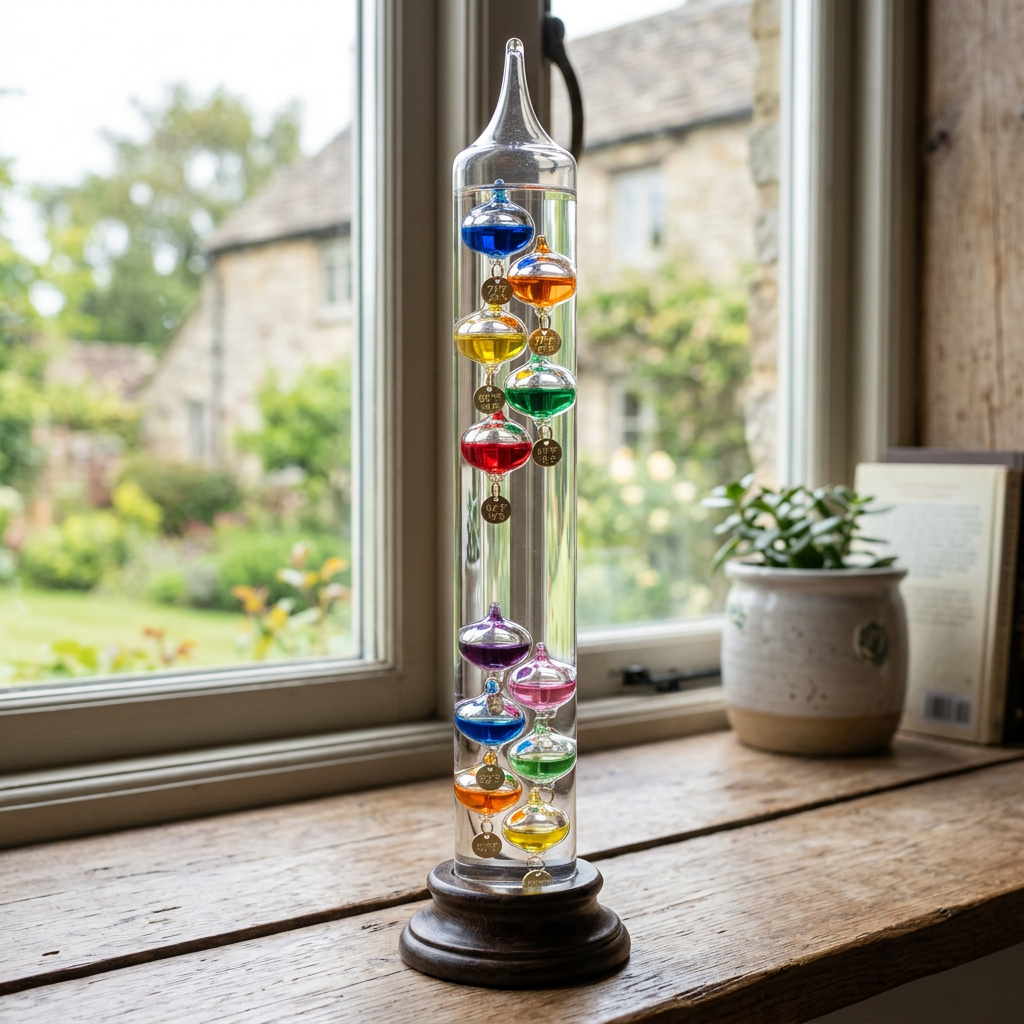
Around 1612, the Venetian scholar Santorio Santorio made a crucial advancement to Galileo’s thermoscope. He added a scale. Then in the 1650s, Ferdinando II de’ Medici, Grand Duke of Tuscany, shifted the design to a sealed tube filled with “spirit of wine” (alcohol) in which glass bubbles of varying levels of air pressure rose and fell with changes in temperature. Yet even with this improved functionality, accurate temperature measurement was not practical. There was still no accepted standard for calibration. The ways in which people tried to find a reference point were ridiculously arbitrary; they used standards as wide-ranging as the melting point of butter, the internal temperature of animals, the cellar temperature of the Paris observatory, the warmest or coldest day of the year in various cities, and “glowing coals in the kitchen fire.” No two thermometers registered the same temperature. It was a mess.
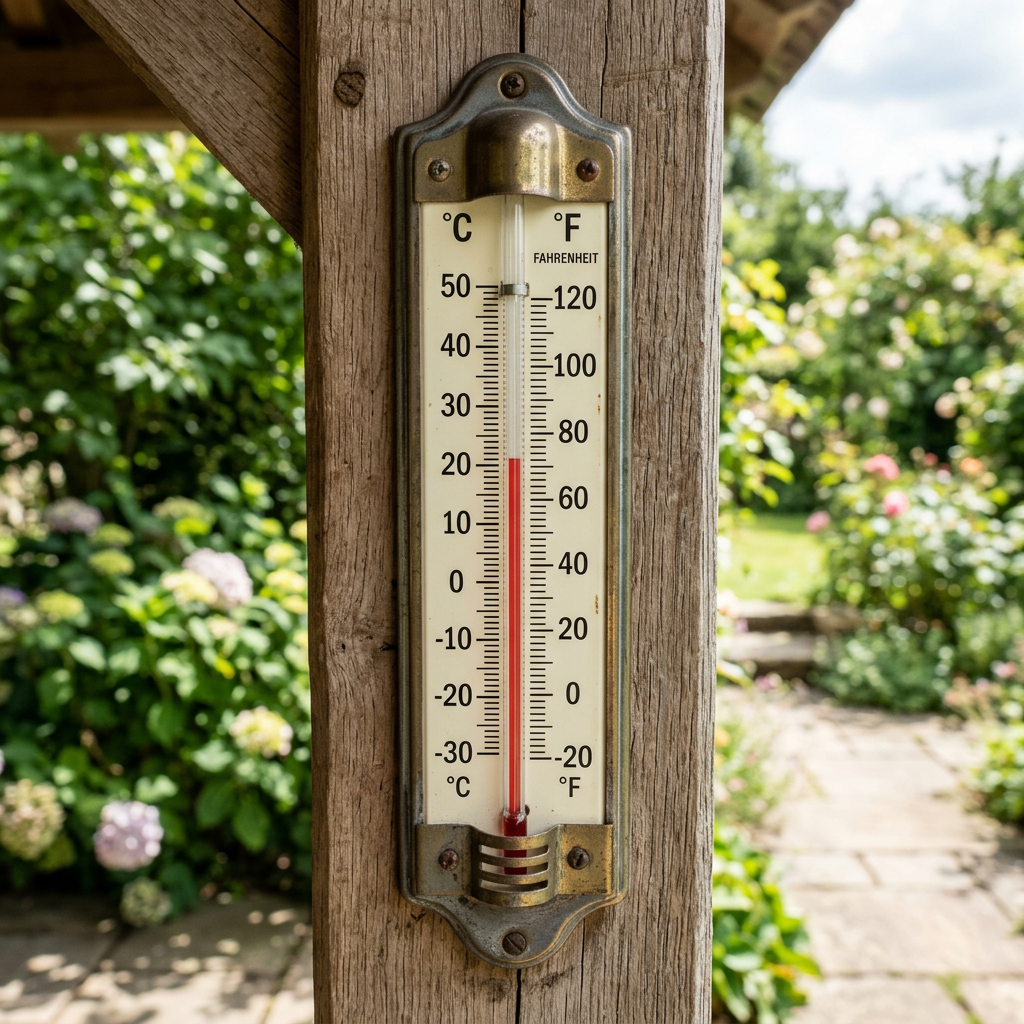
In 1701 the Danish astronomer Olaus Rømer, suggested that thermometers be calibrated to a scale relative to something much more accessible: the freezing and boiling points of water. About the same time Daniel Fahrenheit, the orphaned son of a Polish merchant apprenticed as a glassblower with Rømer in Amsterdam. Their collaboration spawned the first quicksilver (mercury) thermometer, which afforded greater accuracy and precision than its predecessors. And finally, he was able to make multiple thermometers that gave consistent readings because of the improved design involving mercury. This thermometer calibrated the zero point to the freezing temperature of a brine solution made of an equal mixture of water, salt and ice. This scale established the freezing point of water and ice (no salt) at 32 degrees, the temperature of the human body at 96 degrees, and the boiling point of unsalted water at 212 degrees. In 1742 the Swedish astronomer Anders Celsius, proposed changing the scale (not the calibration, just the scale) so that the freezing water at sea level was zero and the boiling point (also at sea level) was 100. This became the current Celsius (or centigrade) scale.
Want to have the
Regimental Brewmeister
at your site or event?
You can hire me.
https://colonialbrewer.com/yes-you-can-hire-me-for-your-event-or-site/

