
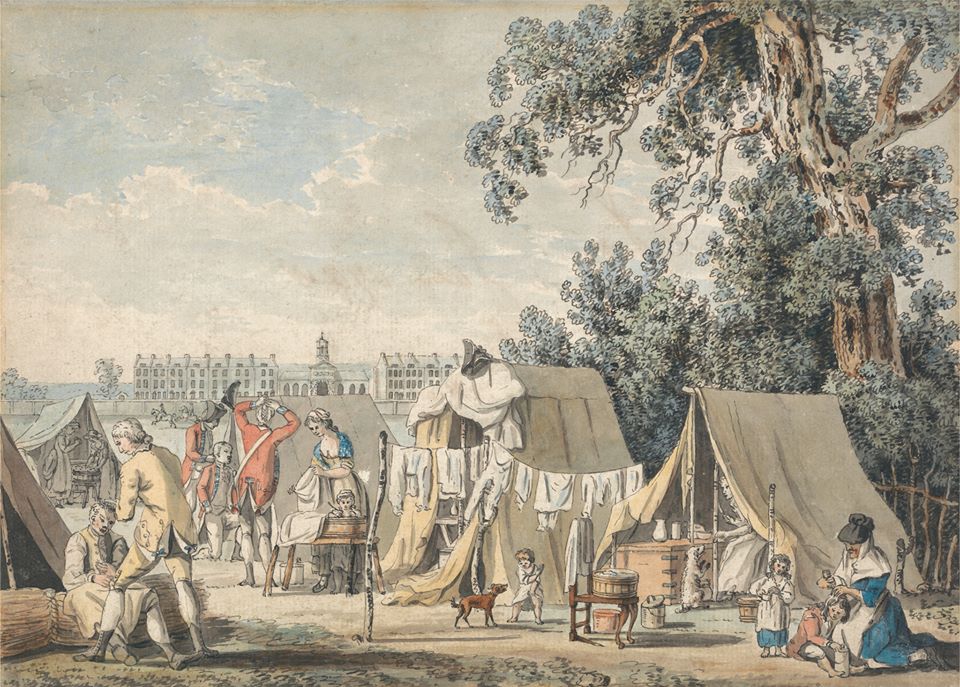
Only a tiny fraction of any soldier’s time was spent in combat. The vast majority of the time, the army was in camp. Camp life was exactly a time of rest and idleness. Uniforms and arms required daily attention, food had to be cooked, firewood collected, shelters built and the near endless work that caring …
Author Archives: Michael Carver
Auld Lang Syne
At midnight on December 31st, throughout the English-speaking world, the song “Auld Lang Syne” is sung practically everywhere. This song — actually a poem by Robert Burns — is indelibly linked to New Year’s celebrations, but what does it mean? You’ve all seen Billy Crystal in Harry met Sally: “Does that mean that we should …
We’re Reopening the Blacksmith Shop at Fort Mifflin
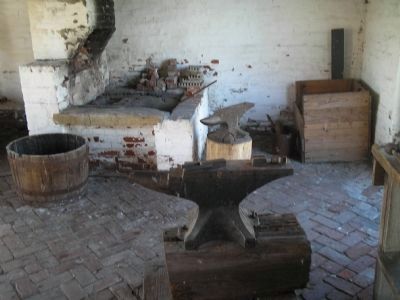
In 1776 the Committee of Safety of the Delaware River ordered a “Smith Shop and Forge” to be built on Mud Island. That building was likely demolished during the siege of 1777 but we have the rebuild (new and improved) blacksmith shop from 1798 The only thing missing is a blacksmith is on duty managing …
Continue reading “We’re Reopening the Blacksmith Shop at Fort Mifflin”
Cast Iron Chef Returns to Fort Mifflin
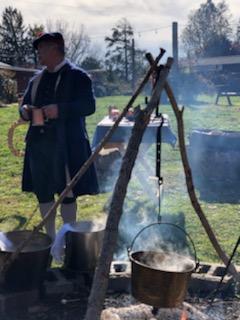
Want an opportunity to quench your thirst and satisfy your hunger for an immersive history experience this winter. Come to Fort Mifflin for a taste of life in early 19th century Philadelphia! Join the Regimental Brewmeister and our team of hearth cooks for a unique hands-on experience in early 19th century foodways. Take up an …
The Other East India Companies

When we talk about 18th Century trade monopolies, the big three (British East India Company, Hudson Bay Company, and the Dutch East India Company). The era of Spanish hegemony in trade was well in the decline by 1700 but what about the other imperial powers. Let’s not forget that France, Austria, Demark, Sweden, and Portugal …
The British East India Company

Founded in 1600 by royal charter, the East India Company was established as a joint-stock trading company to exploit opportunities east of the Cape of Good Hope where it was granted a trade monopoly. Crucially, to conduct this trade, the EIC was permitted to ‘wage war’. Although the EIC did not hold sovereignty in its …
Prussian Blue

Considered the first artificial pigment, Prussian Blue was created at the turn of the eighteenth century, rather ironically by an artist seeking to create a new source for red paint. There are varying accounts as to the exact story behind the color, but the most interesting is from German physician Georg Ernst Stahl (1659–1734). He …
What’s with the BLUE MUSKET?

If you are like most reenactors, you consume all the popular media on the 18th Century no matter how well done it is. We look at the costumes, the misrepresentations of history, and criticize the portrayal of people whose lives and customers we are much more immersed in that the TV or movie producers. Occasionally, …
Texas and the American Revolution

In discussions on the American Revolutionary War, the contributions of Texas are seldom brought up.[1] But in the 1770s, Texas, inhabited by Spaniards and Native Americans, was a hub of activity. While the signing of the Declaration of Independence occurred on July 4, 1776 in Philadelphia, Tejanos (Texans) manned outposts, guarded New Spain’s claims, and reconnoitered neighboring …
Historical Tidbits — Savannah taken by the British

When reenacting or acting as a historical interpreter, its good to have a few historical dates and stories to share. This series will publish a few. December 29, 1778 Savannah taken by the British In 1778, British policymakers and strategists decided to refocus their efforts on the southern colonies, where they believed the crown would …
Continue reading “Historical Tidbits — Savannah taken by the British”

