

In 1876, Philadelphia city officials discussed what role the Liberty Bell should play in the nation’s Centennial festivities. Some wanted to repair it so it could sound at the Centennial Exposition being held in Philadelphia, but the idea was not adopted; the bell’s custodians concluded that it was unlikely that the metal could be made …
Category Archives: General history
The OTHER Clock at Independence Hall

When you visit the Philadelphia State House (AKA Independence Hall), you will be told the story of the Liberty Bell and it multiple recastings before being hung in the tower behind the hall. You will no doubt hear the bells (now the Centennial Bell) as it chimes on the hour and of course most photos …
George Washington Elected as President

On January 7, 1789, the Congress of the United States of America, having recently adopted the Constitution, held its first presidential election. Despite having retired to his Virginia plantation after the war, the Electoral College cast a unanimous vote (69 electoral votes) for George Washington. Under the original Constitution, the electors each cast two …
Historical Tidbits

When reenacting or acting as a historical interpreter, its good to have a few historical dates and stories to share. This series will publish a few. January 6, 1777 1st Encampment at Morristown Remnants of the American forces (2,000 – 4,000 troops) after the battles of Trenton and Princeton are billeted in homes and structures …
Are you a Yankee Doodle Dandy?

We all know the song … “Yankee Doodle went to town.” They teach it to our children. Well, thankfully not! The British sang Yankee Doodle to berate the Americans during the Revolutionary War. It not the nice little dittle we all sang as kids, when you get to the later verses, it quite profane. A …
Historical Tidbits
When reenacting or acting as a historical interpreter, its good to have a few historical dates and stories to share. This series will publish a few. January 5, 1777 Battle of Princeton Preparing to crush Washington’s Army at Assunpink Creek, Cornwallis ordered reinforcements brought down to his position at Trenton. This left only a small …
Historical Tidbits
When reenacting or acting as a historical interpreter, its good to have a few historical dates and stories to share. This series will publish a few. January 17, 1773 – HMS Resolution, under the command of James Cook, became the first vessel to cross the Antarctic Circle. Want to Buy Beer from the Colonial Brewmeister? …
Re-Enactor, Interpreter, or Living Historian?
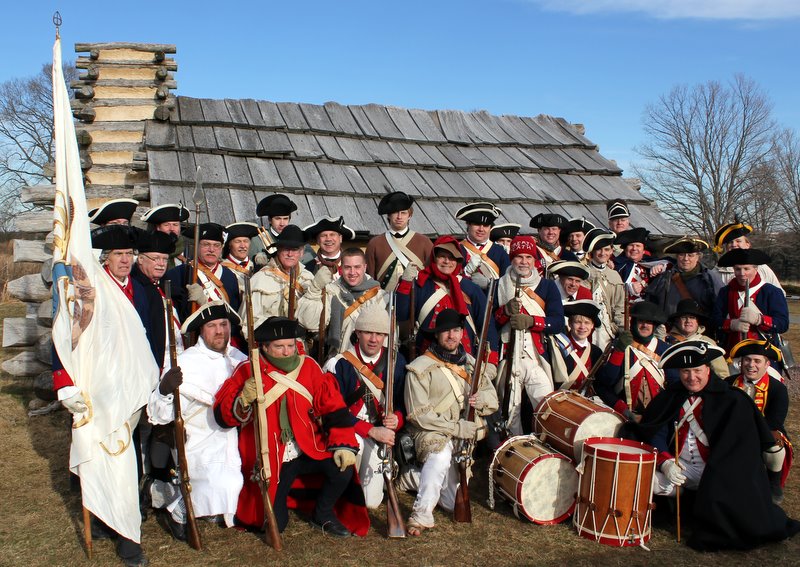
In my tagline, I use the two terms that are sometimes seen as synonyms and just as often as antonyms by the Living History community: Re-enactor and Interpreter. So, are you a re-enactor, an interpreter, or a living historian? Are you part of the exhibit, the staff, a visitor, or something else altogether? These are …
Continue reading “Re-Enactor, Interpreter, or Living Historian?”
Ask your Tavernkeeper
Perhaps its just that sort of week for me but its definitely 5:00 HERE so here are some terms to take with you to your local watering hole to show you understand the drinking habits of we merry 18th Century barmen… Bene Bowse — good beer, or other strong liquorBingo — brandy or other spirituous …
“Seven Rations” for the 18th Century Soldier

For regiments of the British Army, each mess (five or six men) was issued one bowl, one platter, one ladle, one cooking kettle, six trenchers (a plate on one side and a bowl on the other), and spoons. Using this equipment, the men were to prepare, cook, and eat their “seven rations” of food. Each …
Continue reading ““Seven Rations” for the 18th Century Soldier”
 Michael Carver -- Historical Interpreter/Reenactor