
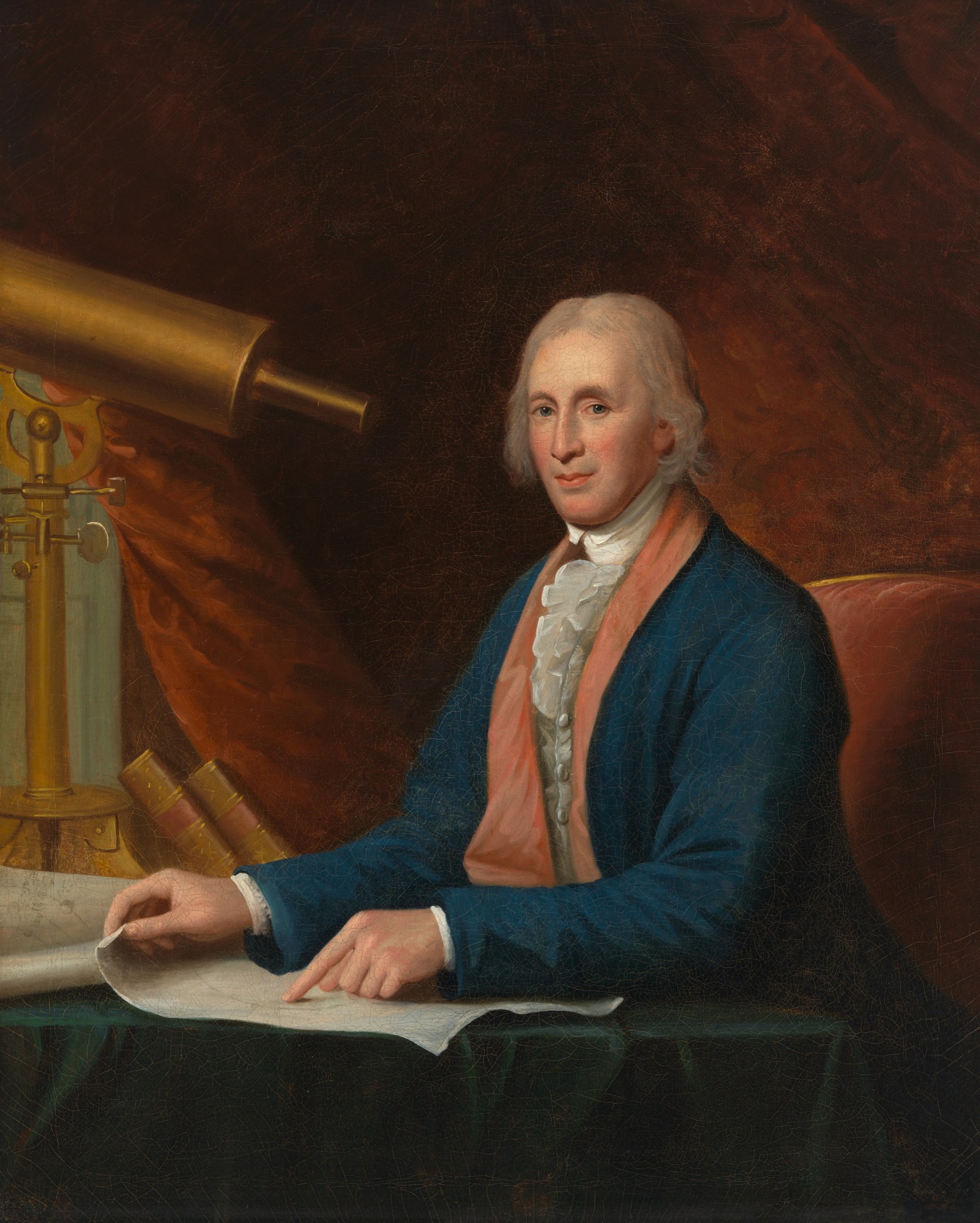
An orrery is a mechanical model of the solar system, demonstrating the motions of the planets and their satellites around the sun. Orreries were regarded as essential teaching equipment for 18th-century lectures on “natural philosophy” (the physical sciences). Such apparatus became popular from around 1700, when John Rowley built one for patron the Charles Boyle, …
Tag Archives: Newspaper
David Rittenhouse’s Thermometer
In 1767, the American astronomer and mathematician David Rittenhouse (1732-1796) described a pocket thermometer that contained a bimetallic mechanism. Bimetallic or deformation thermometers depended on different expansion rates of two metal strips set into a curl. As the temperature changed, the curvature of the metal curls also changed and moved a pointer along a marked …
David Rittenhouse’s Hygrometer
Wood swells and shrinks about 80 times as much around the growth rings relative to the same section of wood along the length of the fiber. This causes wood of certain cuts to warp when exposed to high humidity. As a clockmaker, this phenomenon greatly frustrated David Rittenhouse so he sought to understand it. Taking …
Help Wanted — Immersion Weekend in New York
I am looking for 10 solid tavern goers who are interested in an immersion weekend and willing to travel to Albany, NY. On August 8, the Admiral of the Blue Apron will be hosting an immersion weekend on 18th Century beverages and tavern culture. The program will include a full tavern in a fully restored …
Continue reading “Help Wanted — Immersion Weekend in New York”
Help Wanted
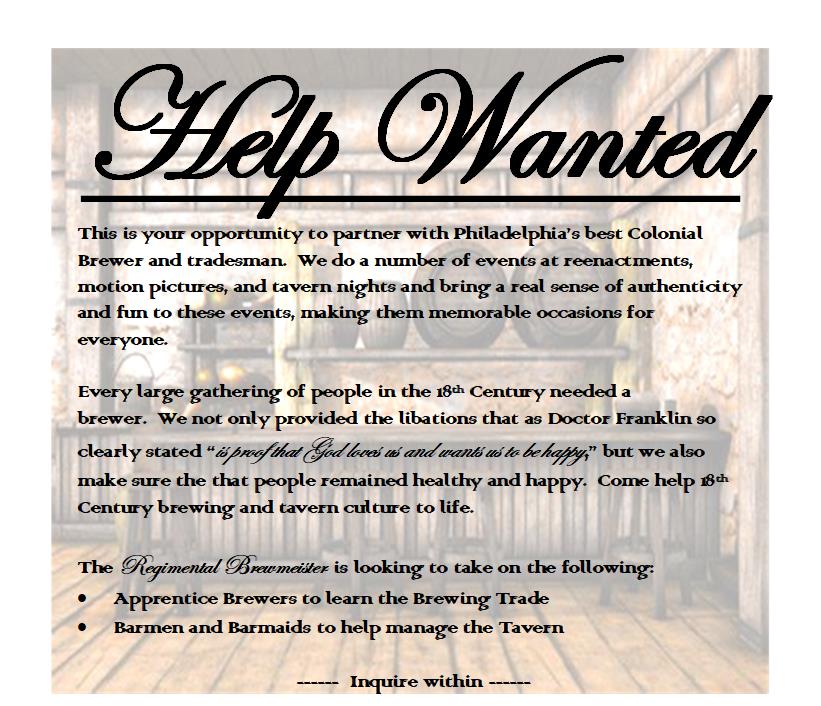
The Regimental Brewmeister needs to recruit one or two people to help with upcoming paid events. Most events are in the general Philadelphia area but some require travel. Brewers: Learn to brew as an 18th Century Journeyman brewer. Talk to the public about beer, brewing, and sanitation in the 18th Century. Serve samples. Tavern Keepers: …
Help Wanted — Immersion Weekend in New York
I am looking for 10 solid tavern goers who are interested in an immersion weekend and willing to travel to Albany, NY. On August 8, the Admiral of the Blue Apron will be hosting an immersion weekend on 18th Century beverages and tavern culture. The program will include a full tavern in a fully restored …
Continue reading “Help Wanted — Immersion Weekend in New York”
Help Wanted
The Regimental Brewmeister needs to recruit one or two people to help with upcoming paid events. Most events are in the general Philadelphia area but some require travel. Brewers: Learn to brew as an 18th Century Journeyman brewer. Talk to the public about beer, brewing, and sanitation in the 18th Century. Serve samples. Tavern Keepers: …
Help Wanted — Immersion Weekend in New York
I am looking for 10 solid tavern goers who are interested in an immersion weekend and willing to travel to Albany, NY. On August 8, the Admiral of the Blue Apron will be hosting an immersion weekend on 18th Century beverages and tavern culture. The program will include a full tavern in a fully restored …
Continue reading “Help Wanted — Immersion Weekend in New York”
David Rittenhouse wrote an almanac in 1747
David Rittenhouse had a long and varied career. He was, of course, Philadelphia’s most celebrated astronomer but he was also a clockmaker, an inventor, the treasurer of the Continental Congress, City Surveyor of Philadelphia, and founder of the US Mint. His masterful 1771 Orrery was the state of the art in teaching celestial mechanics for first half …
Continue reading “David Rittenhouse wrote an almanac in 1747”
Getting Paid to Drink Beer… The Ale Conner
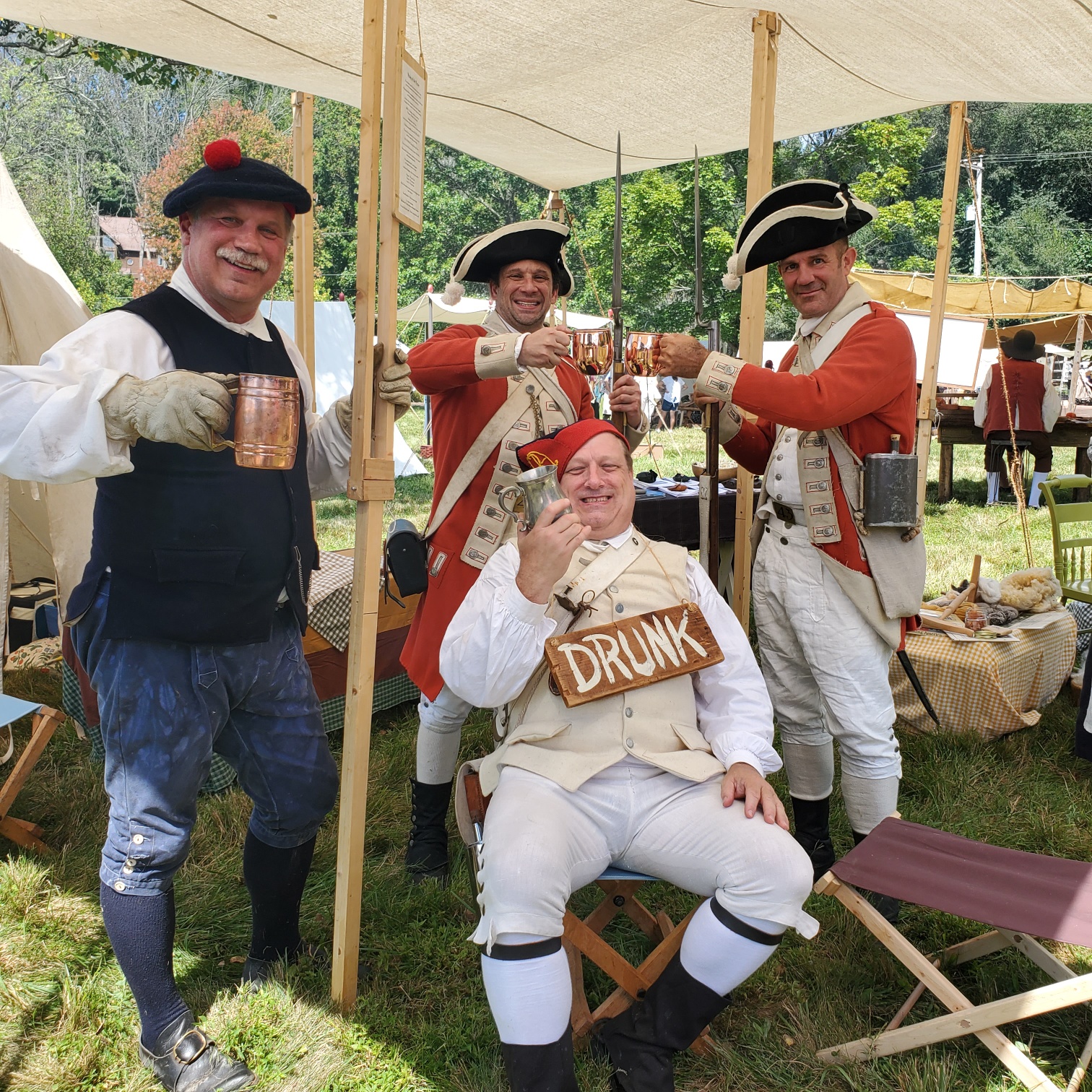
Imagine getting DRAFTED into office where your job is to drink beer. Well, that is exactly what happened in medieval England. Ale conners (also known as ale-tasters or ale-cunners) were local officials appointed by a baron or marquis to ensure the quality and fairness of ale and beer production in their county. Their job was …
Continue reading “Getting Paid to Drink Beer… The Ale Conner”

