Early Meteorology — The Deflection Anemometer

Wind is perhaps one of the most obvious weather phenomena and was of critical importance to commerce in the 18th Century. Wind propels not just ships at sea but the earliest industrial processes like milling grain and pumping water (especially in the Netherlands).There is some controversy over the invention of the anemometer. Some historians suggest …

Early Meteorology — Goethe’s Barometer

The weather glass is a small open barometer filled with water. It is a simple instrument designed to indicate atmospheric pressure rises and falls as the water in its spout falls or rises. It does not provide quantitative measurements of atmospheric pressure but indicates changes.  Falling water in the glass (water pushed into the sealed …

Early Meteorology — The Thermometer

Galileo Galilei is credited with the invention of the thermoscope, a device for gauging heat. But it’s not the same as a thermometer. It couldn’t measure temperature because it had no scale.  Today, we see Galileo Thermometers, but these are modern inventions dependent upon ultra-modern mass and density measurement.  Galileo’s thermoscope simply demonstrated that the …

Early Meteorology — The Psychrometer

By the late 18th Century, the emerging science of meteorology—closely aligned with the study of gases—was focused on major advances in understanding evaporation, latent heat, and water vapor in the air. The earlier Aristotelian study of storms was being superseded by the systematic measurement of temperature, pressure and atmospheric moisture with an aim to PREDICT those …

Donald Trump wants to use the NPS as a propaganda machine to spread his misguided version of history.

Clearly the Trump Administration wants a war. They are insistent upon MISLEADING and UNTRUTHFUL telling of history. Its time we start really protesting and shut-down Philadelphia in preparation for the semiquincentennial. Come to INHP on Saturday between 12 and 4pm as we tell the REAL HISTORY of America and the President’s House. We will continue …

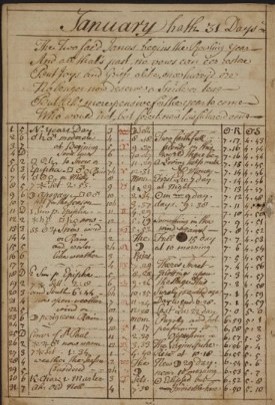
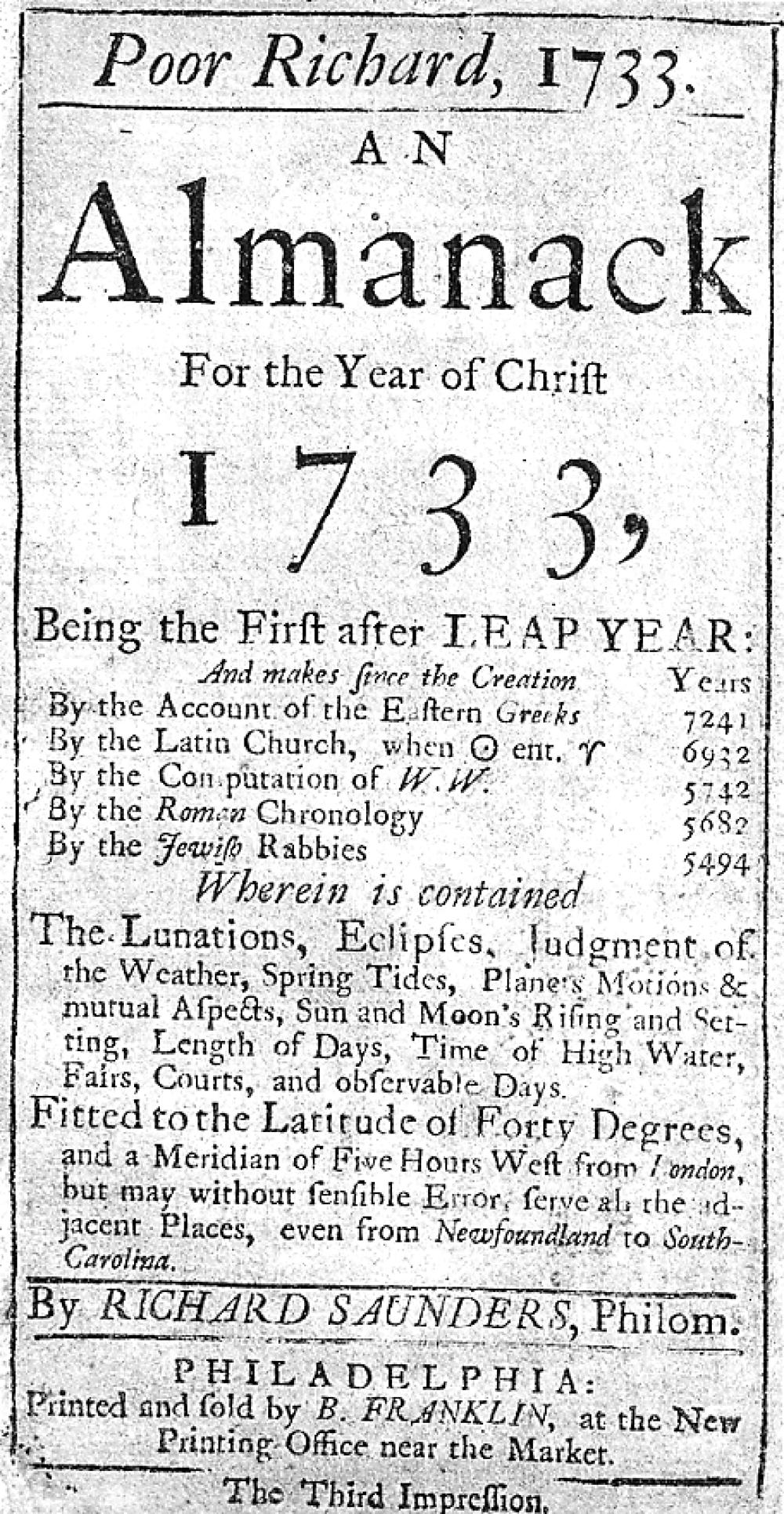
David Rittenhouse wrote an almanac in 1747

David Rittenhouse had a long and varied career.  He was, of course, Philadelphia’s most celebrated astronomer but he was also a clockmaker, an inventor, the treasurer of the Continental Congress, City Surveyor of Philadelphia, and founder of the US Mint. His masterful 1771 Orrery was the state of the art in teaching celestial mechanics for first half …

Getting Paid to Drink Beer… The Ale Conner

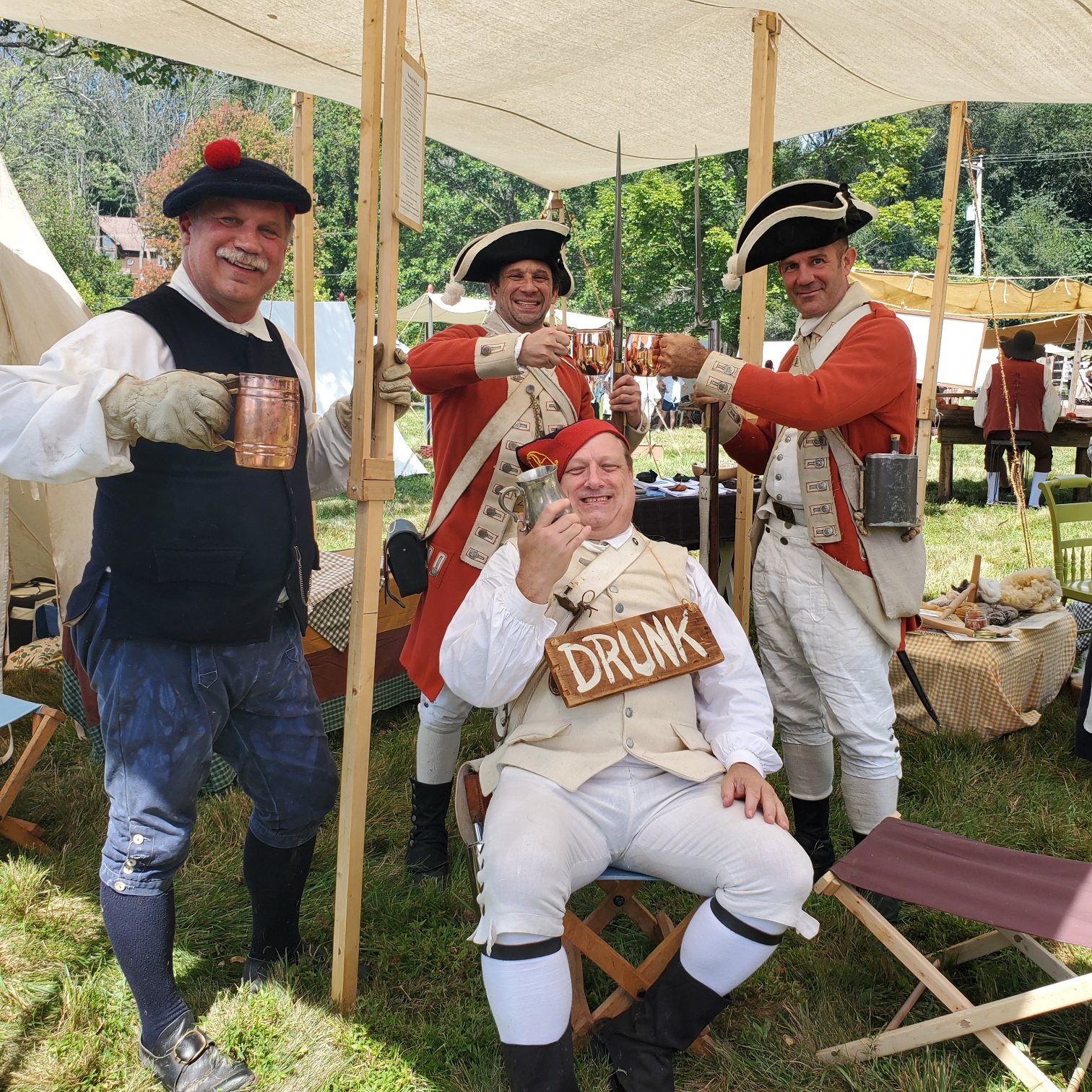
Imagine getting DRAFTED into office where your job is to drink beer. Well, that is exactly what happened in medieval England. Ale conners (also known as ale-tasters or ale-cunners) were local officials appointed by a baron or marquis to ensure the quality and fairness of ale and beer production in their county. Their job was …

The Patriot’s Paradox

Every once in a while, you are struck by how truly strange our political world has become.  I am not referring to the disfunction in our US government (directly) but rather our day-to-day interactions between seemingly normal, patriotic Americans.  Case in point:  I had a very interesting interaction with my SAR compatriots, on Washington’s Birthday …